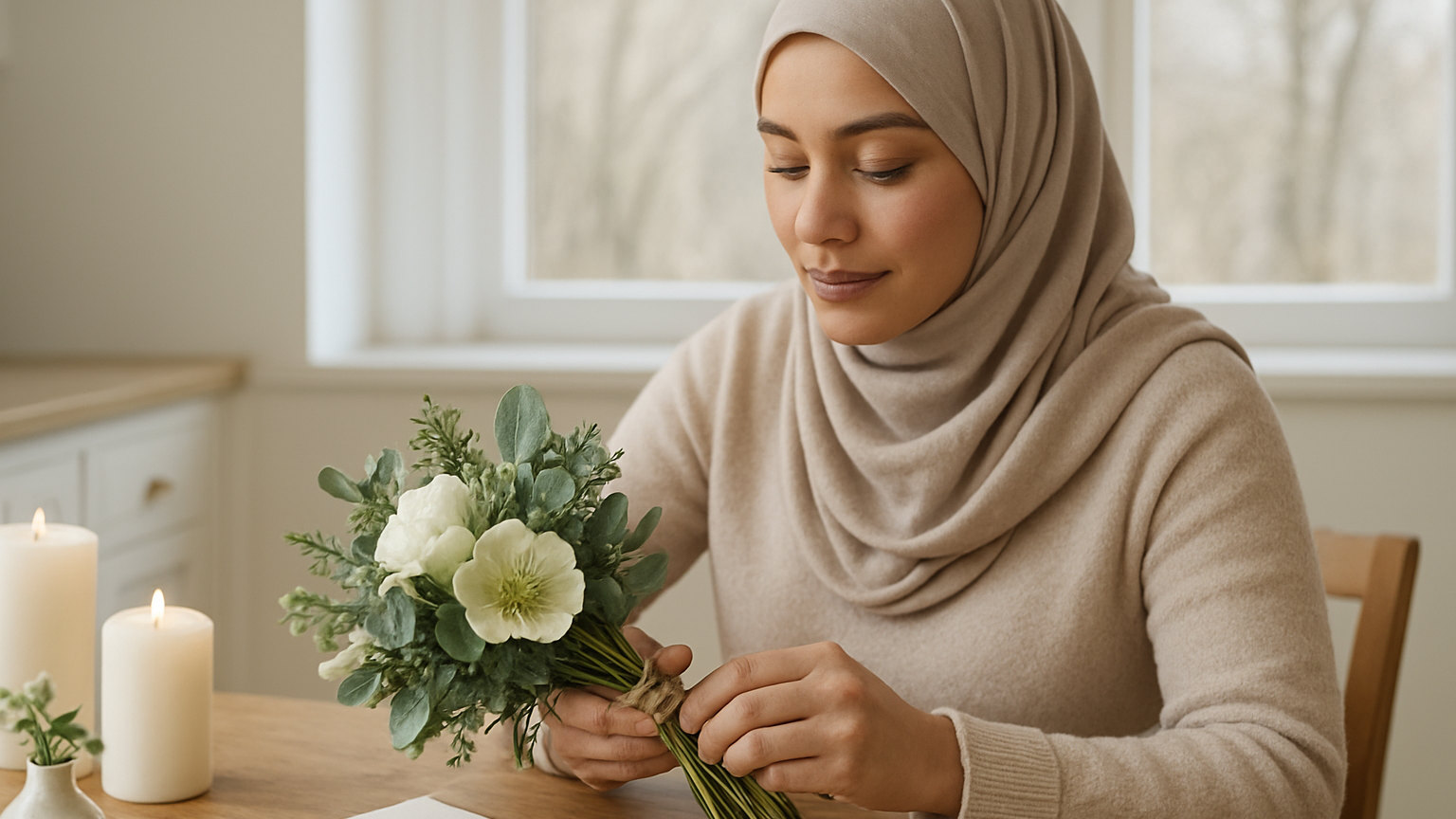
Foliage does most of the visual work in the loose, abundant style that dominates British weddings, and it costs a fraction of flowers by volume. It is also more robust, which matters over a long warm day.
Why use greenery?
Volume, texture and structure at a much lower cost than flowers. An arrangement that is largely foliage with a few strong flowers looks generous and costs considerably less than the reverse.
It also lasts better. Most foliage survives a warm room far more happily than delicate flowers do.
What is eucalyptus?
The most used foliage in British weddings, in several varieties. Silver dollar has round leaves and a grey blue tone, and seeded eucalyptus has small buds along the stem.
It drapes well, it photographs beautifully, it is available year round and it has a light scent that some people find strong at close range.
What about olive?
Slim silver green leaves with a Mediterranean look, well suited to summer and outdoor weddings. It is sturdy and holds up in heat.
It suits a warmer palette than eucalyptus and works particularly well with terracotta, cream and soft yellow.
What is ruscus?
A glossy dark green foliage with a neat leaf, used for garlands and structure. Italian ruscus is the common variety and it is inexpensive.
It is extremely hardy, which makes it the standard choice for anything that has to be built in advance or survive a long day.
What about ferns?
Soft, textured and slightly wild, suiting woodland and rustic settings. Asparagus fern gives an airy quality and leatherleaf gives more structure.
They are delicate in heat, so check with the florist if the venue is likely to be warm.
What is smilax?
A trailing vine used for garlands and anything that needs to hang, with small heart shaped leaves and a light natural look.
It is more expensive than ruscus and considerably prettier for anything draped or trailing along a table.
What works seasonally?
Ivy and evergreens in winter, alongside pine, holly and berried branches. Blossom and fresh growth in spring. Bracken, berries and turning leaves in autumn.
Seasonal foliage is cheap and abundant, and it makes a winter or autumn wedding one of the better value floral propositions in the year.
How is it used?
Table runners along long tables, garlands on mantelpieces and stair rails, wrapped around arches, and as the base of every arrangement.
A foliage runner down a long table with candles between is one of the most effective and least expensive table treatments available.
Can you do it yourself?
More easily than flowers. Foliage lasts longer, is more forgiving to arrange and can be prepared a day or two ahead.
Some can be foraged, with permission and in season, though quantity is usually the constraint. A garland takes a great deal more than people expect.
How much should the brief lean on it?
Heavily, if the budget is tight. Tell the florist you are happy for foliage to do the work with flowers as accents, and the same money goes considerably further.
It is the single most useful instruction you can give a florist working to a modest budget, and the result rarely looks economical.
What does it cost?
Considerably less than flowers by volume, which is why a foliage led brief goes so much further. Ruscus and eucalyptus in particular are inexpensive and available year round.
Does it photograph well?
Very. Green reads clearly against almost every background, holds detail in an image and does not compete with the dress or the people, which flowers occasionally do.
What is the single most useful instruction?
Telling the florist you are happy for foliage to lead with flowers as accents. It is the one sentence that makes a modest floral budget go a long way.
Foliage led arrangements are cheaper, hardier and photograph beautifully, which is an unusually good combination in wedding planning.
What suits your venue?
Ask the florist, who will know what works against the walls and the light in that particular room.