
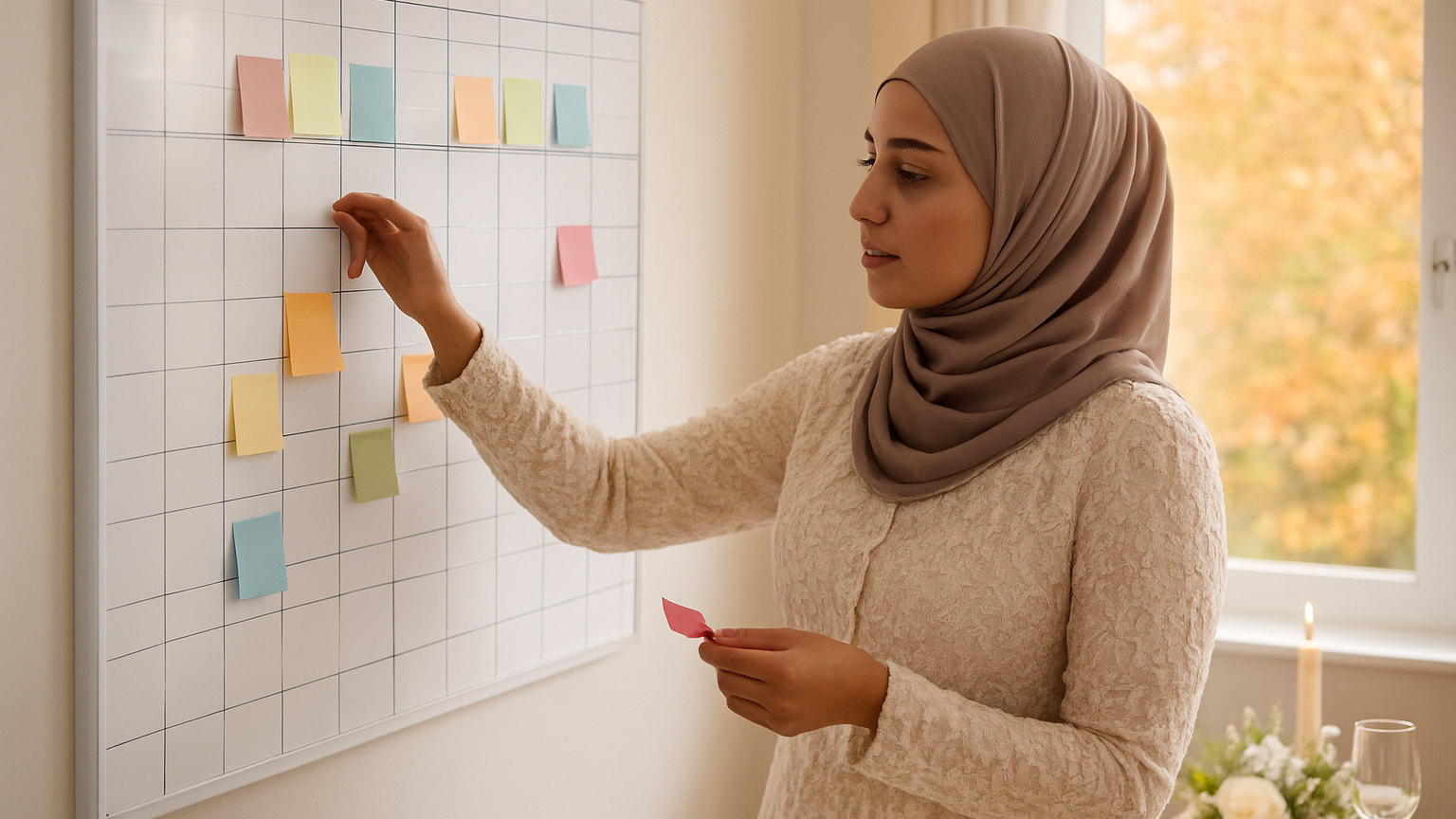
A wedding checklist is a list of every job that has to happen before the day, arranged so that the things other jobs depend on come first. Most published checklists fail on that second point. They list two hundred items in roughly the order somebody thought of them, which is why couples end up chasing table favours in month two and giving notice of marriage in month ten.
What has to go on every wedding checklist?
Six things appear on every workable list regardless of budget or size. The date and the legal paperwork. The venue or venues. The guest list. The people who feed everyone. The people who record the day. And the money, which is not a task but a constraint sitting over all of it.
Everything else is detail hanging off one of those six. Flowers hang off the venue. Stationery hangs off the guest list. Transport hangs off the ceremony location and the timings. If an item on your list does not trace back to one of the six, it can wait.
Which jobs come first?
Anything that other people control comes first, because you are queueing for their diary rather than working through your own. Venues, registrars, photographers and caterers all book out further ahead than anything you can make or buy, and popular dates go earliest.
The guest list belongs near the front too, even in draft form, because it determines what size venue you are looking for and therefore what you can afford. A venue booked before the guest list is settled is the single most common cause of a budget that will not balance.
What can safely wait?
Anything you can buy or make in a fortnight can wait, and most decorative decisions fall into that group. Favours, table numbers, signage, guest book, cake topper, confetti, sparklers. None of these depend on anyone else, none take long, and all of them will look different once you have seen the room.
Rings are the interesting exception. They feel like a late detail and they are not, because a resize or an engraving adds weeks. Order them around the halfway point rather than the final month.
How detailed should each item be?
Each line should be a single action you could do this week, not a category. Book florist is a task. Flowers is a heading. When a list is written in headings, nothing ever gets ticked, because there is no moment at which flowers are finished.
Break anything that has stalled for a fortnight into smaller lines. A task that keeps getting skipped is almost always a task that is secretly three tasks, one of which requires an awkward conversation.
Who should each item belong to?
Every line needs one name against it. Shared ownership means nobody does it, and the item that was on the list for six months turns out to have been on nobody. Splitting by category rather than by task tends to work better, because it avoids the constant handover of context.
Give parents or the wedding party specific, bounded jobs if they have offered. Handling the guest list for their side of the family is a real job with an edge to it. Helping is not.
When should the list stop growing?
A wedding checklist grows until roughly a month out, then it should shrink. If new items are still appearing in the final fortnight, they are almost always additions rather than requirements, and each one costs attention you now need for confirmations.
Draw a line at four weeks. After that, nothing new goes on the list unless something has gone wrong, and the only jobs remaining should be confirming things already booked, chasing final numbers and paying balances.
What does a finished checklist look like?
By the final week the list should contain no decisions at all, only handovers. Who has the rings. Who is paying the balance to the band. What time each supplier arrives and who they call if the gate is locked. If you are still deciding anything in the last seven days, something was left too late, and the fix is to decide it now rather than on the morning.


