
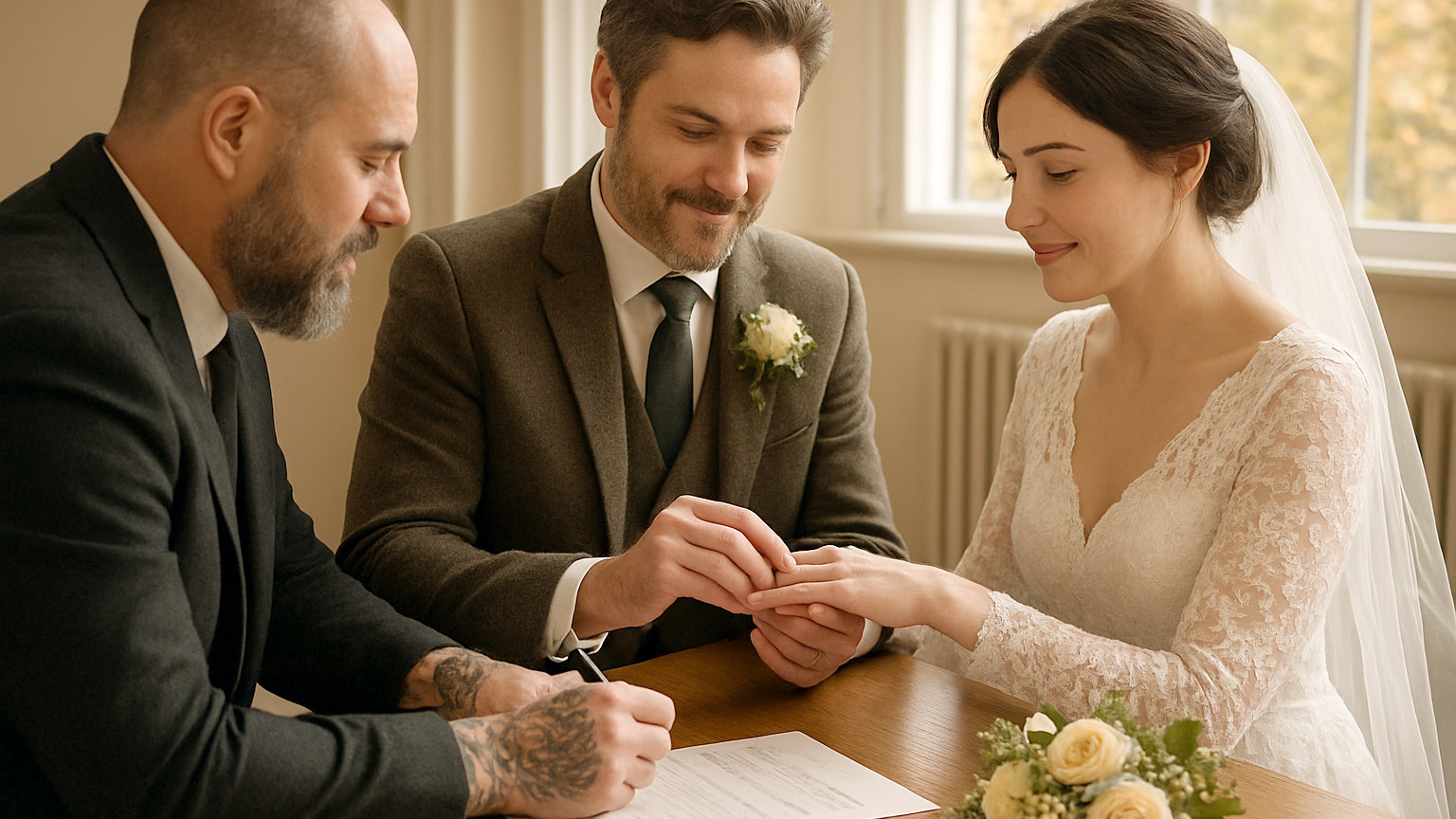
Giving notice is the legal step that allows a wedding to take place. It is a formal appointment at a register office, it carries a waiting period, and it is the part of wedding planning most often left later than it should be.
What is notice of marriage?
A legal declaration of your intention to marry, made in person at a register office. The details are then displayed publicly for a set period before authority to marry is issued.
It is separate from booking a venue or a registrar. A venue booking without notice given is not yet a legal wedding.
Where do you give it?
At the register office for the district where you live, rather than where you are marrying. If you live in different districts, each of you gives notice separately in your own.
There is usually a residency requirement, meaning you must have lived in the district for a stated period before the appointment.
How long is the waiting period?
There is a statutory waiting period between giving notice and being able to marry, and notice remains valid for a limited time afterwards.
Confirm the current periods with your register office or on GOV.UK, since they differ across the United Kingdom and are subject to change.
When should you do it?
Once the venue and date are confirmed, and comfortably within the window where notice remains valid. Register offices book up, so the appointment itself needs arranging in advance.
Leaving it late is a genuine risk. A wedding cannot proceed without valid notice, whatever else has been booked and paid for.
What do you take?
Proof of identity, proof of address and proof of nationality, along with documents relating to any previous marriage such as a decree absolute or a death certificate.
Ask the register office for their exact list when booking, since requirements vary by circumstance and turning up short means rebooking.
What happens at the appointment?
You are seen separately and asked a series of questions about yourself, your partner and the intended marriage. It is straightforward and it takes around half an hour each.
Answer accurately. Giving false information is a criminal matter and the questions are asked precisely for that reason.
Is there a fee?
Yes, payable per person, and further fees apply for the ceremony itself and for certificates. The amounts are set locally and published by each authority.
Additional fees may apply in some circumstances, so ask what your total will be at the point of booking.
What if one of you is not British?
Additional requirements may apply, including a longer notice period and a referral process. Immigration status affects the procedure.
Speak to the register office early, since these cases take longer and the timings differ from the standard route.
Does it differ across the UK?
Yes. England and Wales, Scotland and Northern Ireland each operate their own system with different terminology, forms and timings.
Check with the relevant authority for where you are marrying rather than assuming rules from elsewhere apply.
What should you do first?
Contact the register office for your district as soon as the date is set, ask what they need and book the appointment.
Nothing on this site is legal advice and the register office is the only source that is definitive for your own circumstances. GOV.UK carries the current requirements.
Can somebody object?
The details of an intended marriage are displayed publicly during the notice period, which exists so that any legal objection can be raised.
In practice this almost never happens. It is a procedural safeguard rather than something to be concerned about.
What if the wedding is postponed?
Notice is valid for a limited period, so a long postponement may mean giving notice again and paying the fees a second time.
Tell the register office as soon as you know. They will tell you whether the existing notice still covers the new date.


