
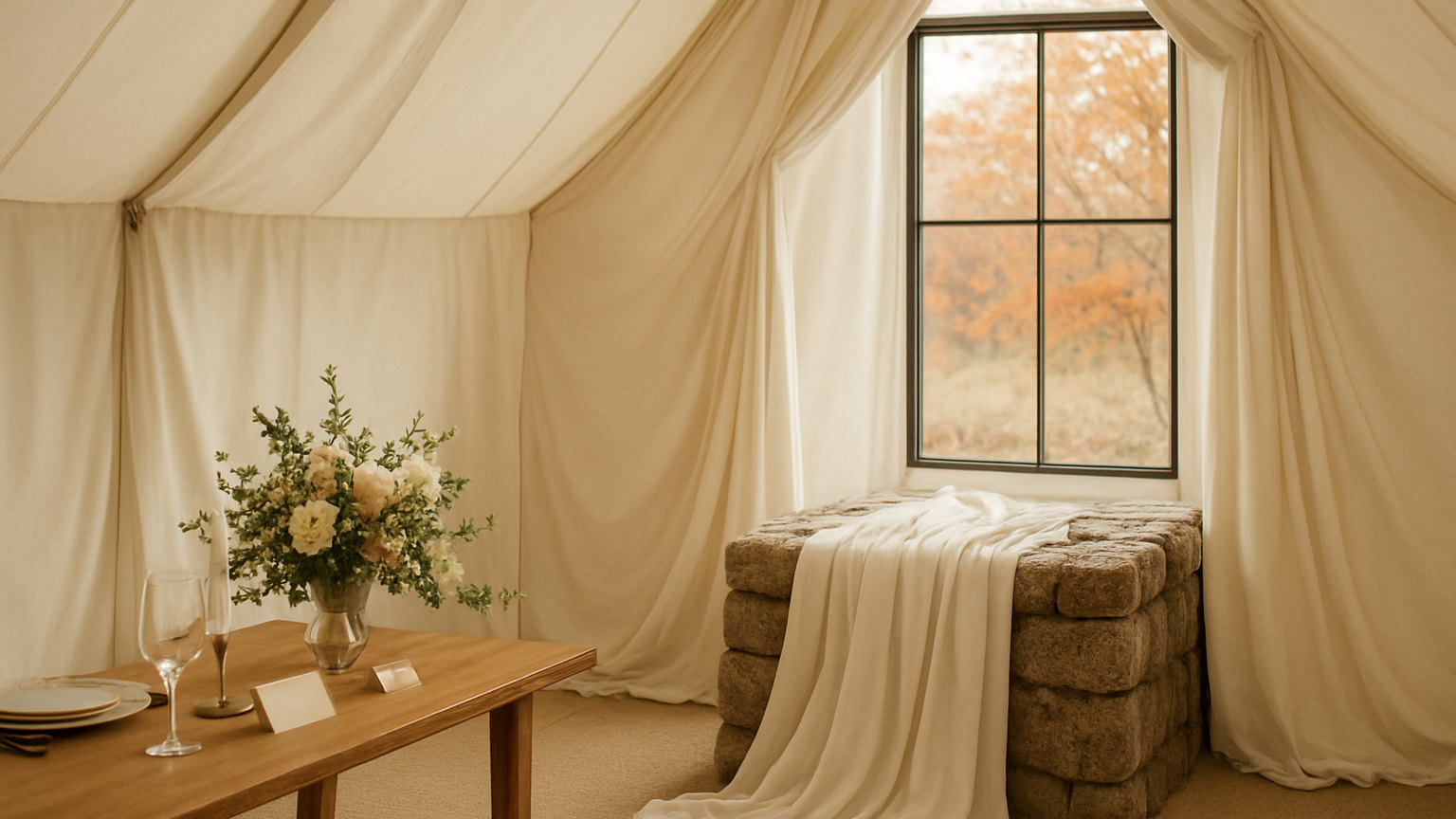
Styling that looks good standing in a room and styling that photographs well overlap and are not identical. A few decisions matter far more to the camera than to the eye, and photographers have strong views about all of them.
What matters most to a camera?
Light, and by a wide margin. Warm, even, reasonably low light produces good photographs. Bright overhead lighting produces flat images and harsh shadows, and coloured lighting produces skin tones nobody wants.
If you change one thing for the photographs, change the lighting rather than adding decoration.
What about backgrounds?
Every photograph has one, and the room provides it whether or not anybody planned it. A backdrop behind the ceremony and the top table is the highest value styling for photographs.
Look at what is behind the places people will stand. A fire exit, a service door or a stack of chairs will appear in a great many images.
Do details get photographed?
Yes, and it is worth knowing which. Photographers commonly shoot the room before guests enter, capturing the tables, the stationery and the styling as a set.
That requires the room to be finished early, so build fifteen minutes of empty room into the schedule before doors open.
What photographs badly?
Anything reflective under direct light, strong coloured uplighting, mismatched linen, and cluttered tables where the centrepiece competes with glasses and menus.
Very tall centrepieces block guests in wider shots, and very small ones disappear entirely. Something at either extreme rather than in between generally works better than a middling height.
What about the dance floor?
It is where the evening images come from, so lighting it matters. A dark dance floor produces very few usable photographs regardless of what the band is doing.
Ask the photographer what they need. Most will accept whatever is there and a few will ask for something specific, and it costs nothing to accommodate at the planning stage.
Should you style for the camera or the room?
For the room, with the camera in mind. A wedding styled entirely for photographs frequently feels staged to the people in it, which is the wrong trade.
The overlap is large. Good light, a clear focal point and uncluttered surfaces serve both.
What should you tell the photographer?
What lighting you are hiring, where the backdrop is, what the layout looks like and what time the room will be finished.
Send the floor plan. It answers questions they would otherwise ask and lets them plan where to shoot before arriving.
What do photographers ask for most?
The overhead lights dimmed, the room finished early enough to shoot, and something behind the top table. Those three come up repeatedly and all three are free or cheap.
Ask yours directly what they would change about your plan. They have shot several hundred weddings and the answer takes two minutes.
What is not worth doing for photographs?
Anything replicating a styled shoot, which was lit by a team in an empty room over several hours. Those images are advertisements rather than weddings.
Style the room you have for the people in it, light it properly, and the photographs follow. That is what every experienced photographer will tell you if asked.
When should the room be finished?
Fifteen minutes before doors open, so the photographer can shoot it empty. Those images are how the styling is recorded and they cannot be taken once guests are in.
Put it on the running order as a slot rather than an intention, since it is the first thing to disappear when setup runs late.
What should you ask the photographer?
What they would change about your plan. Two minutes of their experience across several hundred weddings is worth more than any amount of research.
Does the styling need to match the photographs you like?
No, and chasing images from styled shoots is the most common way to overspend. Those rooms were lit by a team over several hours with nobody in them.


