
Every venue with grounds says it has a wet weather plan and very few couples ask to see it. In a country where rain is likely on any given day, this is the single most useful question at a summer viewing.
What does asking to see it actually mean?
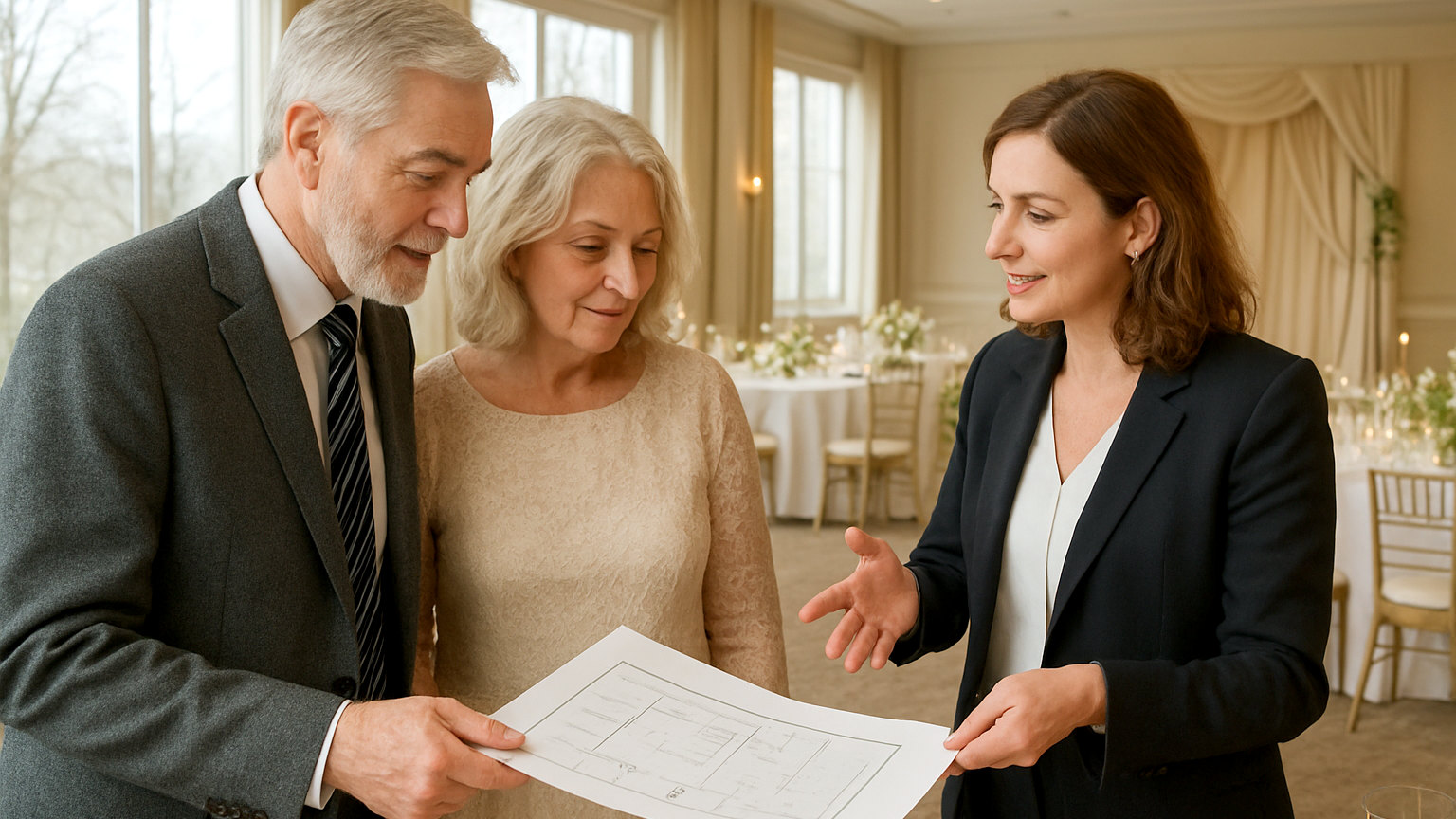
Standing in the alternative space with your guest number in mind, rather than being told it will be fine. A plan you have stood in is a plan and a description is not.
Ask to be shown the ceremony alternative, the drinks reception alternative and where photographs would happen. Those are three separate spaces and three separate questions.
What is the capacity problem?
A room that comfortably holds a hundred guests who can spill outside does not comfortably hold a hundred who cannot. That is the failure most commonly discovered on the day.
Ask what the indoor capacity is for a standing reception with everybody inside. It is frequently lower than the seated dining capacity you were quoted.
Who decides and when?
The most important question and the one almost nobody asks. Ask who makes the call, by what time, and on what basis.
Without that arrangement, somebody makes the decision under pressure on the morning, usually while getting ready. It is the most avoidable stress in any outdoor wedding.
How long does the changeover take?
Ask how long the venue needs to move a ceremony indoors. If it is an hour, the decision has to be made an hour and a half before, which fixes the deadline.
Ask whether the room can be set up both ways simultaneously. Some venues can and it removes the deadline entirely, which is worth knowing.
What happens to the schedule?
Ask whether the running order changes. An indoor ceremony followed by a turnaround in the same room is a different afternoon from an outdoor ceremony with the room already laid.
Establish which rooms are used in each version. Photographers and florists need this too, since it changes where they work.
What about partial weather?
Ask what happens with drizzle, wind or cold rather than only heavy rain. Those are the more common conditions and the more difficult decisions.
Ask whether the venue has umbrellas, whether there is covered outdoor space, and whether heaters are available and at what cost. A drinks reception under cover is frequently the middle option nobody planned for.
What can be hired?
Ask whether the venue permits a marquee or covered walkway as a contingency and what notice would be required. Some allow it and some do not.
Booking one on standby is expensive and occasionally worth it for an entirely outdoor wedding. Ask what the cancellation terms would be.
Should this affect the venue choice?
If any part of the day is outdoors, yes, and substantially. A venue with a genuine indoor alternative is worth more than one with better grounds and nowhere to put your guests.
Between two otherwise equal venues, this is a reasonable tiebreaker, because it is the thing most likely to actually happen.
What should you agree in advance?
The decision maker, the deadline, the alternative spaces and who tells the suppliers. Write it into the running order rather than leaving it as an understanding.
Then tell the photographer, the florist and the coordinator what the wet version looks like. All three plan differently for it and none of them can if they have not been told.
What should you tell your suppliers?
What the wet version looks like and where each part of the day would happen. Photographers, florists and coordinators all plan differently for it and none of them can if they have not been told.
Should it change the venue choice?
If any part of the day is outdoors, yes. Between two otherwise equal venues, the one with a genuine indoor alternative is worth more than the one with better grounds, because rain is the more likely outcome.


