
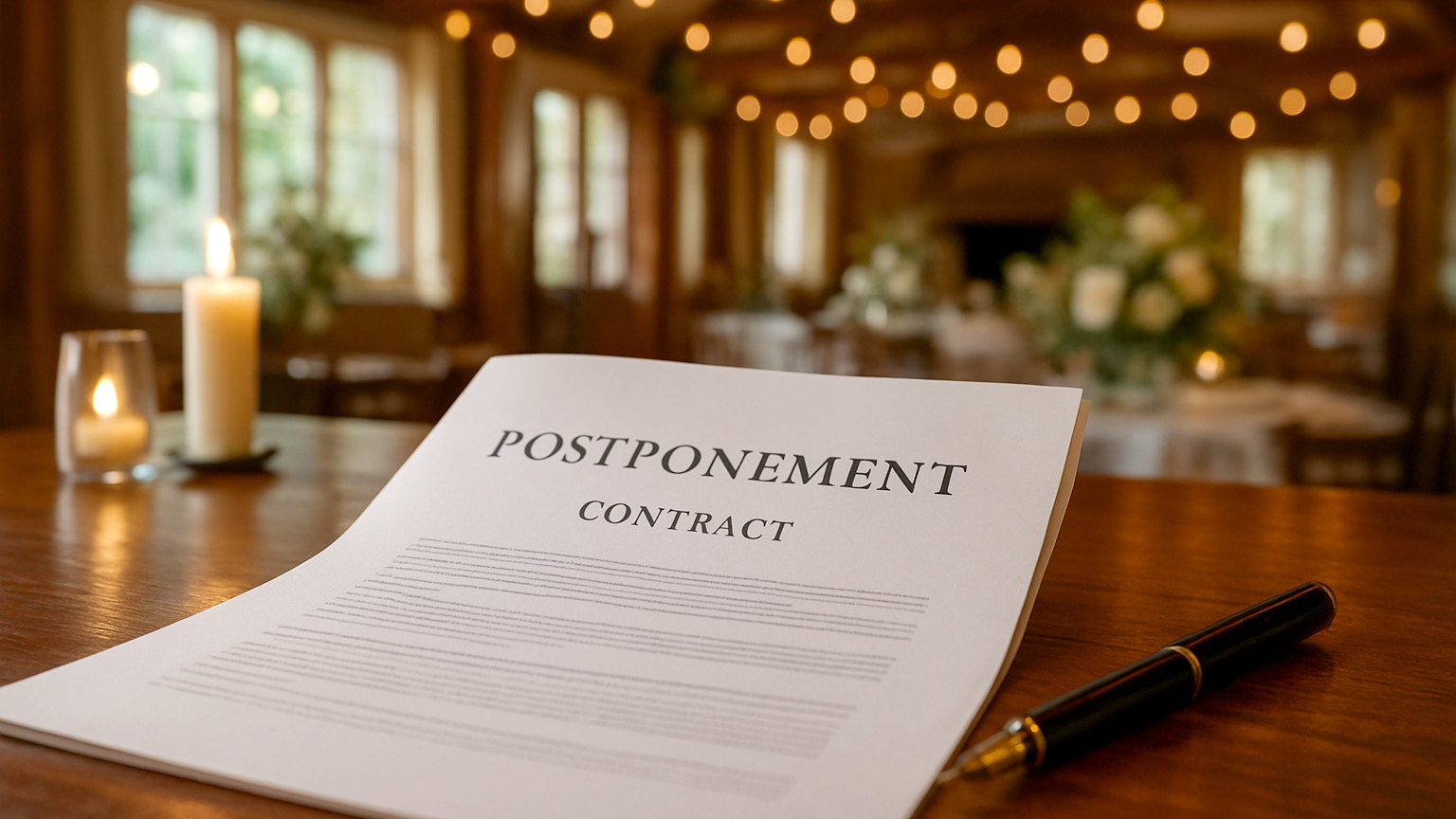
Postponement clauses became standard in wedding contracts after a period when a great many weddings had to move. Most venues now address a date change separately from a cancellation, and the difference between the two clauses can be thousands of pounds.
What does a postponement clause usually allow?
A change of date subject to availability, with the deposit and payments transferring to the new booking. Many require a minimum period of notice and some limit how many times a date may move.
The underlying principle is that the venue keeps the booking rather than losing it, which is why the terms are far gentler than cancellation.
What should you look for?
Four things. Whether payments transfer, how much notice is required, whether a fee applies, and whether a price difference is charged if the new date falls in a different season.
That last one matters most in practice. Moving a February date to July at a venue that prices seasonally can add a substantial sum, and the clause should say whether it will.
What if the contract is silent?
Then a date change will generally be treated as a cancellation and a new booking, which means the cancellation scale applies and the deposit is lost.
Ask for a postponement clause to be added before signing. It costs the venue nothing while the date is far away and it is the term most likely to be needed.
Does the reason matter?
To the contract, usually not. To the venue in practice, frequently yes, since a couple postponing for a serious reason with generous notice is treated differently from one changing their mind.
To your insurer it matters a great deal, since rearrangement cover applies only for the reasons the policy names.
How much notice is usually required?
It varies and the shape is consistent. Generous notice generally means a straightforward transfer, and a request in the final weeks is much more likely to be treated as a cancellation.
If a postponement is even possible, start the conversation early rather than waiting to be certain. Venues respond far better to being warned than to being informed.
What happens to the suppliers?
Each has their own contract and their own clause, so the venue agreeing does not mean everybody else can. Suppliers unavailable on the new date are effectively cancellations.
Contact the venue and the registrar first, since those two determine what is possible, then work through the rest once a date exists.
Does insurance cover it?
Most wedding policies include rearrangement cover for the same reasons that trigger cancellation cover, paying the additional costs of moving rather than the wedding twice.
Notify the insurer before agreeing a new date, since what they will cover may influence which date is workable. Limits for this section are frequently lower than the cancellation limit.
What should you put in writing?
Everything, and use the word postponement rather than cancellation if that is what you mean. The two trigger different clauses and correspondence is what determines which applies.
Get the new date, the transferred payments and any price difference confirmed in a written variation rather than an email exchange that trails off.
What should you check before signing?
Whether the clause exists, what it permits, and what a seasonal move would cost. Three questions before the deposit, and considerably harder to raise afterwards.
Nothing here is legal advice. Citizens Advice is free and handles this kind of question, and a solicitor is worth an hour where the venue figure is large.
How many times can a date move?
Some contracts limit it to one change and others are silent. Ask, since a booking that has already moved once may have no flexibility left if circumstances change again.
Where a limit exists, that is worth knowing before using the flexibility for a reason that could have been handled another way.
Read the clause when you sign rather than when you need it. Couples who know what their contract permits handle a postponement calmly, and couples who find out under pressure rarely do.


