
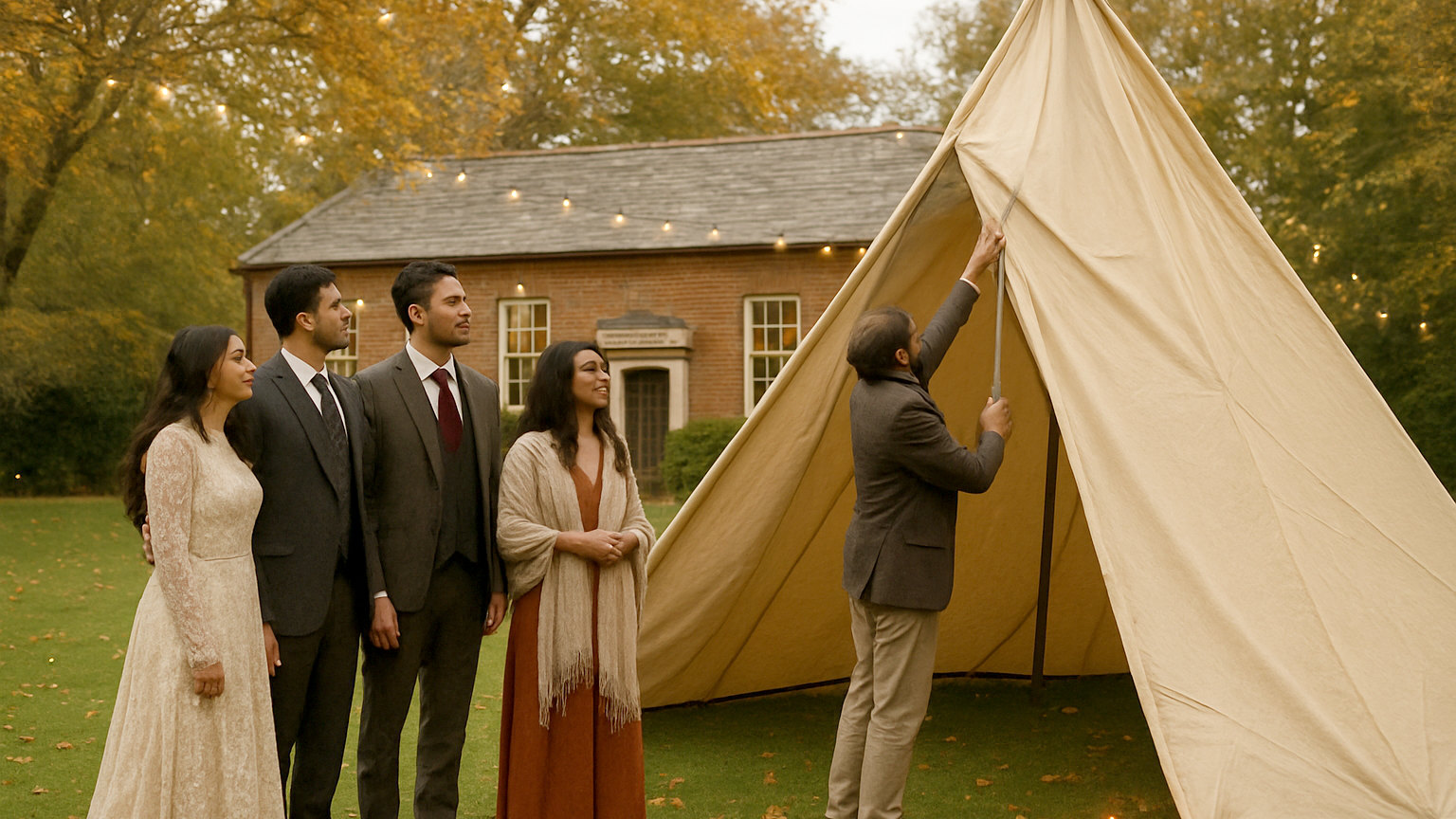
A venue viewed on a bright June afternoon is a different place from the same venue on a grey February morning. Since you are booking one specific date, seeing the space in conditions resembling that date is worth arranging deliberately.
What time of day should you visit?
The time your wedding will actually happen. If the ceremony is at one and the meal at five, seeing the rooms at those times shows you the light you will have.
Ask for it specifically. Venues usually accommodate this and rarely offer it, because their default viewing slots are arranged around their own convenience.
Does the season matter?
Considerably, and it is where couples are most often misled. A venue with grounds is transformed in summer and can look very ordinary in winter, and the reverse is true of somewhere with good interiors.
If you are marrying in December, ask to view in winter or at least ask for photographs from a winter wedding there. The gap between a venue in season and out of it is substantial.
What should you check about the light?
Which direction the main rooms face and when they lose the sun. A ceremony room facing north is a very different photographic proposition from one facing west.
Check sunset for your date and ask where photographs happen when the light has gone. Winter weddings in particular need this answered before booking rather than afterwards.
Is it worth seeing a wedding set up?
Enormously, and open days exist for exactly this. Seeing a room dressed with tables laid gives you a far better sense of capacity and atmosphere than an empty space ever will.
Many venues run open evenings a few times a year. It is worth waiting a few weeks for one rather than viewing an empty room, particularly if you are struggling to picture the space.
Should you visit twice?
For your final one or two, yes. A second visit at a different time of day, ideally with a different person, catches things the first visit missed.
The second viewing is also where the practical questions get asked. The first is largely about whether you like it, and those are different conversations.
What about weather?
Deliberately visit on a bad day if you can. Every venue looks good in sunshine and the useful information is what happens when it rains.
Ask to see the wet weather plan in the actual space rather than being told about it. A room that holds a hundred guests who can spill outside does not hold a hundred who cannot.
When in the planning should you view?
Once you have availability, capacity and a full quote confirmed by email, and not before. Viewing venues you cannot afford or that are unavailable wastes the most limited resource in a venue search, which is your attention.
Aim to view a shortlist of three to five within a fortnight, so the comparisons are fresh rather than spread across three months.
What should you do afterwards?
Write notes immediately, in the car, before the next viewing. Include the things that struck you as problems as well as what you liked.
Photograph the unglamorous parts too, which is where the useful detail lives. The car park, the toilets, the room where you would get ready and the space guests would stand in if it rained.
Should you view when a wedding is on?
Venues will not usually allow it, and an open day is the closest equivalent. If a venue offers one, wait for it rather than viewing an empty room.
Failing that, ask for photographs from a real wedding at your guest number rather than the styled images on the website. The difference is instructive.
What if you can only view once?
Go at the time of day your ceremony would be, and ask for photographs of the venue in your season and at your guest number. Those two together cover most of what a second visit would have told you.


