
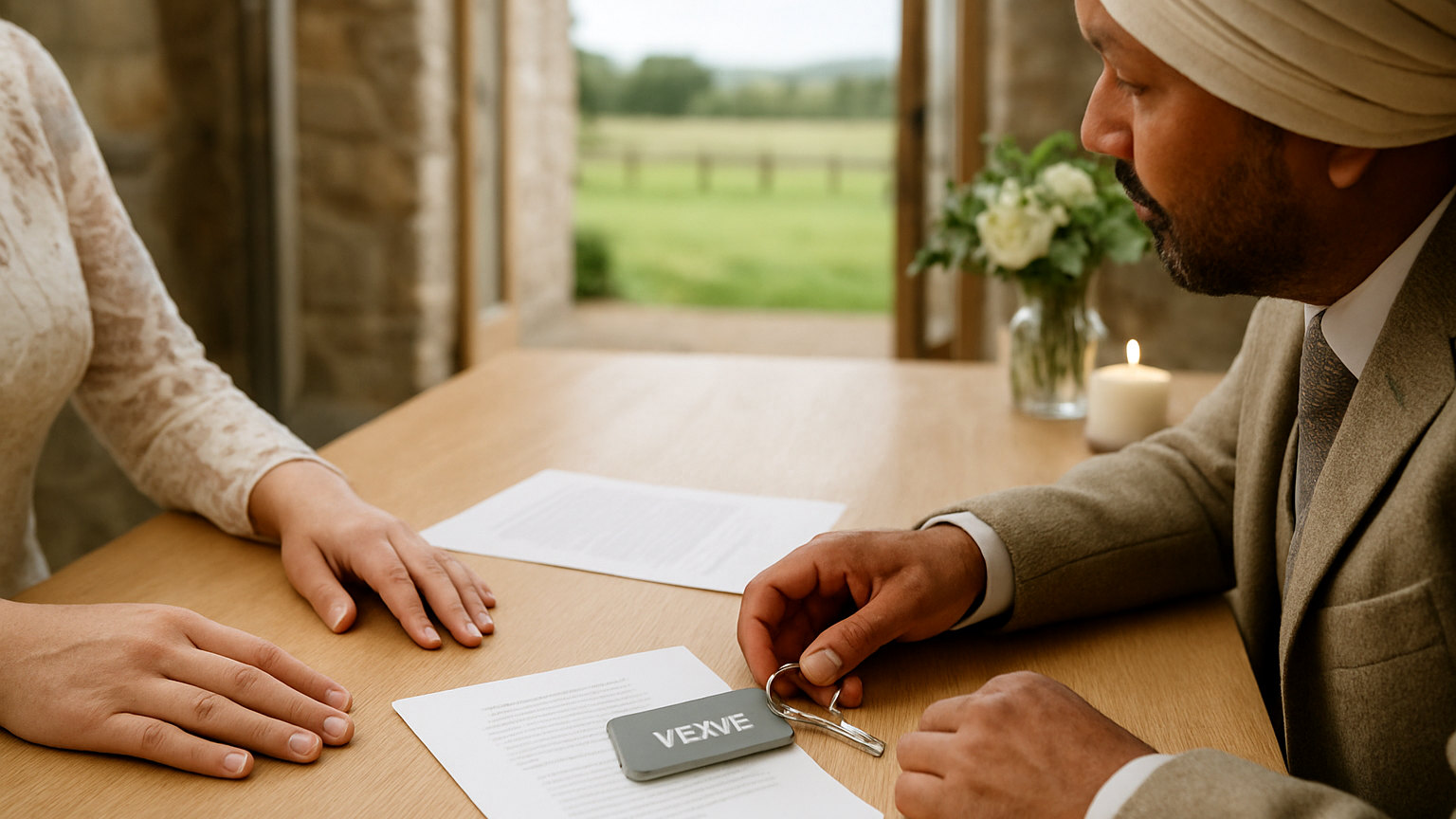
The week after a venue is booked is when several useful things should happen, and usually nothing does. A few steps taken immediately prevent most of what surfaces later.
What comes first?
Confirm the registrar or officiant for the exact date and time if you have not already. A venue booking without one is not a wedding date.
In busy districts the registrar for a specific slot is scarcer than the room, so this is genuinely urgent.
What should you confirm in writing?
Everything you were told at the viewing. Access times, what is included, the exclusions, the sound limiter, the decoration rules and anything promised.
Send one email asking them to confirm it back. Verbal assurances are not terms and staff change over a long engagement.
What about insurance?
Arrange it now rather than later. Policies generally exclude anything already known about, so cover taken out after a problem appears will not address it.
Check the liability level against whatever the venue requires you to hold.
How should the deposit be paid?
By credit card where the venue accepts it and the amount qualifies, then cleared immediately from your wedding account.
If a transfer is the only option, verify the account details by phone using a number you found independently.
What should you record?
The contract, the payment schedule with dates, the venue contact and every confirmation, all in one place outside your email.
Put each payment date in a calendar with an alert a week ahead. Late payments are almost always missed deadlines rather than cash problems.
What should you book next?
Photography and any evening band, both of which take one wedding a day and both of which book out furthest ahead.
Catering follows immediately where it is separate from the venue.
What should you tell guests?
The date, as soon as it is certain, particularly anybody travelling or needing to arrange leave.
Send save the dates only to people who will definitely be invited to the whole day, since it cannot be withdrawn.
What should you check in the contract?
The cancellation scale, any postponement clause, minimum numbers, whether the price is fixed, and what happens if the venue cannot host.
Raise anything missing now, since after the deposit there is very little leverage to change terms.
What can wait?
Almost everything else. Flowers, stationery, cake, transport and styling can all be left several months.
The urgency is entirely in the scarce suppliers and the paperwork.
What should you do at six months?
Re confirm the booking and ask whether anything has changed. Ownership, management and policies all move over a long engagement.
How long does all this take?
An afternoon. It is the most productive afternoon in the whole of wedding planning and almost nobody spends it.
What should you ask the venue for?
A written summary of everything included, the access times, the full list of additional charges and their preferred supplier list.
Ask for it while they are still pleased to have your booking, which is now rather than in month nine.
What should you tell suppliers?
The venue name and date, since it is the first thing every one of them will ask and it determines their availability.
What is the most urgent item?
The registrar or officiant, since it is the one thing that can make a confirmed venue booking unusable.
What is most often skipped?
Confirming the viewing promises in writing. It takes twenty minutes and it is what makes everything else enforceable.
What should you diarise?
Every payment date with an alert a week ahead, and a six month reminder to re confirm the booking.
One afternoon of admin in the week after signing prevents most of what would otherwise surface in month nine.
What can you then stop thinking about?
Almost everything. Once the date, the officiant and the paperwork are settled, nothing else is urgent for months.


