
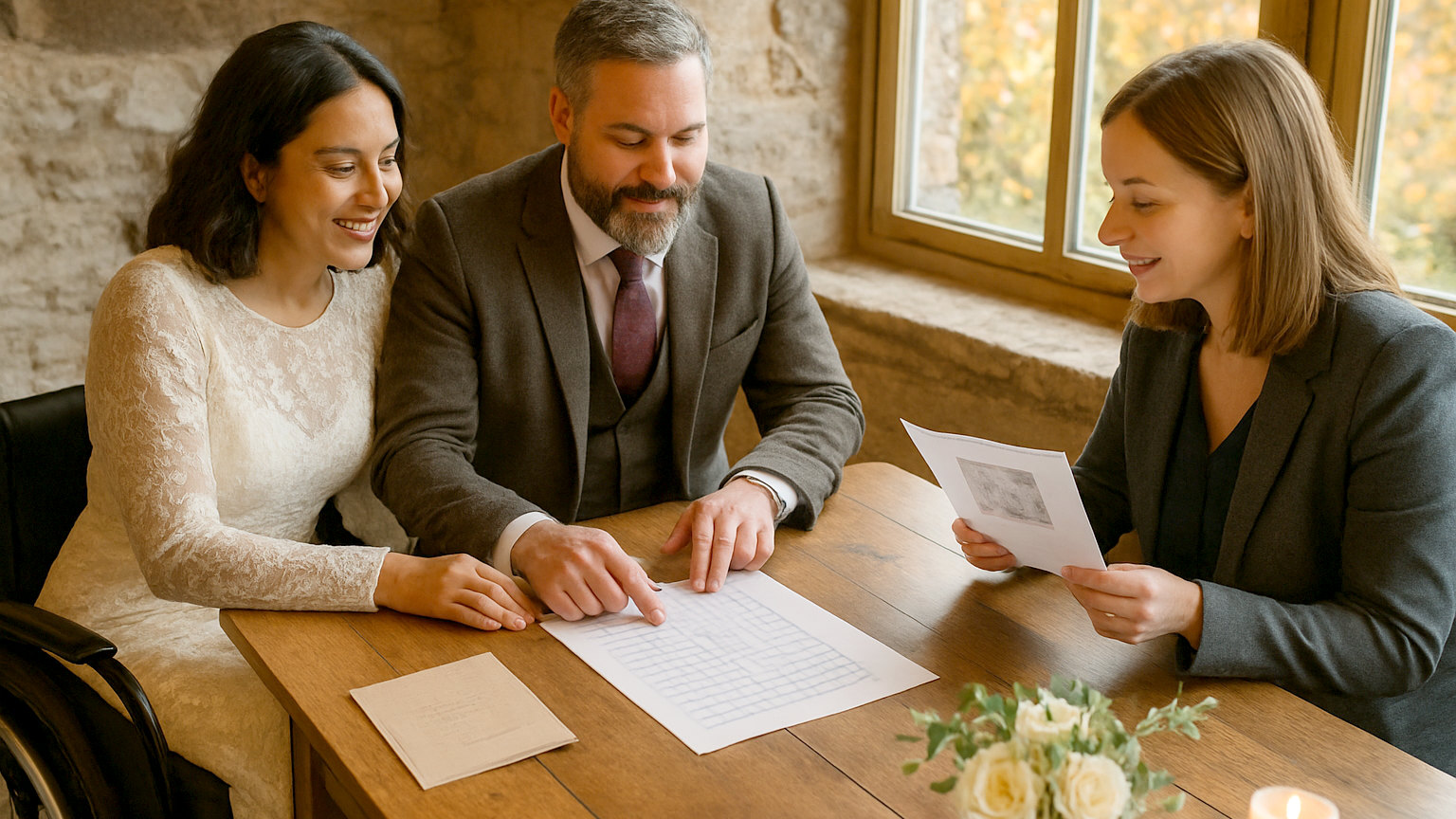
A wedding planned in a few months is entirely possible and the venue search works differently. Availability exists, and it is not spread evenly across the calendar.
Where is the availability?
Weekdays, Sundays, and anywhere outside May to September. Those three between them hold almost all of the short notice availability in the country.
A Tuesday in February is available almost everywhere, and a Saturday in July almost nowhere.
How do you search efficiently?
Reverse the usual order. Ask venues what dates they have free rather than asking about a date you have chosen.
That single change transforms a short notice search, since you are working from availability rather than against it.
What about cancellations?
They happen, and venues rarely advertise them widely. Ask to be told if anything comes up, and check back periodically.
Some venues discount a cancelled date to fill it, which is one of the few situations where asking about price is entirely reasonable.
What is the legal constraint?
Notice of marriage carries a statutory waiting period, so there is a minimum time before you can legally marry.
Check the current period with your register office before booking anything, since it sets the earliest possible date.
What should you check first?
Registrar availability alongside venue availability. In busy districts the registrar is scarcer than the room, particularly at short notice.
A venue confirmed without a registrar is not a date.
Which suppliers are hardest?
Photographers and bands, both of which take one wedding a day. Ask venues for recommendations, since they know who is free.
Everything else is generally findable, and off peak dates make all of it considerably easier.
What about the dress?
An ordered dress takes four to six months, so short notice means sample, second hand, off the peg or hire.
All four are available immediately and all four produce the same result on the day.
What should you drop?
Save the dates, which are pointless at short notice. Send invitations directly and follow up by phone.
Elaborate stationery and anything with a long production time can also go, and none of it is missed.
Does it cost more?
Usually less, since the available dates are the cheaper ones. Off peak and weekday pricing is where the availability is.
Short notice is one of the few situations where the constraint and the saving point the same way.
What are the trade offs?
Fewer guests able to attend, less choice of supplier and less time to deliberate. The last of those is frequently an advantage.
What is the practical approach?
Confirm the legal minimum, ask twenty venues what they have free, take the best date offered and book the officiant the same day.
How wide should you search?
Wider than you otherwise would, since availability rather than preference is driving the search.
Widening the radius by thirty miles typically doubles the number of venues with a free date.
What should the enquiry say?
Guest numbers, budget and a broad date range, with a direct question about what they have available.
Short enquiries with the key facts get faster replies, which matters more at short notice than at any other time.
What is the biggest advantage?
Very little time to second guess anything. Couples who plan quickly frequently report enjoying it more than those who plan for two years.
What should you not compromise on?
Capacity, the wet weather plan and whether the venue is licensed if you want the ceremony there. Everything else is negotiable at speed.
How long does it take?
A fortnight of concentrated enquiries is usually enough, since you are asking a simple question and the answers come quickly.
Ask what is free rather than asking about a date, and check the legal notice period before committing to anything.
Is anything lost?
Choice, mostly, and very little else. A wedding planned in four months looks identical to one planned in two years.


