
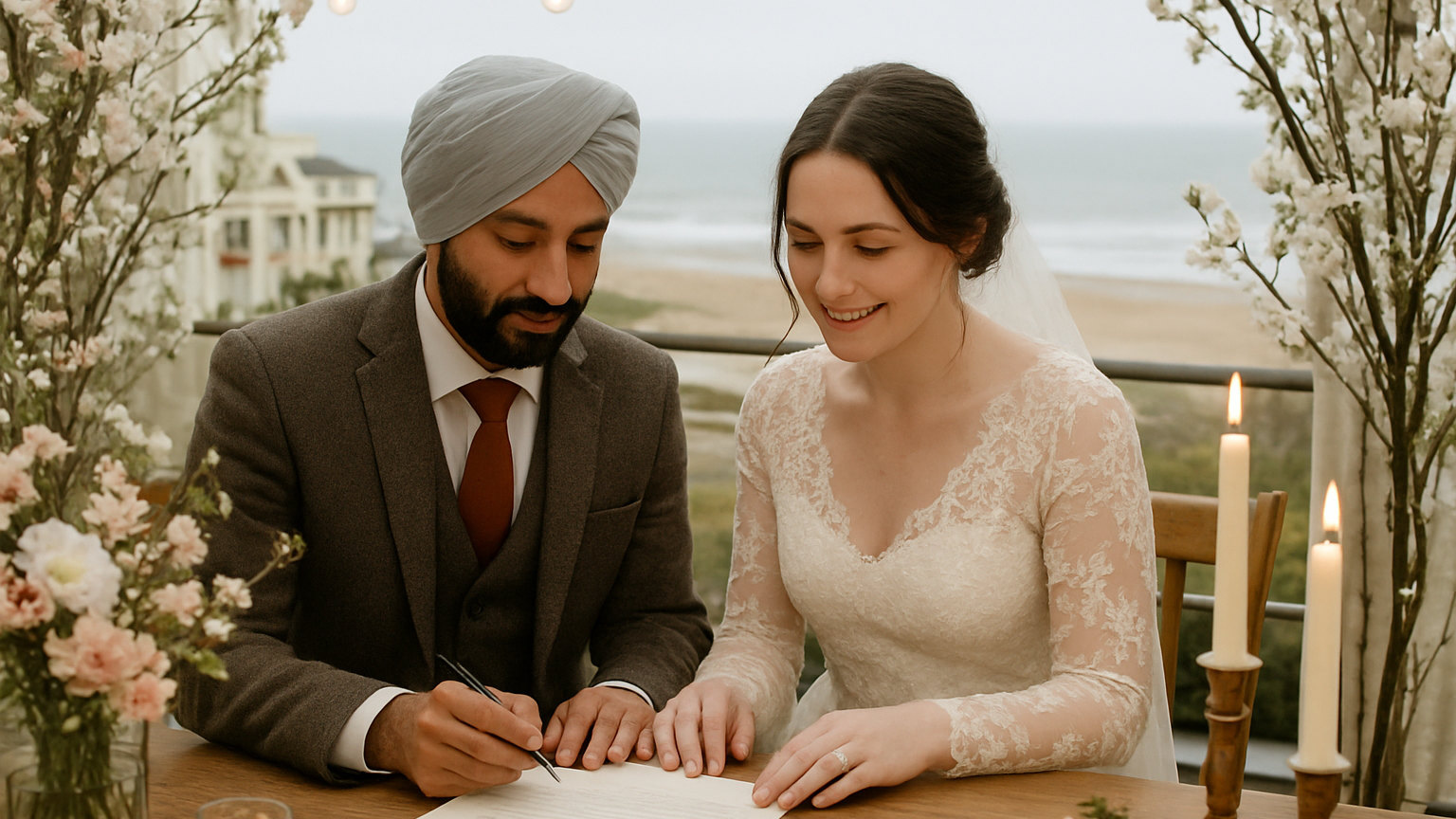
Outdoor weddings and weddings at home are two different questions with two different answers. One is now widely possible in England and Wales, and the other generally requires the legal part to happen somewhere else.
Can the ceremony be outdoors?
At licensed venues in England and Wales, yes. A change in the law extended civil ceremony approval to outdoor areas within the grounds of approved premises, which opened up gardens, terraces and courtyards.
The approval still belongs to the venue and covers specific areas. Ask the venue exactly where outdoor ceremonies may take place and confirm with the local register office.
What about Scotland?
Considerably more flexible, because Scotland licenses the celebrant rather than the building. A legally binding ceremony can take place almost anywhere, which is why outdoor weddings have been normal there for far longer.
Northern Ireland operates its own system again, so check with the relevant registration authority rather than assuming.
Can you marry in your own garden?
Generally not as a legal ceremony in England and Wales, unless the property holds approval, which is uncommon and involves an application by the owner.
What a great many couples do instead is complete the legal ceremony at a register office, usually a short appointment with two witnesses, and hold a celebrant led ceremony and reception at home.
What does a wedding at home involve?
Everything a dry hire venue involves and then some. Catering, drink, tables, chairs, linen, glassware, toilets, power, lighting, parking and somewhere for people to shelter.
Add the practical questions nobody thinks about. Where deliveries go, where suppliers park, who is in the house on the morning, and what happens to the garden afterwards.
What does it cost?
Less than a venue in principle and more than people expect in practice. Marquee hire, generators, toilet hire, catering equipment and staff add up quickly and can approach the cost of a venue.
The saving is real where you already have the space, the parking and reasonable weather cover. It disappears fast where any of those has to be hired.
What about insurance?
Important, and frequently overlooked. Public liability cover matters more at a private property than at a commercial venue, since there is no venue policy sitting behind you.
Check whether your home insurance covers a large event, since many policies do not, and check what any marquee company requires. Wedding insurance commonly offers a marquee extension as a separate section.
What are the practical constraints?
Noise and neighbours, above everything. There is no licence limiting you and there are still environmental health rules and people living nearby, so tell them well in advance and be realistic about the finish time.
Ground conditions are the other. A lawn that takes a marquee, a hundred and fifty people and a week of rain is not the lawn you had in spring.
Is it worth it?
For the right property and the right couple, very much so, and the results can be considerably better than a commercial venue. It is not the cheap option and it is not the easy one.
Budget for help. A coordinator, or at minimum several people with defined jobs, is what separates a home wedding that works from one where the couple spends the morning directing a lorry.
What is the fallback if it rains?
Decided in advance, with somebody nominated to make the call and a time by which it is made. An outdoor ceremony without a wet weather plan is the most avoidable stress in any summer wedding.
Ask the venue where the indoor version happens and stand in that space. The plan is only real if you have seen it.
Who should you tell in advance?
Neighbours, well before the day, and the local authority if amplified music or a bar is involved. A conversation months ahead prevents almost every complaint that would otherwise arrive on the evening itself.
Whatever the format, get the legal position confirmed before any money is committed. It is the one part of a wedding that can stop the day happening rather than merely making it less good.


