
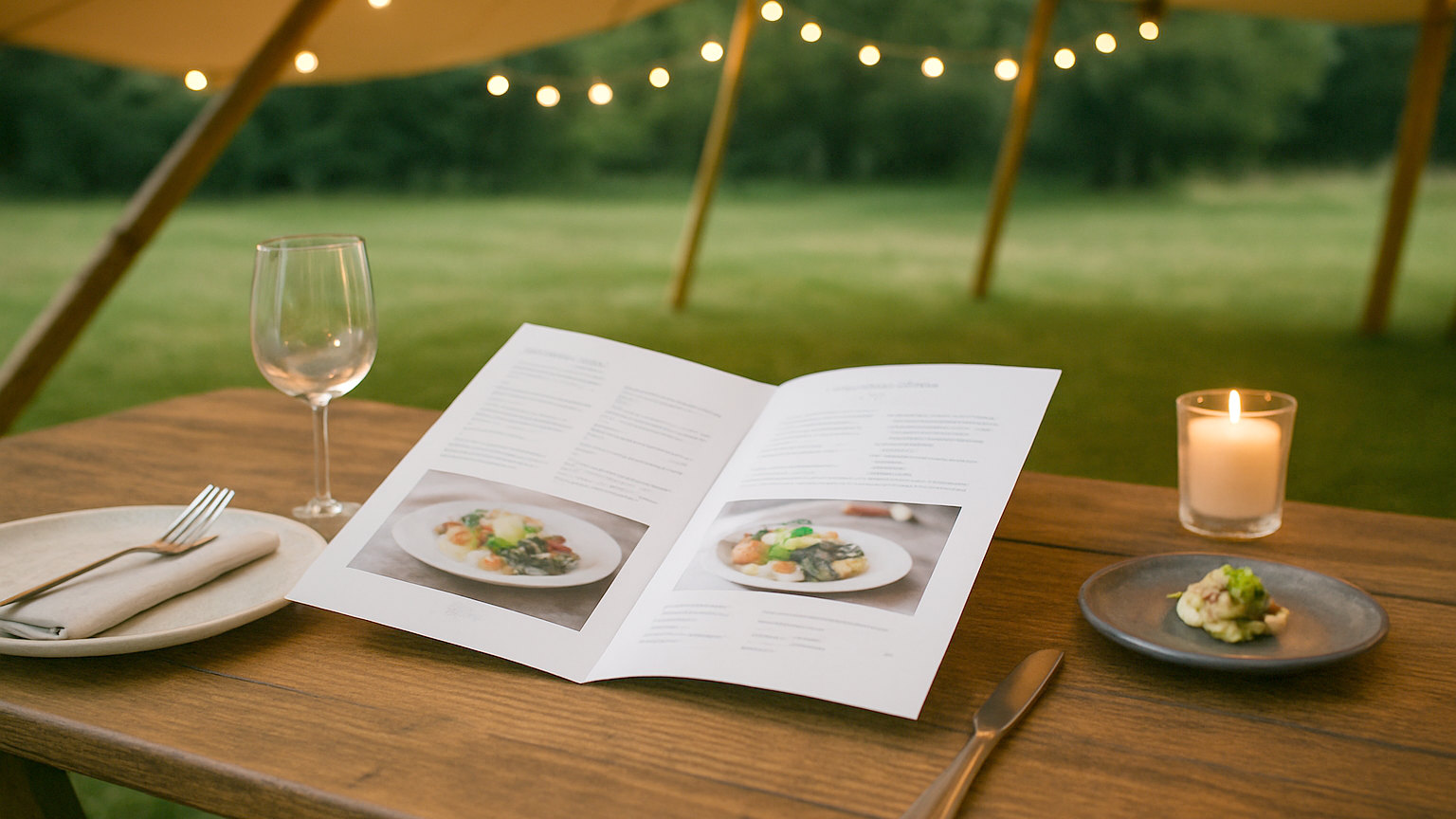
Catering is the largest per head cost at almost every wedding and the hardest element to compare between venues, because the same figure buys quite different food and quite different service depending on where it is quoted.
What should you compare on?
Total cost per head with everything added, which means the menu price plus service charge plus VAT plus any staffing charged separately.
Two venues quoting sixty five and eighty pounds a head frequently end up within a few pounds of each other once those are included, and occasionally reverse.
What does the number of staff tell you?
More than the menu does, in practice. Staffing determines how long service takes, and a meal that runs forty minutes long comes out of your evening.
Ask how many staff work a wedding of your size and how long service typically takes. A venue that answers precisely has thought about it.
What is an exclusive caterer?
An arrangement where the venue requires you to use one particular caterer or its own kitchen. It removes your ability to get comparable quotes for the largest per head cost in the wedding.
That is not automatically bad, since some exclusive caterers are excellent value. It does mean you should price the catering carefully before committing to the room.
How do approved lists compare?
Better, since a list of three or four caterers still allows comparison. Ask whether you may use somebody not on the list and what conditions apply.
Some venues charge a fee for an outside caterer, which should go into the comparison as a cost of that venue rather than being treated separately.
What should the menu comparison cover?
Number of courses, number of choices, whether upgrades cost extra, and how dietary requirements are handled and charged.
Canapes are frequently quoted separately and are worth including, since a drinks reception without food is a genuine problem rather than an economy.
What about children and suppliers?
Both are charged and both are frequently missed in a comparison. Children are commonly billed at a reduced rate and sometimes at full price.
Supplier meals go into the headcount too. A photographer, videographer, assistant and five piece band is nine additional covers at each venue.
How does format affect the price?
Substantially. A long lunch costs less than a formal dinner, sharing platters less than plated service, and a barbecue or hog roast at £15 to £40 per head far less than either.
Ask each venue what formats they offer, since a venue that only does plated dinners is more expensive than one that will do a relaxed lunch, whatever the headline figures say.
Should you have a tasting?
Where it is offered, yes, and ask whether it is charged. A tasting is where portion size and quality become real rather than described.
Ask to taste the actual menu you would serve rather than a showcase selection. Those are not always the same thing.
What is the practical method?
Take each venue, add every catering element for your exact numbers, and produce one figure per head. Then compare that against the staffing level and the format offered.
Evening food belongs in the same calculation at £8 to £20 per head, since numbers there are usually higher than the meal and it is routinely left out of a first comparison entirely.
What about drinks?
Price them alongside the food rather than separately, since venues bundle them differently. A package including a welcome drink, wine with the meal and a toast is quite different from a menu price with drinks charged on top.
Use the same consumption assumption at every venue, which for most weddings is two to three drinks across the reception plus wine with the meal.
What tells you most about a kitchen?
Whether they will let you taste the actual menu, and how they answer a question about dietary requirements. Both reveal more than a sample menu does.


