
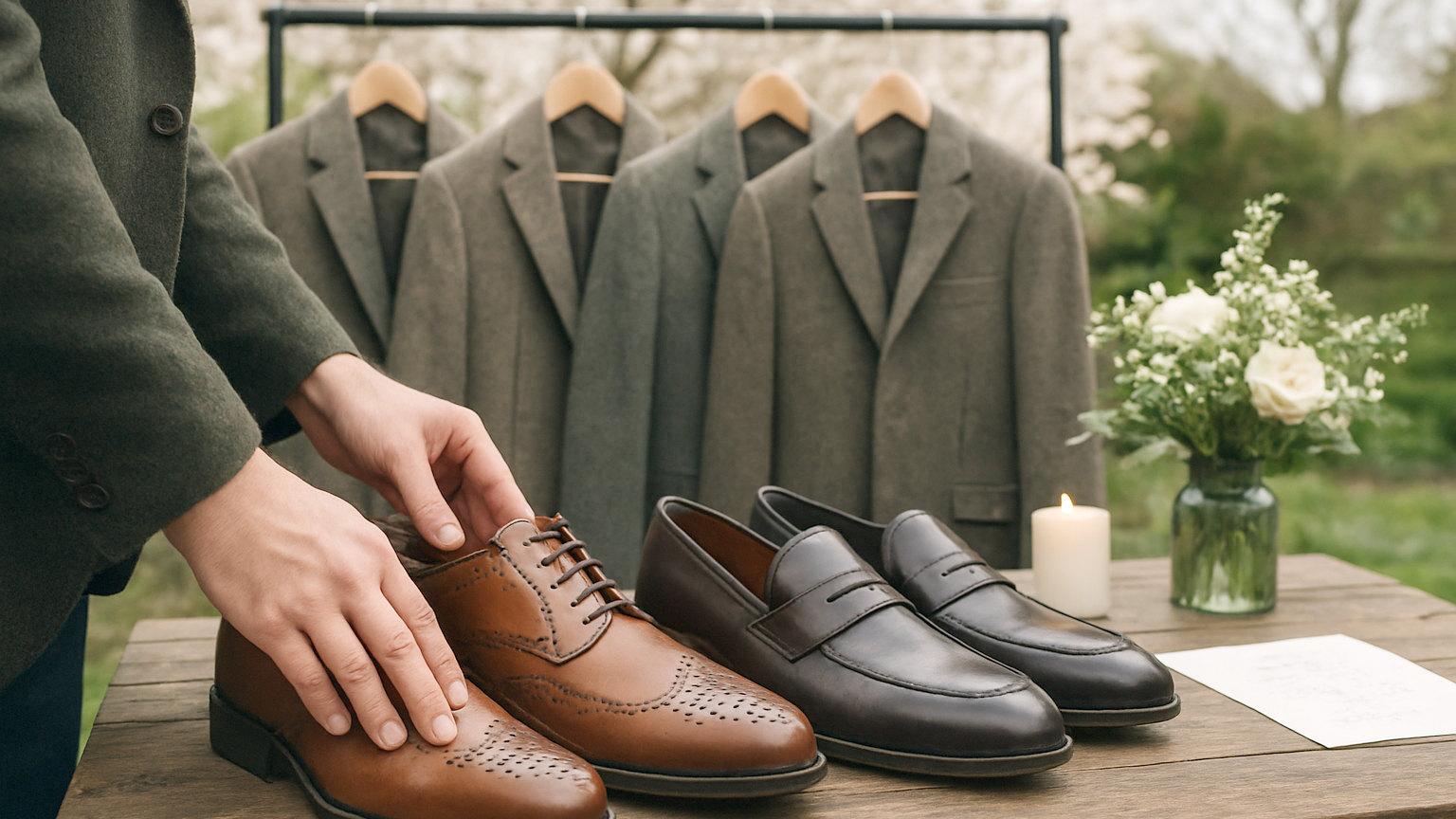
Shoes set the formality of an outfit more than most people realise, and they determine whether you are comfortable at eleven at night. Both matter and only one of them is visible in photographs.
What is the most formal shoe?
A plain black Oxford, which has closed lacing and no decoration. It is correct at any wedding including the most formal, and it is what morning dress requires.
A Derby has open lacing and is slightly less formal, and it suits a lounge suit perfectly well.
What about brogues?
Decorative perforation makes a shoe less formal, so a full brogue is casual, a semi brogue is middling and a plain toe is most formal.
Brogues suit tweed, country and relaxed weddings very well. They look slightly informal with morning dress.
What colour?
Black with a very formal outfit or a black suit. Dark brown or oxblood with navy or grey, both of which look considerably better than black in daylight photographs.
Tan works with lighter summer suits and reads distinctly informal, which is correct for a garden or beach wedding.
Do they need to be new?
They need to be comfortable, which usually means not new. A shoe worn for the first time at a wedding is a well known way to spend the evening in socks.
Wear them in for several evenings beforehand, with the socks you will actually wear.
What about the ground?
Check the venue. Grass, gravel and outdoor stairs are hard on leather soles, and a rubber soled shoe grips considerably better on wet ground.
If the wedding is outdoors and the ground is likely to be wet, this is worth thinking about rather than discovering during the photographs.
What about the soles?
New leather soles are slippery on polished floors and dance floors. Scuffing them with sandpaper takes five minutes and prevents a fall.
It is a small thing and it comes up repeatedly in accounts of what people wish they had done.
What socks?
Long enough that no leg shows when seated, which is the most common error and is visible in every photograph of the top table.
Colour matched to the trousers rather than the shoes is the conventional approach. Novelty socks are common at weddings and are a matter of taste.
Should the wedding party match?
Specify a colour rather than a shoe. Dark brown or black across the party is enough, and letting people wear their own is kinder and cheaper.
Feet differ and a shoe that suits one person is uncomfortable for another, which matters over a twelve hour day.
How should they be prepared?
Cleaned and polished properly a few days before, not on the morning. Polish needs time to dry and buff, and doing it in a hurry produces marks on trousers.
Take a cloth in the emergency kit. Outdoor photographs and grass do a great deal to a pair of shoes in twenty minutes.
Is a second pair worth it?
For the evening, some grooms do and it is entirely reasonable. Anything comfortable that will not damage a dance floor works.
Put them somewhere accessible and tell somebody where. Comfort at eleven at night matters more than anything the camera will record by then.
What is the safe choice?
A dark brown or black Oxford or Derby, plain or semi brogue, worn in and polished. It suits every suit colour and every level of formality below morning dress.
Spend on comfort rather than appearance. Shoes are barely visible in photographs and entirely present in your experience of the day.
What should be in the kit?
A cloth, plasters and a spare pair of socks. All three take no space and all three get used at a substantial proportion of weddings.
When should you buy them?
Early enough to wear them in, which means at least a month before rather than the final fortnight.
Get them early, wear them in, and scuff the soles. Three small steps that between them prevent almost every shoe problem at a wedding.


