
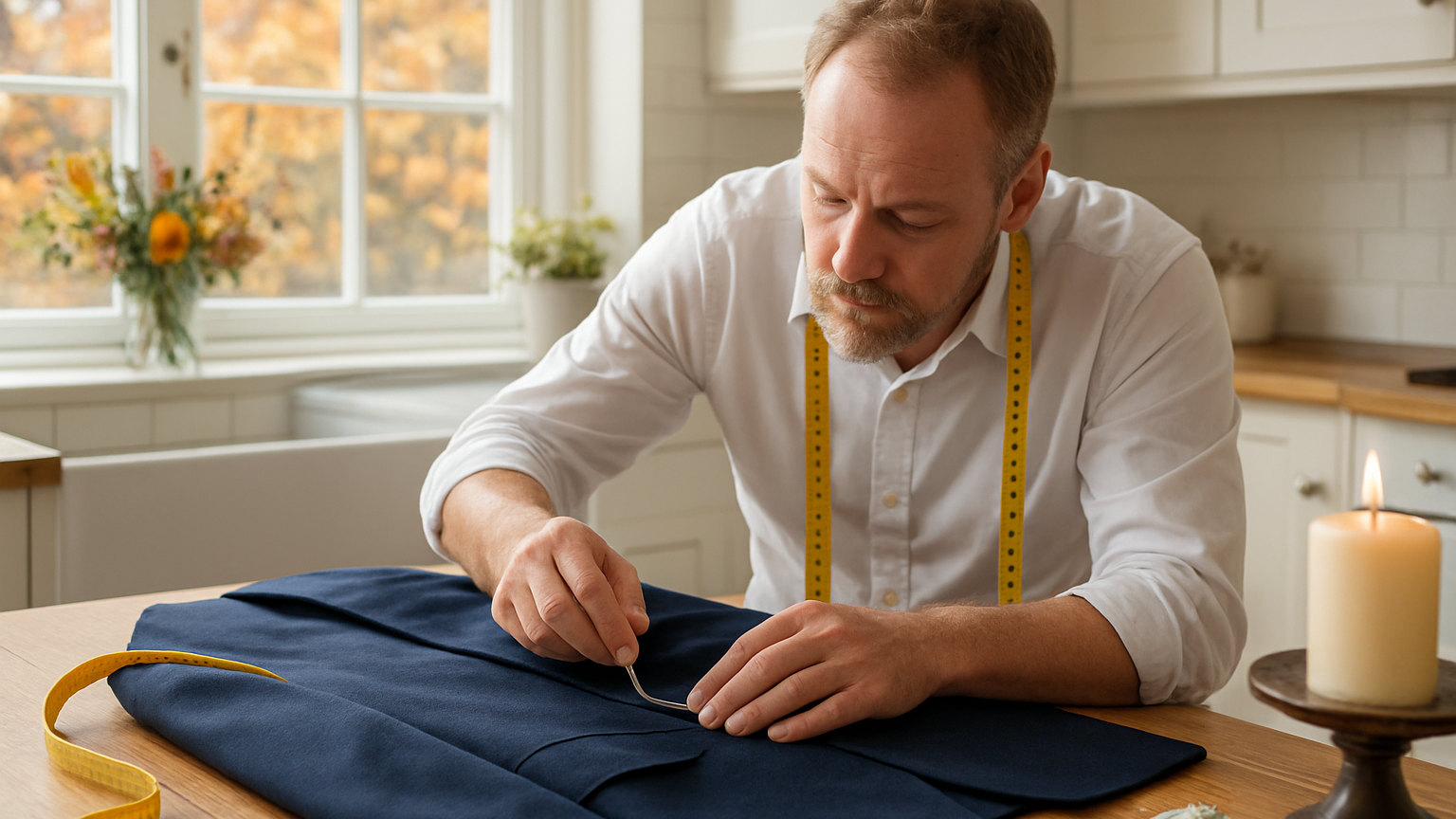
Almost no off the peg suit fits properly untouched, and the alterations are inexpensive relative to what they achieve. It is the cheapest improvement available in the whole wedding wardrobe and the one most often skipped.
What is almost always needed?
Trouser length and sleeve length. Both are standard, both are quick, and both are visible in every photograph if they are wrong.
Trouser waist and taper are close behind, since off the peg trousers are cut generously and rarely sit correctly untouched.
What can be adjusted on a jacket?
Sleeve length, waist suppression to bring the body in, and sometimes the jacket length depending on the construction and the pockets.
Sleeve length is best altered at the shoulder rather than the cuff on a jacket with working buttonholes, which costs more and is worth asking about.
What cannot be altered?
The shoulders, which is why the shoulder fit is the first thing to check and the one thing to choose the suit on.
The overall chest size cannot be increased meaningfully, and the jacket length can only be shortened a little before the pockets sit wrong.
What about the waistcoat?
The back strap adjusts, and the body can be taken in. It should cover the waistband completely with no shirt showing, which is the most common three piece fit error.
Take the shirt and trousers to the fitting so the whole thing is checked together.
Who does the work?
The shop where you bought it, an independent tailor or an alterations specialist. All three are common and prices vary considerably.
An independent tailor is frequently better and cheaper than a chain, and worth finding if the suit matters to you.
What does it cost?
A modest sum relative to the suit for standard work, and more for anything structural. It is inexpensive enough that skipping it is never the right economy.
A three hundred pound suit properly altered photographs better than a thousand pound suit that has not been touched, every time.
When should it happen?
Four to six weeks out, which is late enough to be accurate and early enough to correct anything. Allow one to three weeks for the work itself.
Tailors are busiest in summer, so book the appointment rather than turning up expecting a quick turnaround.
What should you take?
The shoes you will wear, the shirt, and the waistcoat if there is one. Heel height sets the trouser hem and it cannot be adjusted afterwards.
Sit down at the fitting as well as standing. Trousers that fit standing and not seated make for a long two hour meal.
Do hired suits get altered?
Adjusted rather than tailored, and within limits, since the suit has to go back. Trouser length is usually pinned or taken up temporarily.
That is why hire fit is acceptable rather than sharp, and it is the main practical argument for buying if the fit matters to you.
What should you check on collection?
Try everything on together, in daylight, in front of a full length mirror. Check the sleeve length against the shirt cuff and the trouser break against the shoe.
Do it a fortnight before rather than the night before. Anything wrong can still be fixed, and almost nothing can be fixed on the morning.
What should you ask the tailor?
What they would change, rather than telling them what you want. Somebody who alters suits daily will spot two things in thirty seconds that you would not.
Then ask what is possible and what is not, since the answer depends on the construction of that particular suit rather than on general rules.
What is the return on it?
The largest of any spend in the wedding wardrobe relative to cost. A modest alteration bill changes how a suit looks in every photograph taken all day.
Book the appointment when you buy the suit rather than afterwards, since tailors are busiest in exactly the months when most weddings happen.


