
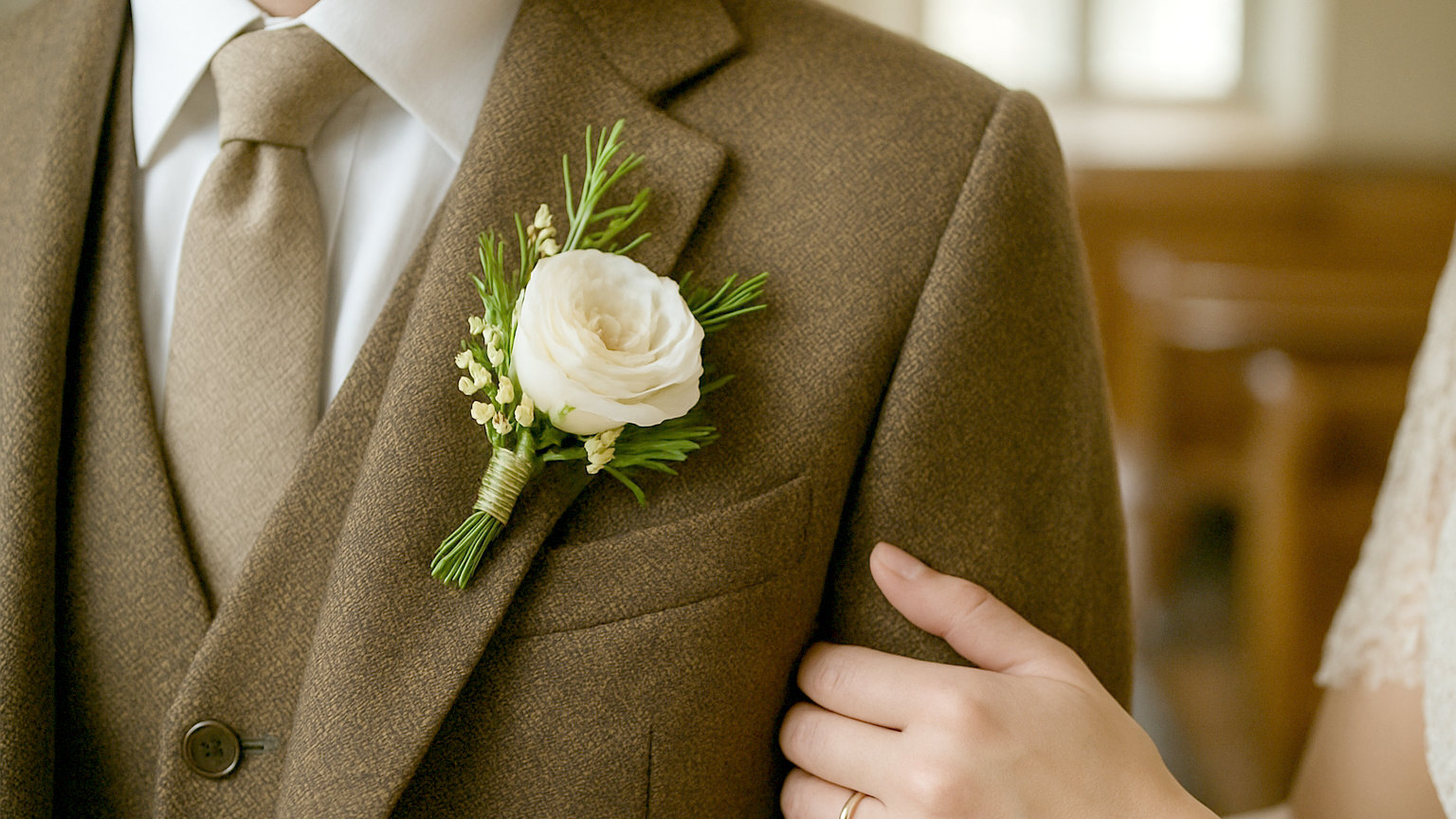
Menswear at a wedding tends to be decided late and quickly, which is why so many grooms end up in something adequate rather than something they like. It is a straightforward set of decisions taken in the right order.
What comes first?
The venue and the season, in that order. A heavy three piece in a marquee in July is uncomfortable, and a linen suit in a cold February church looks and feels wrong.
Those two settle the fabric weight and the formality, which between them rule out most of the market before you have looked at a single suit.
How formal should it be?
Match the venue rather than the tradition. A country house or a cathedral supports morning dress. A barn, a garden or a register office does not, and a suit that outranks the setting looks out of place.
Ask what most weddings there look like. Venues see fifty a year and will tell you honestly.
Buy or hire?
Buy if you will wear it again, which most grooms will if the colour is sensible. Hire if the style is very formal or if you would not otherwise own a suit.
For a groom, buying is frequently better value once you count wearing it afterwards. For five groomsmen who will not, hire usually wins.
What colour?
Navy or grey for most weddings, both of which photograph well, suit almost everybody and are worn again. Beige and lighter tones suit summer and outdoor weddings.
Black is more formal than most weddings require and reads slightly severe in daylight photographs. It is more common at evening weddings than daytime ones.
Two piece or three?
A waistcoat adds formality and warmth and lets you take the jacket off in the evening while still looking dressed. That last point is the practical argument for it.
In high summer, a two piece is more comfortable and entirely appropriate. The waistcoat is a choice rather than a requirement.
What actually matters most?
The fit, by a wide margin. A well fitted suit at three hundred pounds photographs better than a poorly fitted one at a thousand, and the difference is visible in every image.
Budget for alterations whatever route you take. Almost no off the peg suit fits properly without them.
Should it match the wedding party?
It should be distinguishable, which usually means the groom differs slightly rather than substantially. A different tie, a waistcoat where others have none, or a different shade.
Identical outfits across six people photograph flatly and cost more. Coordinating rather than matching looks better and is cheaper.
How does it fit with the dress?
Loosely, and it does not need to match. What matters is that the two sit at a similar level of formality, since a very formal dress with a casual suit reads oddly in photographs.
Agree the formality between you early. That single conversation prevents the most common mismatch.
When should it be sorted?
Around three months out for hire or made to measure, and any time for off the peg. This is one of the genuinely relaxed categories.
What does need deciding early is who is paying for the wedding party outfits, since that affects what you can ask people to buy.
What is the most common mistake?
Leaving it until the final month, which removes made to measure entirely and rushes the alterations. Six weeks is enough and four is tight.
The second is buying a suit that only works at a wedding. A navy or grey suit that fits well is worn for years afterwards, which changes the value calculation considerably.
Who should be involved?
Whoever will be honest. Menswear appointments benefit from one person with an opinion rather than a group, and a shop assistant with nothing to gain from flattery is more useful than either.
What is the simplest brief?
Navy or grey, mid weight wool, single breasted, two or three piece depending on the season, altered to fit. That covers the overwhelming majority of British weddings and is worn for years afterwards.


