
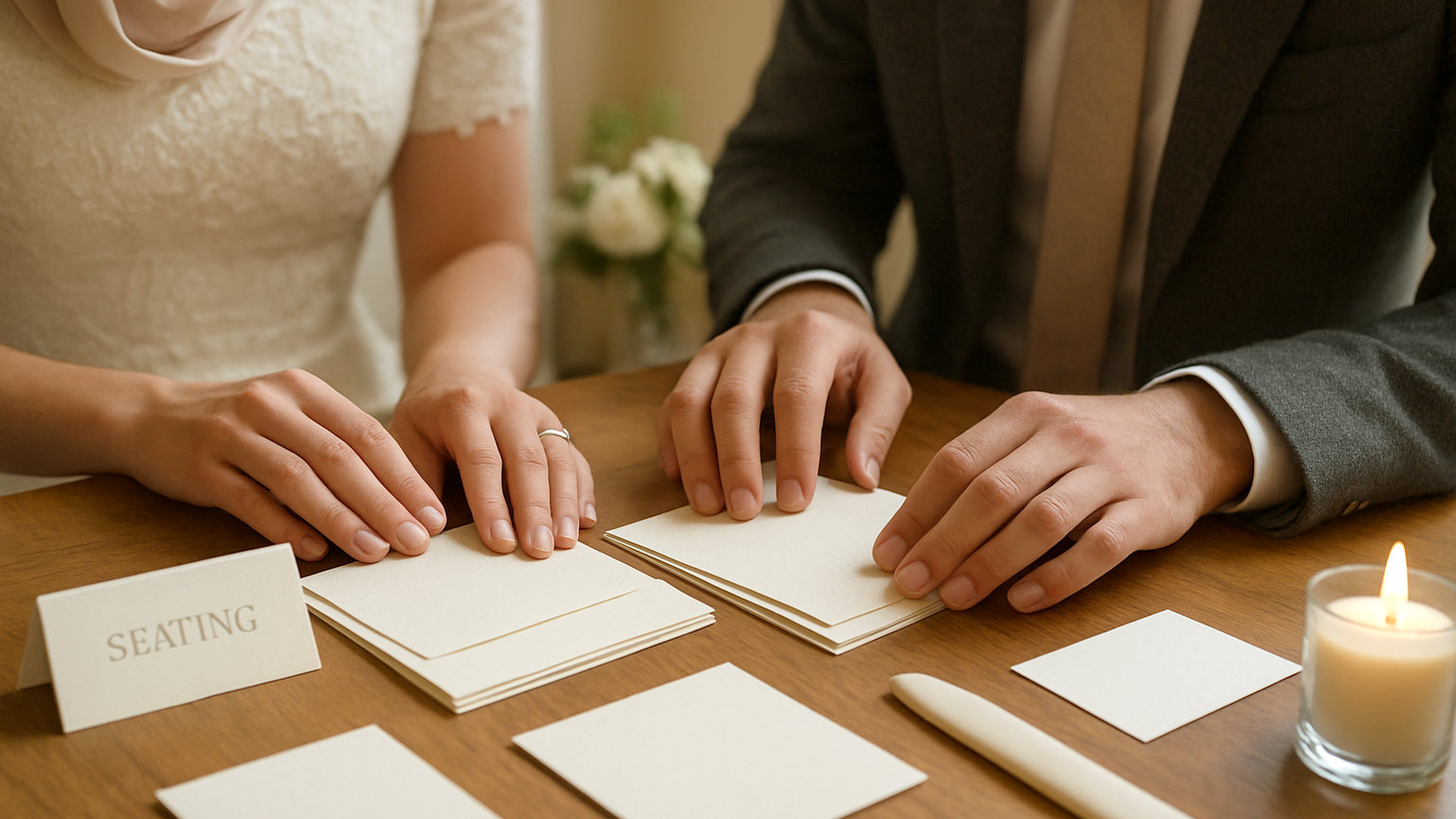
On the day stationery is everything used at the venue rather than posted to guests. It shares one characteristic that shapes the whole schedule, which is that almost none of it can be produced until the final numbers are in.
What does it include?
The order of service, the table plan, table numbers or names, place cards, menus, signage, and anything else printed for use at the venue.
Guest books, cards for a wishing well and anything similar sit in the same category and are ordered at the same time.
Why does it wait for numbers?
Because the table plan, the place cards and the menu count all depend on who is actually coming. None can be finalised until the replies are complete.
That is why the reply deadline sits four to six weeks out rather than a fortnight, since everything downstream depends on it.
When should it be ordered?
Work backwards from the item with the longest production time. If a table plan takes two weeks to make, the seating has to be final three weeks out.
Which means numbers final at four weeks and replies in at five or six. That chain is what sets the invitation deadline.
What is genuinely worth printing?
The table plan, which everybody reads, and place cards where there is a seating plan. Both prevent confusion at the moment a hundred people try to sit down.
An order of service is worth it for a religious ceremony where guests need the words, and frequently unnecessary for a short civil one.
What can be dropped?
Menus, which are read once and discarded, particularly where the food is announced or where there was a pre order.
Table numbers can go if tables are named on the plan and marked some other way. Guests find their table by the plan rather than by the number.
What about signage?
Worth having wherever guests would otherwise be uncertain. An arrow to the ceremony, a note about where to leave gifts, and a sign at the entrance.
Two or three signs answer most questions. Beyond that they stop being read.
Does it have to match?
Only loosely, and matching across a whole suite costs considerably more. Guests see the invitation and the on the day items months apart and do not compare them.
Using the same paper or the same typeface is enough to read as coherent without ordering everything from one supplier.
Can you make it yourself?
More easily than the invitations, since it is produced late and in small quantities. Place cards and table numbers in particular are straightforward.
The table plan is the exception, since it is large and everybody reads it. A poorly made one is noticed.
Who sets it out?
Whoever is setting up the room, which needs telling. Place cards in a box are no use, and somebody has to know the plan to lay them.
Give the venue or the stylist a printed copy of the seating plan alongside the cards, and keep a photograph of it on your phone.
What goes wrong?
Late numbers compressing the print schedule, and cards laid in the wrong order. Both are prevented by working backwards from the production time rather than forwards from the wedding.
How much should it match the invitation?
Enough to feel related and not necessarily identical. Guests see the two months apart and the connection registers through paper and typeface rather than exact matching.
How much should you order?
Final numbers plus a small margin for late changes and for keeping. Order a few spare place cards and a spare order of service for yourselves.
Who takes it home?
Assign it, since it is left behind more often than any other stationery. A table plan and an order of service are worth keeping and both usually end up in a bin.
Work backwards from the longest production time and the whole category schedules itself. Work forwards from the wedding and it will be rushed.


