
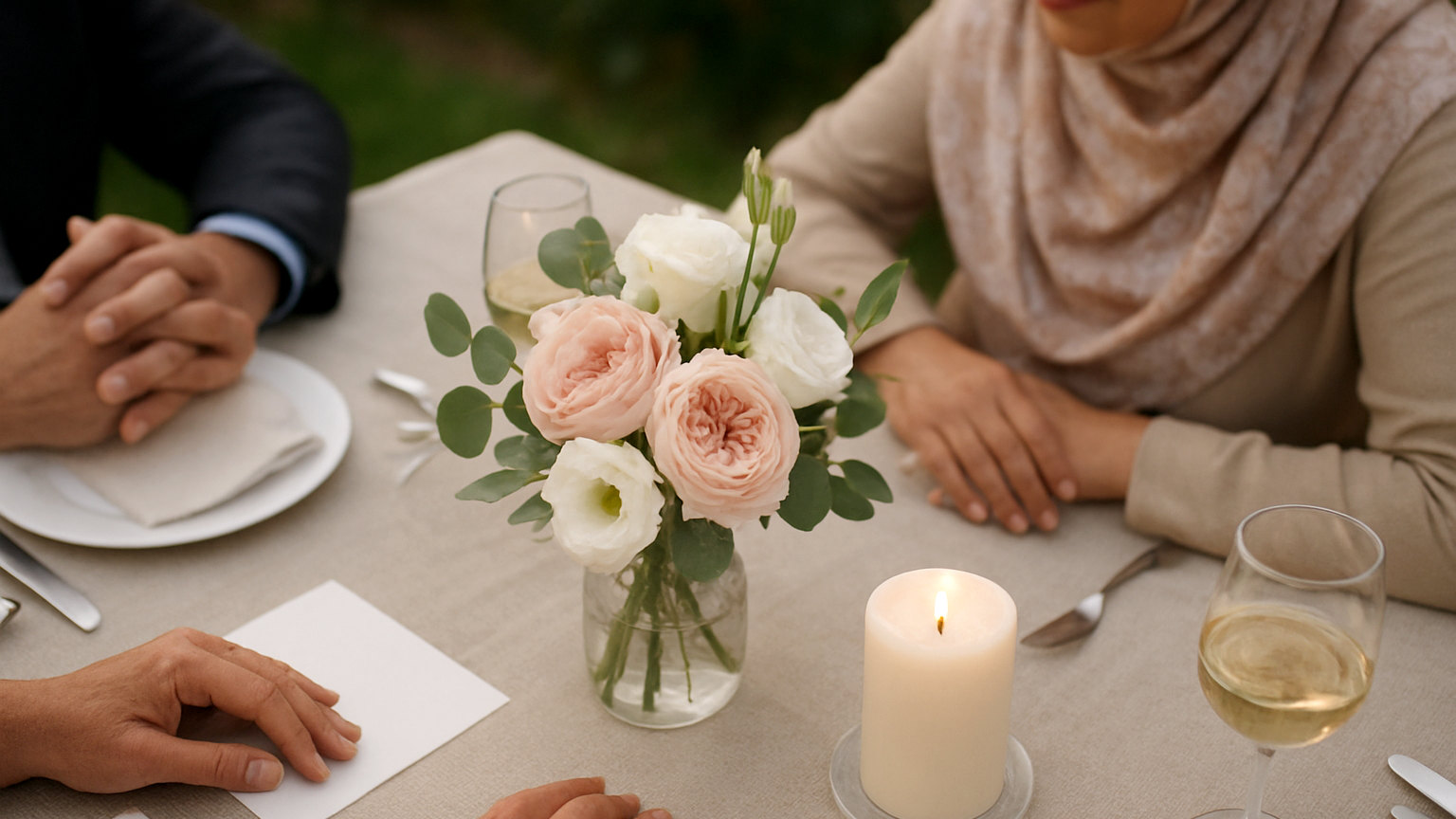
A relatively small number of flowers do most of the work at British weddings, chosen for availability, vase life and how they photograph rather than for fashion. Knowing what each one does makes a florist conversation considerably easier.
Why are roses so common?
Available all year, enormous range of colours and forms, long vase life and they hold up in a warm room. That combination is unmatched.
Garden roses are the fuller, more open type and cost considerably more than standard commercial roses. Both are called roses on a quote, so ask which.
What about peonies?
The most requested wedding flower and one of the shortest British seasons, running from late May into June. Outside that they are imported and expensive.
They open dramatically in a warm room, so a peony bouquet on the morning and the same bouquet at six in the evening look quite different.
What are ranunculus?
Layered, rose like flowers available through spring and into early summer, and again in winter from some growers. Elegant, relatively inexpensive and they photograph beautifully.
They are a common substitute for peonies out of season and get remarkably close for a fraction of the price.
What about dahlias?
The dominant flower of late summer and autumn, from August through October, in a vast range of sizes and colours.
They are abundant, British grown and inexpensive in season, which makes an autumn wedding one of the best value floral propositions in the year.
Where does gypsophila fit?
Cheap, available all year and useful for volume. It divides opinion sharply, and a florist would rather know your view before building anything around it.
Used in mass it creates a cloud effect. Used as filler among other flowers it reads dated to some eyes, which is why opinions differ.
What about hydrangea?
Large heads that fill space quickly, which makes them efficient for arrangements and centrepieces. Available through summer and into autumn.
They are thirsty and wilt if they dry out, so they need proper conditioning and are not the flower for a hot marquee without water.
What about lilies?
Dramatic and long lasting, with two considerations. The scent is strong at close range and the pollen stains fabric badly.
Ask for stamens to be removed. Note also that lilies are toxic to cats, which matters if flowers are going home with guests.
What is used for structure?
Delphiniums, stocks, snapdragons and foxgloves give height and line, while sweet peas, scabious and cornflowers give softness and movement.
A good arrangement uses several of these together rather than one flower repeated, which is why briefing by feeling works better than by variety.
What lasts best?
Roses, chrysanthemums, carnations and most foliage. These are the reliable workhorses for anything that has to survive a long warm day.
Sweet peas, poppies and anemones are beautiful and short lived, which is fine in a bouquet and risky in a marquee in July.
Should popularity guide you?
Only as a signal about practicality. These flowers are common because they work, which is a reasonable reason to use them.
Tell the florist what you like and dislike and let them choose the rest. Given a colour, a feeling and a budget they will use whatever is best that week.
What is worth avoiding?
Anything with a strong reaction attached, unless you are sure. Carnations, gypsophila and chrysanthemums all divide opinion sharply and a florist would rather know your view in advance.
Does the fashion matter?
Very little in photographs twenty years later. Choose on colour, scent and how something holds up on a long day, all of which age better than trend does.
How should you use this?
As vocabulary rather than as a shopping list. Knowing what a florist means by garden rose or seeded eucalyptus makes the conversation faster and the brief more accurate.
Say what you like, say what you dislike, and let the florist choose the rest from what is best that week.


