
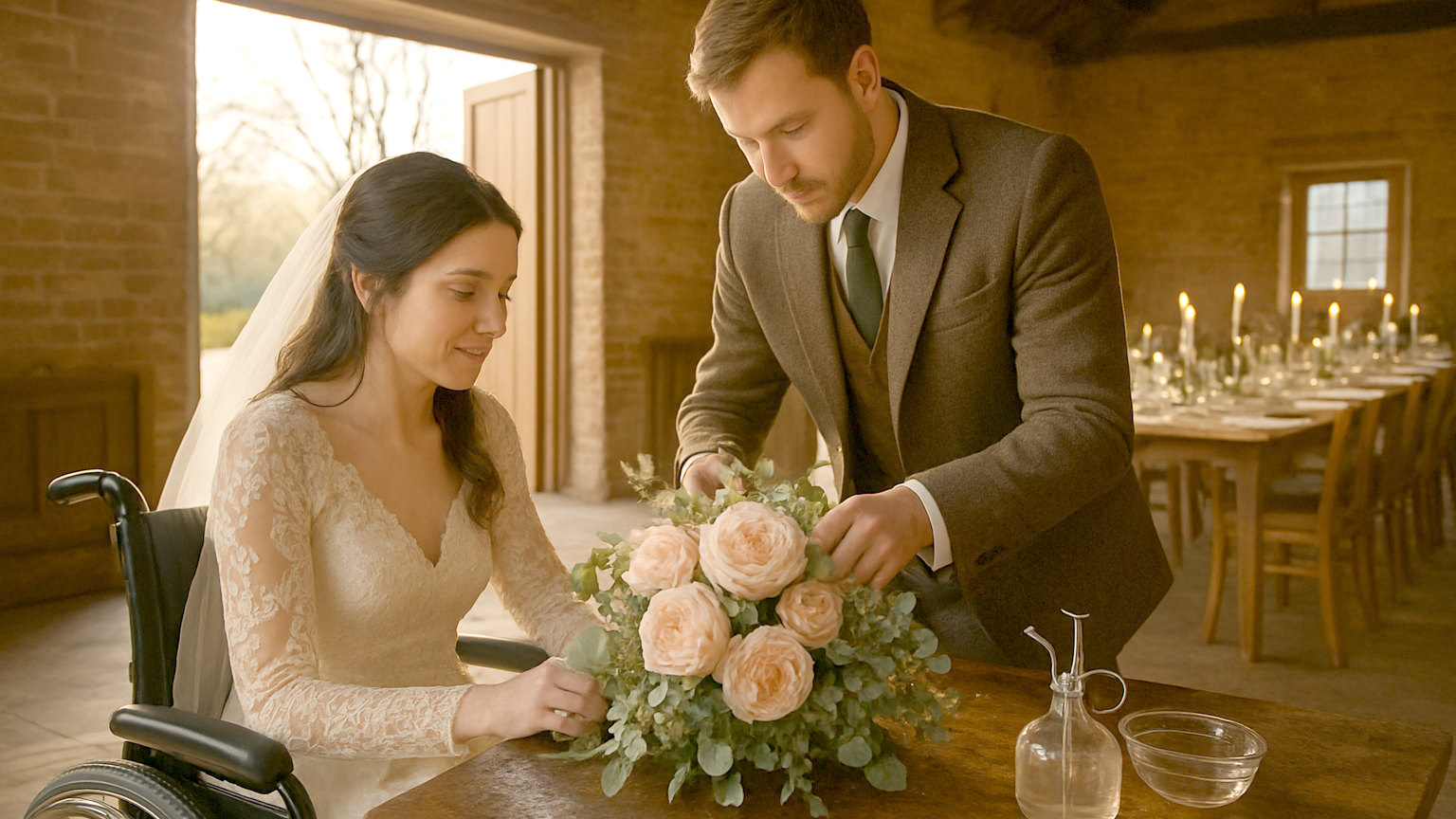
Flowers at a wedding face a long warm day with no water, which is not what they are designed for. Most of what ruins them is heat and dehydration, and both are largely preventable with a little planning.
What happens on the morning?
Flowers are delivered, usually a few hours before they are needed, and where they are kept in those hours matters considerably.
Cool, shaded and out of direct sunlight. A box of buttonholes on a sunny windowsill for three hours is the most common way flowers are ruined before anybody has left the house.
Where should the bouquet go before the ceremony?
In water, in the coolest room available. Ask the florist for a container or use any vase, and keep the stems submerged until the last possible moment.
Take it out shortly before leaving and dry the stems, since a wet bouquet marks a dress immediately.
What about during the ceremony?
Somebody holds it, usually the chief bridesmaid, and it is out of water for the duration. That is fine for an hour and less fine for four.
Have somewhere for it to go afterwards, ideally water again. A bouquet left on a warm table through a drinks reception and a meal will not survive well.
What is the effect of heat?
Substantial. A warm marquee or a room in direct sun accelerates everything, and some flowers open dramatically within hours.
Peonies in particular open fast in warmth, so a bouquet that looks right at ten in the morning can look quite different by six.
Which flowers are most vulnerable?
Hydrangea, which wilts quickly if it dries out. Sweet peas, poppies and anemones, which are beautiful and short lived. Anything very delicate.
Tell the florist if the venue is likely to be hot. They will select accordingly, and it is one of the more useful pieces of information you can give.
What can the venue do?
Keep arrangements out of direct sun, avoid placing them near heat sources, and top up water in anything that has a reservoir.
Ask whether the room will be warm on the day. A venue in a heatwave with no ventilation is a difficult environment and worth planning around.
What about transporting them?
Arrangements in water are heavy and spill. Transport them in crates or boxes that hold them upright, in the coolest part of a vehicle rather than a boot in the sun.
Air conditioning on a long journey makes a genuine difference. So does travelling early rather than in the heat of the day.
What should the florist handle?
Conditioning, which happens before delivery and is what determines how long everything lasts. A properly conditioned flower survives a day out of water far better.
Ask what they recommend for your venue and season. It is a routine question and they will have a clear answer.
What about the buttonholes?
Keep them in the box, cool, until shortly before they are pinned. They are small and dehydrate fastest of anything.
Order two or three spares. They get crushed by hugging and by car seats, and a replacement is easier than a repair.
What is the single most useful thing?
Keeping everything cool and out of the sun until it is needed. That one habit prevents the large majority of wilting problems at British weddings, including hot ones.
What should you tell the venue?
Where arrangements should go and to keep them out of direct sun. Staff will do it if asked and will place things wherever is convenient if not.
What about the end of the night?
Anything going home with guests should be given out before it has been sitting in a warm room for six hours, which means during the evening rather than at midnight.
Cool, shaded and in water until the last moment. That single habit prevents most of what goes wrong with flowers on a wedding day.


