
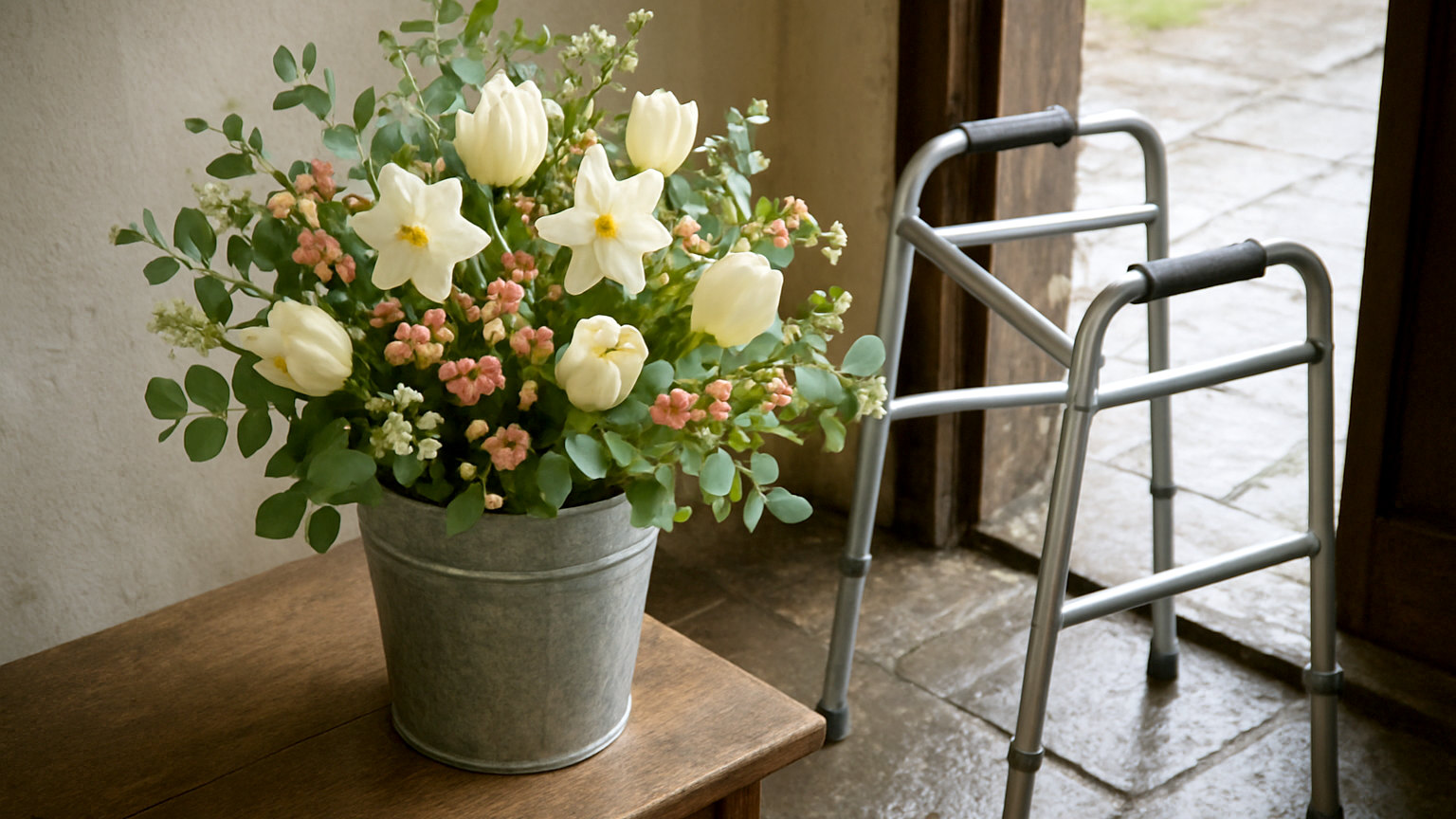
The bouquet appears in almost every photograph taken of you during the ceremony and the portraits, which makes it the highest value flowers at any wedding. It is also the one you carry for several hours.
How does it work with the dress?
It covers part of it, which is the first consideration. A heavily detailed bodice deserves a smaller bouquet, since a large one hides exactly the detail you chose.
Bring a photograph of the dress to the florist meeting. They will scale and shape the bouquet to it, which is a large part of what they do.
What size is right?
Scaled to you rather than to an image. A bouquet that looks generous in a photograph of somebody else may be too large or too small against your own frame.
Ask the florist to hold examples against you at the meeting. It settles the question in about a minute and is far more reliable than any reference image.
How much does weight matter?
More than most people expect. You carry it down the aisle, through the ceremony, through the photographs and frequently through a receiving line.
Structured shapes such as a cascade are considerably heavier than a hand tied bouquet. Ask to hold something of comparable weight before deciding.
What colour works?
Almost anything, though contrast matters. A white bouquet against a white dress can disappear in photographs, and some definition helps it read.
Foliage does that work well and cheaply. A predominantly white bouquet with strong greenery photographs considerably better than white alone.
Should it match the scheme?
Loosely. The bouquet does not have to match the bridesmaids or the table flowers exactly, and near matches look worse than deliberate contrast.
Give the florist physical colour references rather than names, since blush and sage mean different things to different people.
What about scent?
Worth thinking about, since it is right under your face all day. Heavily scented flowers such as hyacinth, stephanotis and some lilies are strong at close range.
If you or anybody close to you is sensitive, say so. A florist can build something beautiful with very little scent.
What about something sentimental?
Common and easily accommodated. A locket, a piece of fabric, a sprig from a relative garden or a wrapped photograph can all be built into the binding.
Tell the florist in advance rather than handing it over on the morning, so it is incorporated properly and securely.
How do you hold it?
Lower than instinct suggests, at roughly hip height rather than at the chest. Held high it covers the dress and blocks the body in photographs.
Photographers mention this constantly. Practising once in front of a mirror is enough to fix it.
What happens to it during the day?
Somebody holds it during the ceremony, usually the chief bridesmaid, and it needs somewhere to go afterwards. Water is worth arranging for a long day.
Ask the florist for a container, or ask the venue for a vase. A bouquet left on a table for six hours in a warm room does not survive well.
When should it be decided?
The shape and scale at the florist meeting, and the final varieties four to six weeks out once the season is clear.
Trust the florist on the specifics. Given a colour, a feeling and a size, they will produce something better than a fixed list would have done.
What should you ask the florist?
What they would suggest given the dress, the venue and the season, rather than presenting a fixed brief. Their answer is usually better and it costs nothing to hear.
Is it worth spending on?
More than any other flowers at the wedding, since it appears in almost every photograph of you. If the floral budget is tight, this is the last thing to reduce.
Bring the dress photograph, describe the feeling you want, and let the florist scale it to you. That is the whole method and it works better than any amount of research.


