
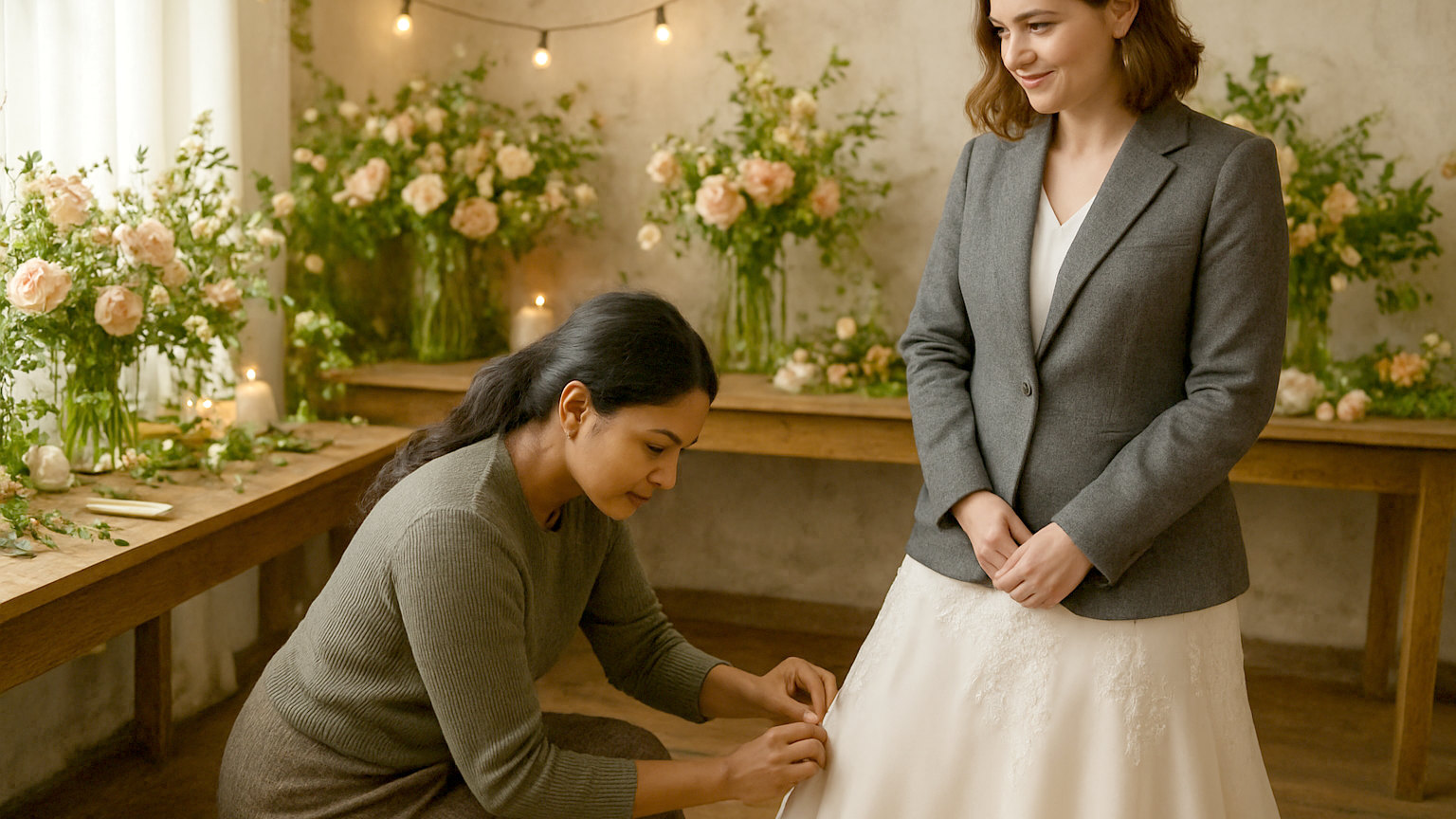
The size of the group at a bridal appointment changes it more than almost anything else. Two people is usually right, four is manageable, and six is where appointments stop producing decisions.
Why do large groups make it harder?
Because everybody has an opinion and they rarely agree. With six people in the room, any dress will have at least one person who is not keen, and it becomes very difficult to hear your own reaction.
Consultants will tell you plainly that appointments ending without a decision are almost always the crowded ones.
Who should come?
Whoever will be honest and whose opinion you actually want. That is frequently one or two people rather than everybody who would like to be asked.
Somebody who will say what they think rather than what you want to hear is more useful than somebody enthusiastic about everything.
How do you handle the people who cannot come?
Explain the boutique limit, which most have. A great many shops cap the number of guests for space reasons and consultants will happily be the reason if you need one.
Alternatively invite people to a second appointment once you have a shortlist. It gives them the experience without the influence, which is frequently the better arrangement.
Should you take your mother?
Most people do and it matters to a lot of families. Be aware that it is also the relationship most likely to produce a difficult moment, particularly where expectations differ.
Setting the tone in advance helps. Saying beforehand that you want their honest view and that the decision is yours removes most of the awkwardness before it arises.
What about going alone?
Entirely acceptable and more common than people assume. It removes every complication and lets you concentrate on your own reaction.
Boutiques are used to it and consultants are perfectly good company for two hours. If the group dynamic is likely to be difficult, this is the simplest solution.
How should you brief them?
Tell them the budget, so nobody encourages something out of range, and tell them what you want from them. Honest opinions, one at a time, and no comments on anybody body.
That last instruction sounds unnecessary and it is worth giving. Appointments are a common setting for remarks that land badly, and most are made without any intent.
What if somebody is difficult?
Consultants deal with this constantly and are practised at managing a room. Tell them in advance if you are expecting a strong opinion from somebody.
They will frequently intervene diplomatically on your behalf, which is easier than doing it yourself while standing on a plinth in a dress.
Should the group be the same each time?
Not necessarily, and varying it helps. A second opinion from somebody who was not at the first appointment is more useful than a repeat of the same reactions.
For the final decision, fewer is better. Two people who know you well is plenty.
Whose opinion matters?
Yours, and it is worth saying because it gets lost. You are the person wearing it for twelve hours and looking at the photographs for forty years.
A dress everybody else preferred is a dress you will notice every time you see it. If you are certain and the room is not, buy the one you are certain about.
What if somebody is upset at not being invited?
Offer them something else, such as a second appointment, the final fitting or coming to choose accessories. Most people want to be included rather than to influence the decision.
A specific alternative invitation resolves this far better than an explanation of why they could not come to the first one.
Should anybody see the dress before the day?
Entirely up to you and there is no rule. Some people show everybody and some tell nobody, and both are common.
If you are keeping it private, say so clearly to whoever comes, since a photograph shared without thinking is the usual way it gets out.


