
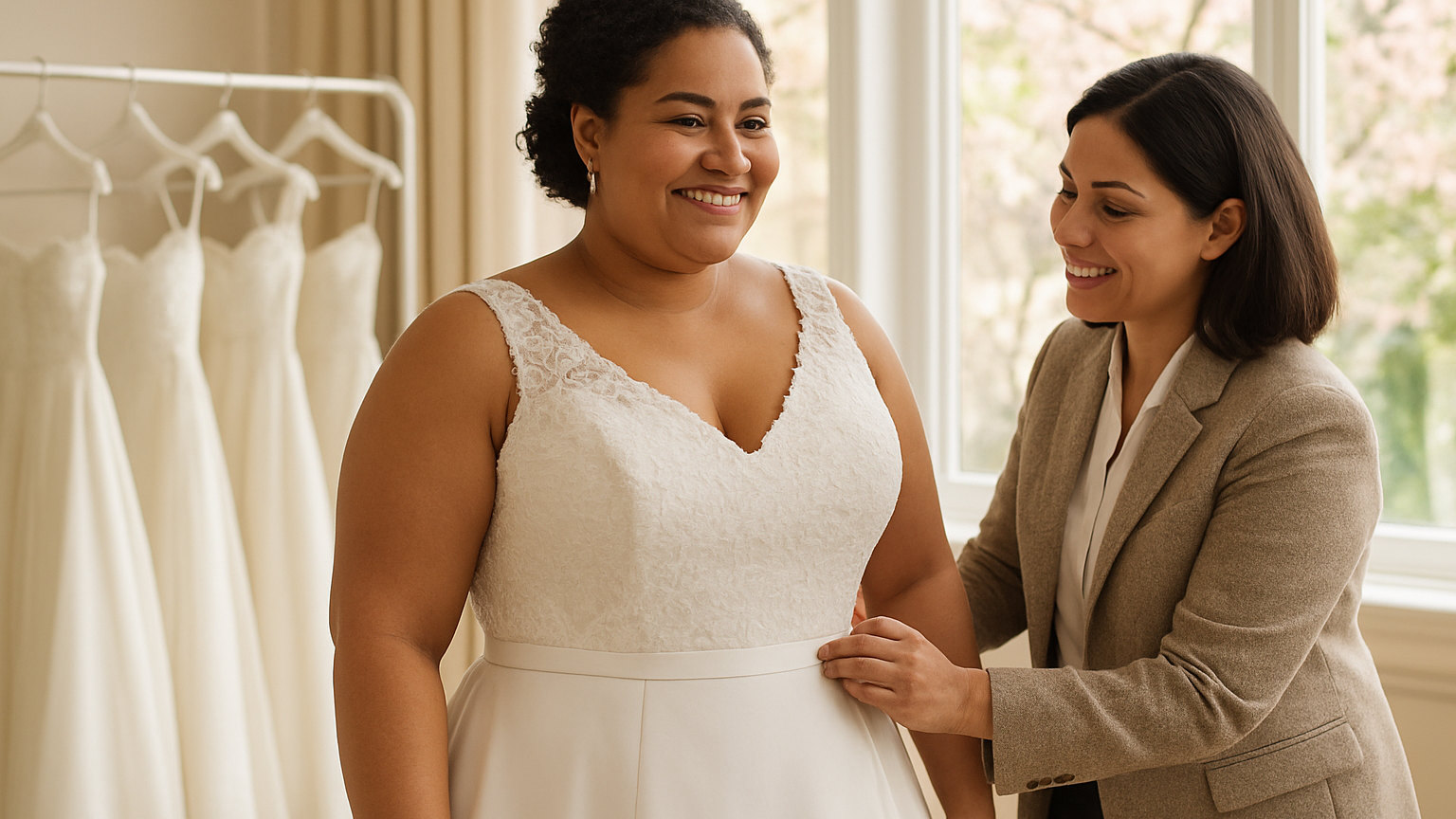
Bridal shapes have names that get used constantly in boutiques and are rarely explained. Knowing them makes appointments considerably easier, because you can describe what you want rather than pointing.
What is an A line?
Fitted through the bodice and flaring gradually from the waist to the hem, forming the shape of the letter. It is the most common silhouette and the most versatile.
It is also among the easiest to move and sit in, which matters over a twelve hour day. If you are unsure where to start, this is usually where a consultant will.
What is a ballgown?
A fitted bodice with a full, structured skirt, frequently with layers of netting beneath it. It is the most dramatic silhouette and the most photographed.
It takes up a great deal of space, which is worth thinking about in a narrow aisle, a small ceremony room or a car. It is also heavy.
What is fit and flare?
Fitted through the bodice and hips, flaring out somewhere around the thigh or knee. Sometimes called a trumpet or a fishtail depending on where the flare begins.
Closer fitting through the body than an A line and more structured. Ask about the walking room, since a narrow flare point restricts stride.
What is a mermaid?
The most fitted version of the same idea, hugging the body to below the knee and flaring sharply at the bottom. Very structured and very defined.
Practicality is the consideration. Sitting, dancing and stairs all take more thought, and many brides change or add a piece for the evening.
What is a sheath or column?
Straight from top to bottom with no defined flare, following the line of the body. Frequently in a fluid fabric such as crepe or silk.
Understated and increasingly popular, particularly for smaller weddings, register office ceremonies and second weddings. It is also the easiest shape to travel with.
What is an empire line?
Fitted to just below the bust with the skirt falling from there. Historically associated with regency dress and comfortable to wear.
It is a common choice for a pregnant bride and for anybody wanting a shape that does not sit at the natural waist.
What about separates?
A skirt and top bought as two pieces, which is now a substantial part of the bridal market. It allows different shapes for the day and the evening.
It also solves the sizing problem for anybody who is a different size on top and bottom, which is common and which single dresses handle badly.
Does the shape affect the price?
Somewhat. Heavily structured dresses with internal boning and layered skirts cost more to make than a simple sheath, though fabric and designer matter more.
Alterations vary too. A fitted shape needs more precise work than a loose one, and that can be a few hundred pounds of difference.
Which should you try?
Several, including at least one you expect to dislike. Consultants say the same thing constantly, which is that a great many brides buy something quite different from what they came in for.
What a shape looks like on a hanger, on a model and on you are three different things, and only the third one matters.
How do the names vary?
Considerably between shops and designers, which is why describing what you want is more reliable than naming it. Fishtail, trumpet and mermaid overlap and are used loosely.
Say where you want the dress to be fitted and where you want it to flare. Consultants understand that immediately, whatever they call the resulting shape.
Which are most common?
A line and fit and flare account for a large share of what most boutiques stock, with ballgowns and sheaths beyond them. That is worth knowing when planning which shops to visit.
Try at least one from each broad family before narrowing. It takes a single appointment and it is the fastest way to find out what you actually like rather than what you expected to.


