
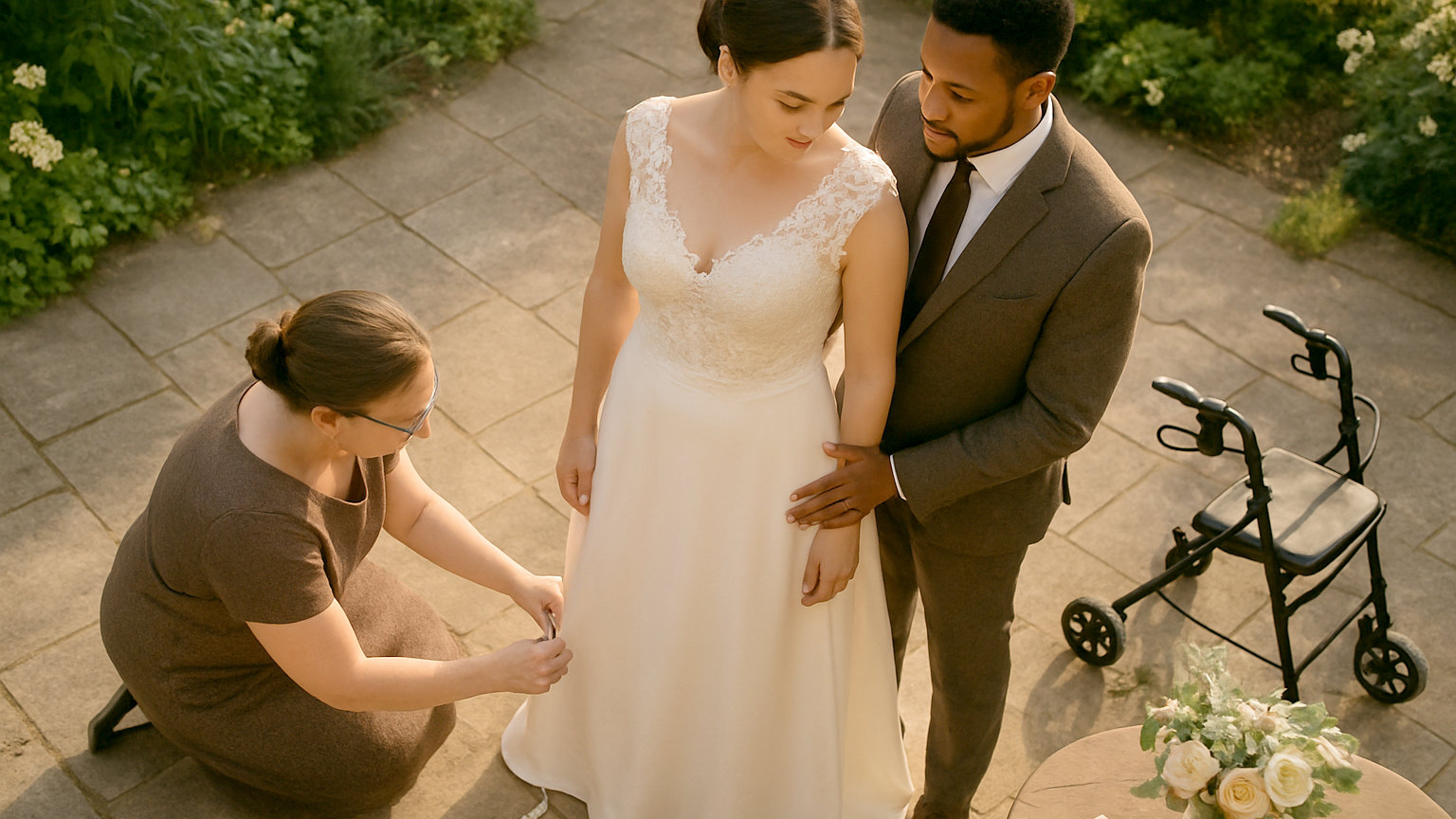
A bridal appointment follows a fairly consistent format across most boutiques, and it surprises people the first time. Knowing what to expect removes most of the awkwardness, which is largely about not knowing the conventions.
How long does it last?
Usually ninety minutes to two hours, covering perhaps six to eight dresses. Some boutiques run shorter appointments and a few run longer, particularly for a first visit.
Ask when booking, since the length determines how much you can realistically try and whether you should prioritise particular shapes.
How does it start?
With a conversation. The consultant will ask about the venue, the season, the budget, the style you have in mind and what you do and do not want.
Answer honestly, including about the budget. The appointment works considerably better when the consultant is selecting from the right part of the shop.
Who chooses the dresses?
Usually the consultant, working from that conversation, and in most boutiques you do not pull dresses from the rails yourself. That surprises people and it is standard.
Say if you want to see something specific. A good consultant will bring it, and will also bring one thing you did not ask for, which is frequently the one that works.
What is it like trying them on?
You will be helped into each dress, since bridal gowns cannot generally be put on alone. Consultants do this all day and it is entirely routine, though it is worth knowing in advance.
Dresses are clipped at the back to approximate a fit, because the samples are one size and will not be your measurements. That is normal and does not indicate anything about the dress.
Why does nothing fit properly?
Because boutiques hold sample dresses in a limited range of sizes and every dress is ordered and then altered. Nothing in the shop is meant to fit anybody exactly.
Consultants are practised at showing you what a dress will look like once it is yours. Ask them to explain what will change, since the clipped version can be misleading in both directions.
What should you pay attention to?
How it feels to move, sit and raise your arms, since you will be wearing it for twelve hours. Whether you can walk in it. What it does when you turn.
Photographs are useful and boutiques vary on whether they allow them. Ask when booking, and if not, take a moment in the mirror instead.
What about the price?
Consultants generally state it when they bring the dress. If they do not, ask, and ask whether alterations are included, since they usually are not.
A dress at fifteen hundred pounds is realistically nineteen hundred by the final fitting once alterations and accessories are counted, and that is worth holding in mind throughout.
Is there pressure to buy?
There should not be, and at reputable boutiques there is not. Some will mention an order deadline for your date, which is a genuine constraint rather than a tactic.
If you feel pushed, leave. Plenty of boutiques exist and the one that pressures you at an appointment will not become easier afterwards.
What happens if you find the dress?
Measurements are taken, a size is ordered, and a deposit of around half is usually paid. The dress arrives some months later and the alteration appointments are booked then or at the time of order.
Ask about the alteration schedule when you order rather than when it arrives, since boutique alteration diaries fill during summer just as the fitting rooms do.
What should you ask before leaving?
The price including any expected alterations, the order deadline for your date, when the dress would arrive and how the fitting schedule works.
Ask for it in writing if you are considering the dress seriously. Four figures agreed verbally in a fitting room is easy to misremember a fortnight later.
What if you feel overwhelmed?
Say so. Consultants deal with it constantly and will slow down, reduce the number of dresses or suggest coming back another day.
There is no requirement to enjoy the experience, and a substantial number of people find it stressful rather than fun. That is entirely normal.


