
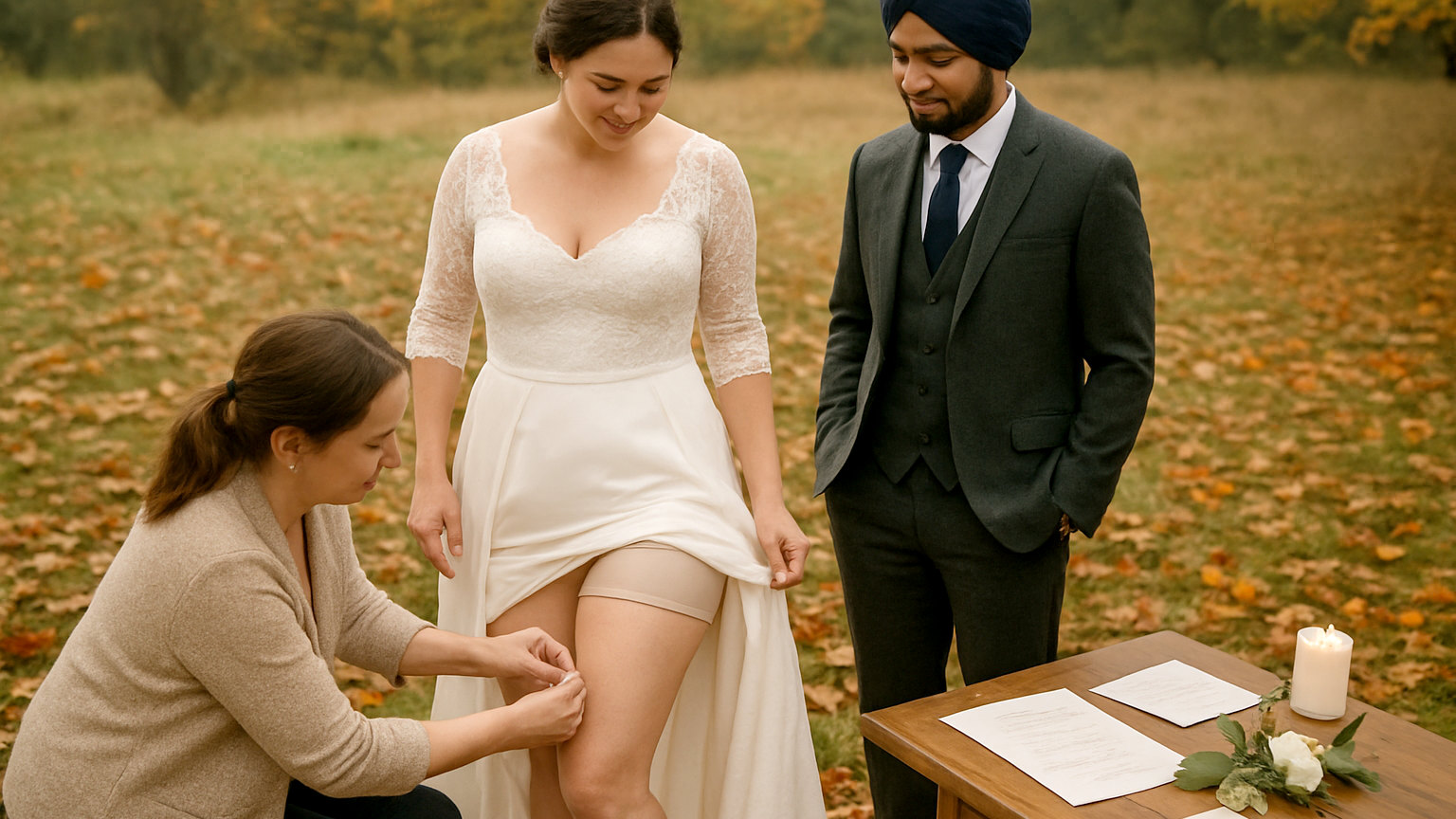
Underwear changes the shape and fit of a dress, which is why it has to be chosen before the first fitting rather than in the final week. It is also one of the more common sources of discomfort across a twelve hour day.
Why does it have to come first?
Because the dress is fitted around whatever you are wearing beneath it. Bring different underwear to the final fitting from the first and the fit will be wrong.
Buy it before the first appointment and take it to every fitting. It is the single most useful preparation for the alterations.
What does the dress determine?
A great deal. Many bridal gowns have built in support in the form of boning or cups and need nothing beneath, and others need something specific.
Ask the consultant at the point of ordering. They will tell you what works with that particular dress, and their answer is more reliable than any general advice.
What about strapless dresses?
Most structured strapless gowns have internal support and are designed to be worn without a bra. That surprises people and it is usually correct.
Where extra support is wanted, adhesive options or a bra cup sewn in by the seamstress are the usual solutions. Ask at the fitting rather than buying something that shows.
What works under close fitting fabrics?
Seamless everything. Crepe, satin and any smooth fabric show every line beneath, which is worth testing at a fitting rather than discovering in photographs.
Nude tones generally disappear better than white under pale fabrics, which is counterintuitive and consistently true.
Is shapewear necessary?
Only if you want it, and comfort should decide. Anything you would not wear for twelve hours in ordinary life will be uncomfortable at a wedding, where you are also standing, eating and dancing.
If you do wear it, test it for a full day beforehand rather than trying it for the first time on the morning.
What about the practicalities?
Consider how you will manage the lavatory, which is a genuine and rarely discussed consideration in a full dress. Anything complicated becomes a problem quickly.
Somebody will be helping you, so factor that in. Simpler is better, and this is the reason.
What about hosiery?
Largely a matter of season and comfort. Many brides wear nothing, and tights or hold ups are a reasonable choice in winter or where shoes are likely to rub.
Take a spare pair if you are wearing them. They ladder, and a wedding involves a great deal of getting in and out of cars.
What should you avoid?
Anything new on the day, anything that has not been tested for several hours, and anything that shows through the dress in daylight.
Check it in natural light rather than shop lighting, and take a photograph with a flash, which shows through pale fabrics far more than the eye does.
What should you take on the day?
A spare of anything that could fail, plus safety pins and tape, which solve a surprising range of problems.
Put it in the emergency kit with everything else. It is the sort of thing nobody thinks about until it is needed, and by then it is too late to arrange.
What about the honeymoon?
Buy whatever you want for that separately and do not confuse the two. The underwear that fits under a structured bodice is rarely what anybody would choose otherwise.
Comfort on the day should decide entirely, since you are wearing it for twelve hours and nobody else sees it.
What should you test?
All of it, for a full day, several weeks beforehand. Anything worn for the first time on a wedding morning is a decision you will be living with for twelve hours.
Who should you ask?
The boutique consultant and the seamstress, both of whom see this every week and will tell you exactly what works with your particular dress.


