
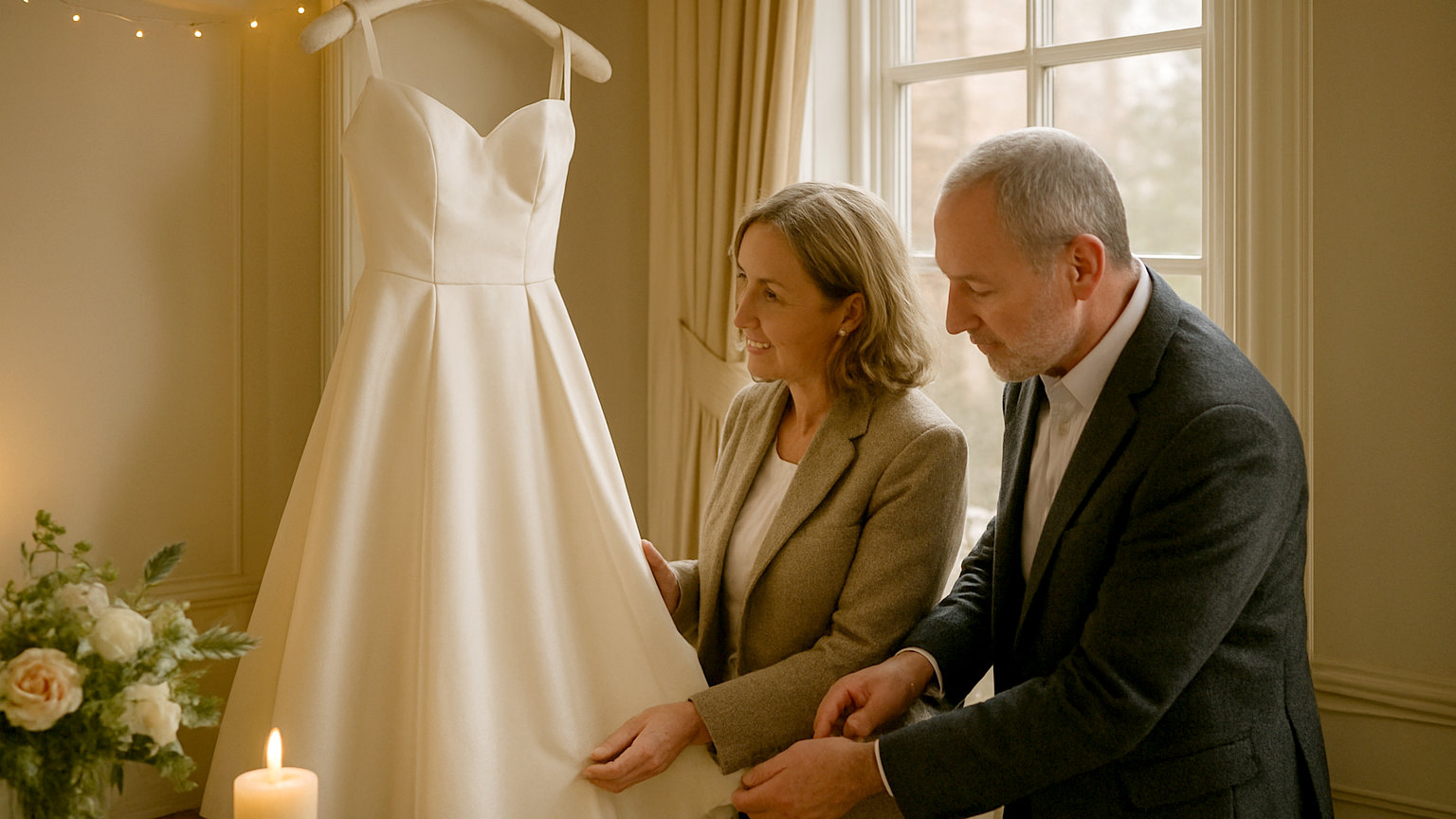
Sample and second hand dresses are the same garments bought through a different route, usually at half the price or less. Both are entirely normal, both have their own quirks, and no guest at any wedding has ever been able to tell.
What is a sample dress?
The dress from the shop floor that has been tried on by other people, sold when a boutique clears stock or changes collections.
They are reduced substantially and available immediately, which removes the four to six month order time entirely.
What is the catch with samples?
Sizing. You are buying what exists rather than ordering, so the range is limited to whatever the boutique holds.
Condition varies too. Samples have been worn repeatedly and may need cleaning or minor repair, which is factored into the price and worth checking before agreeing.
When do sample sales happen?
Usually when collections change, often at fixed points in the year, and boutiques advertise them in advance. Some hold permanent sample rails.
Ask boutiques when their next one is. Going with an open mind about the designer produces a much better result than arriving with a fixed dress in mind.
What about second hand?
A substantial market, and most dresses have been worn once for eight hours and professionally cleaned, which means they are effectively new.
Prices are commonly half or less and the choice is far wider than any boutique, since you are looking across everything rather than one shop stock.
What should you check?
Condition, particularly the hem, the underarms and any beading. Ask whether it has been cleaned and whether the seller has the receipt or provenance.
Ask whether it has already been altered, since a dress fitted to somebody else may have limited seam allowance for further work.
Can you try before buying?
Where possible, yes, and it is worth travelling for. Buying a dress unseen is a genuine risk, and returns are frequently not offered on private sales.
Where you cannot, ask for detailed photographs including the inside seams, and ask for the exact measurements rather than the label size.
What about alterations?
Budget for them either way. A sample or second hand dress needs the same alteration work as a new one and frequently a little more, since it was fitted to somebody else.
That is the figure that catches people out. A four hundred pound dress needing six hundred pounds of work is not a bargain, so factor it in before comparing.
Where do you look?
Boutique sample sales, dedicated resale sites, charity bridal shops and local wedding groups. Prices and protections vary considerably between them.
Buying through a platform with some form of buyer protection is safer than a private transaction, particularly for a large sum.
Is it worth it?
For most people, yes. Both routes produce the same garment for a fraction of the price, and the money saved is available for the things guests actually experience.
It is also the fastest route for a short engagement, since neither involves waiting for a dress to be made.
Can you negotiate?
On a sample, occasionally, particularly where there is visible wear or where the boutique is clearing stock. On a private second hand sale, frequently.
Ask politely and be prepared for no. Sample prices are usually already substantially reduced and there is often little room left.
What should you avoid?
Buying unseen without measurements, paying by bank transfer to a private seller, and assuming a dress can be let out. All three are common and all three go wrong.
How much can you save?
Commonly half the retail price and frequently more, particularly on second hand where the original owner has already absorbed the depreciation.
Set the saving against the alteration cost, which is the same either way, and the comparison becomes clear.
Both routes are entirely ordinary now and neither carries any stigma. The dress on the day is identical and only the receipt differs.


