
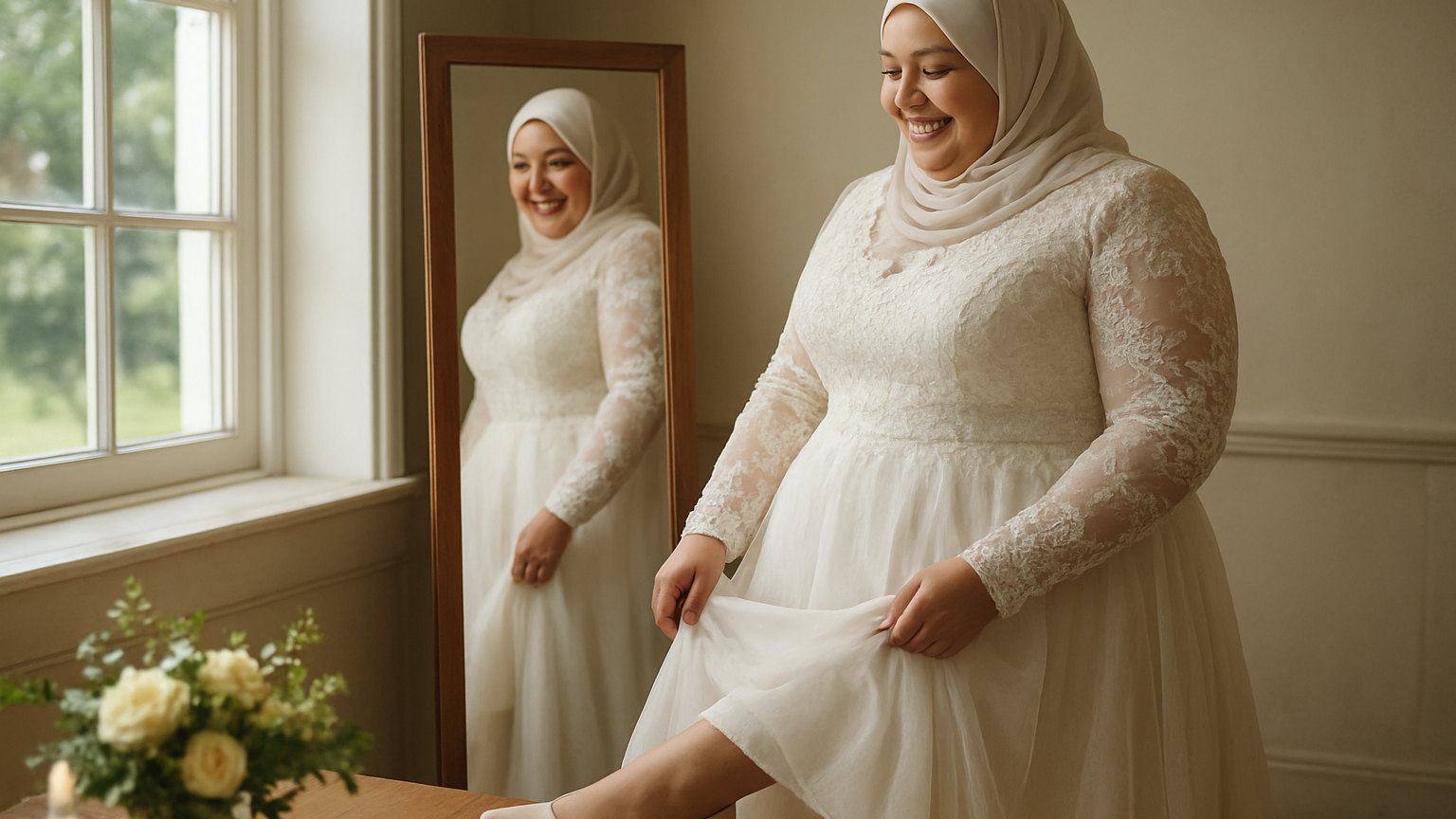
Wedding shoes do two jobs beyond looking right. They set the hem length of the dress, which cannot be changed afterwards, and they determine whether you are still standing at eleven at night.
When should you buy them?
Before the first fitting, and take them to every fitting afterwards. Two centimetres of heel changes the hem entirely, and a dress hemmed for different shoes will drag or hang short.
This is the most common shoe related problem at a wedding and it is completely avoidable.
What height works?
Whatever you can walk in without thinking about it. A wedding involves standing for several hours, walking on unfamiliar surfaces and dancing, none of which suits a heel you are not used to.
If you rarely wear heels, the wedding is not the day to start. A lower heel or a flat is entirely normal and considerably more enjoyable.
What about the ground?
The most overlooked factor. Grass, gravel, cobbles, decking and outdoor stairs are all difficult in a narrow heel, and a great many venues have at least one of them.
Walk the actual route at the viewing if you can. A block heel or a wedge solves this entirely and is invisible under a long dress.
Should you wear them in?
Yes, properly, over several evenings at home. New shoes worn for the first time at a wedding is a well known way to spend the reception barefoot.
Wear them with the underwear and any hosiery you will be wearing, since both affect the fit.
Do they need to be visible?
Under a long dress, barely. They appear in a handful of photographs and are otherwise hidden entirely, which is worth knowing before spending heavily on them.
Under a shorter dress or a fitted shape, they show throughout, which is a different calculation.
Should you have a second pair?
A great many people do and almost nobody regrets it. A comfortable flat, a trainer or a sandal for the evening is common and entirely acceptable.
Put them somewhere accessible and tell somebody where. They are no use in a bag in a car.
What about the soles?
New soles are slippery, particularly on a polished floor or a dance floor. Scuffing them with sandpaper or fitting a grip pad takes five minutes and prevents a fall.
It is a small thing and it comes up repeatedly in accounts of what people wish they had done.
What should you consider for an outdoor wedding?
Heel protectors for grass, which are inexpensive and work. Or simply choosing a flat or a wedge for the ceremony and changing later.
Wet grass is the difficult case, and a stiletto in it is genuinely unmanageable rather than merely awkward.
What should be in the kit?
Plasters, blister protection and the second pair. Also a small brush if the shoes are pale and the ground is not.
Shoes are among the most common causes of discomfort at a wedding and among the easiest to plan for. Twenty minutes of preparation covers almost all of it.
Do they have to be new?
No, and wearing something you already own and love is a genuine option that solves the comfort problem entirely.
It also saves money that is better spent elsewhere, and nobody at the wedding will know or care.
What about the wedding party?
Let them choose their own, within a colour if you want consistency. Feet differ and a shoe that suits one person is uncomfortable for another.
When should you buy them?
Before the first fitting, which is the one rule that genuinely matters. Everything else about shoes is preference and this one is structural.
What is the most common regret?
Heels that were fine in the shop and not at eleven at night. A second pair solves it entirely and costs very little.
What should you check about the venue?
The floors and the outdoor ground, both of which are visible at the viewing. A polished floor, a gravel drive or a lawn each rules out something, and all three are common.


