
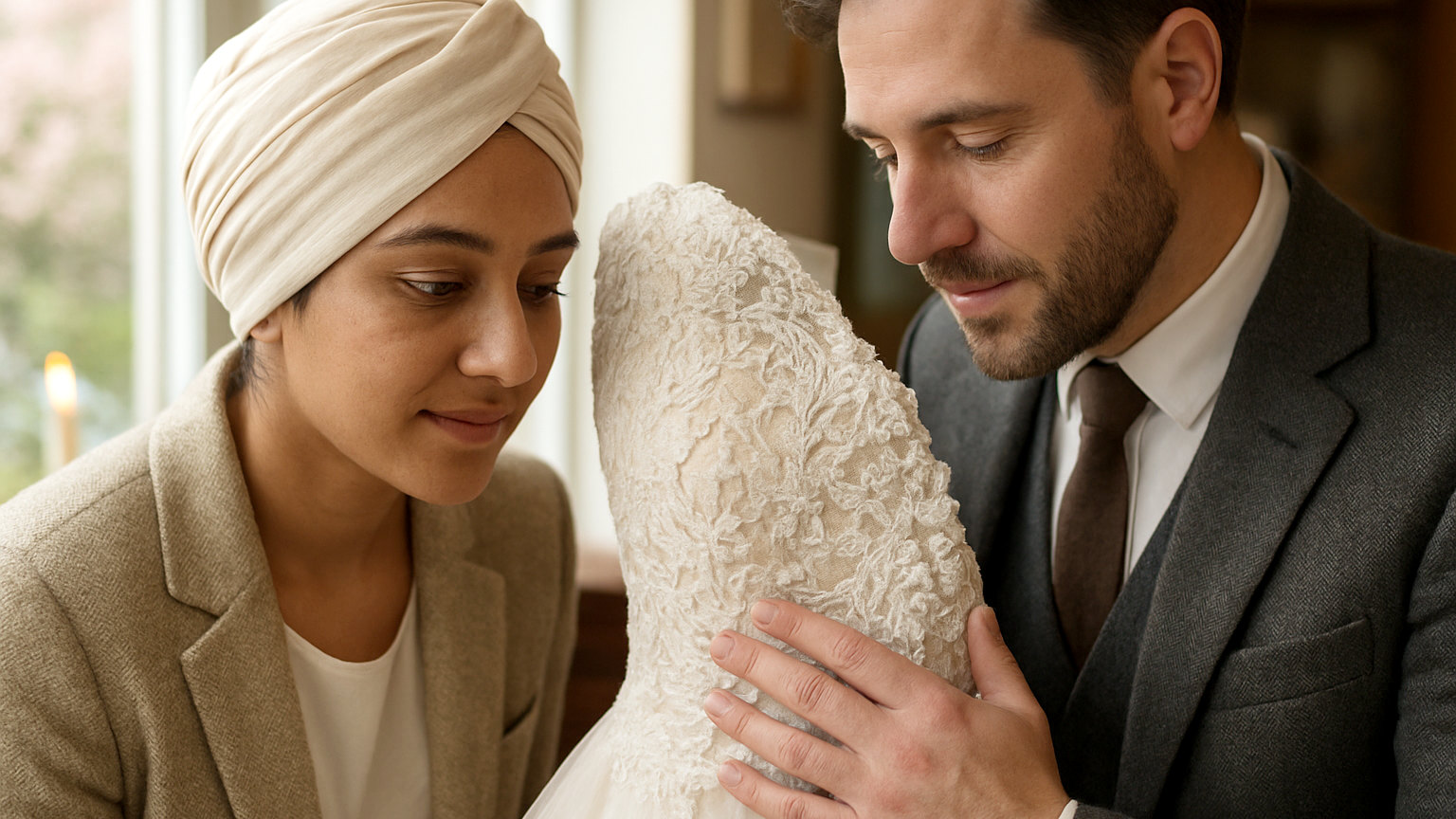
There is a great deal of advice about which shapes suit which people and most of it is worth ignoring. The useful considerations are practical, and they are the ones that determine whether you enjoy wearing the dress rather than only looking at it.
What matters most?
How it feels to wear for twelve hours. You will be standing, sitting, hugging people, eating a meal, going to the lavatory and dancing, and a dress that makes any of those difficult becomes a long day.
Test all of it at the appointment. Sit down, raise your arms, walk across the room and turn. Consultants expect this and a good one will suggest it.
How does the venue affect it?
Considerably. A structured ballgown in a narrow country church aisle or a small register office is difficult, and a delicate fabric on a farm is unforgiving.
Think about the floor, the stairs and the outdoor ground. A long train across gravel or wet grass is a real consideration rather than a theoretical one.
What about the season?
Fabric weight more than shape. A heavy structured dress in July is genuinely uncomfortable and a strapless dress in a cold church in February is a long ceremony.
Ask about the fabric weight and the lining. Both are easy to overlook at an appointment in a warm shop.
Does the shape need to suit your body?
The honest answer is that almost every shape suits almost everybody, and the rules published about this are largely invented. What matters is whether you feel good in it.
Try a range rather than ruling anything out on the basis of advice. The dress people choose is very frequently one they had decided in advance would not work.
What about the photographs?
Shape shows more than detail in photographs, particularly at a distance. Intricate beading is largely invisible from across a room and a silhouette is not.
That is an argument for choosing on the outline rather than on the detail, and for trying dresses in the mirror at a distance rather than only close up.
How does movement affect it?
Fluid fabrics move and structured ones hold their shape, and that changes every photograph taken while you are walking or dancing.
If a lot of the day is outdoors, consider wind. Lightweight fabrics and long veils behave very differently on an exposed terrace than in a shop.
What about the back?
Worth more attention than it usually gets. Guests look at the back throughout the ceremony, and it appears in a substantial share of the photographs.
Ask to see it in the mirror properly. A great many people choose a dress on the front and are surprised later by the images.
Should you consider a change?
Increasingly common and worth thinking about if you want a dramatic shape for the ceremony and something easier for the evening.
Separates, a detachable skirt or an overskirt achieve the same thing without buying two dresses, and cost considerably less.
What is the best test?
Whether you stop thinking about it. A dress you keep adjusting, holding up or worrying about is a dress that will occupy your attention all day.
The one people describe afterwards as the right choice is almost always the one they forgot they were wearing.
What about a second look for the evening?
Increasingly common and worth considering if you want something dramatic for the ceremony and something easier later. It solves the comfort question without compromising either.
Separates, a detachable overskirt or removing a train achieves it without buying two dresses, and costs considerably less.
What do people say afterwards?
Almost universally that comfort mattered more than they expected and that the dress they forgot they were wearing was the right one.
Choose for the twelve hours rather than for the photograph. The photographs will be good either way and only one of those two things you have to live through.


