
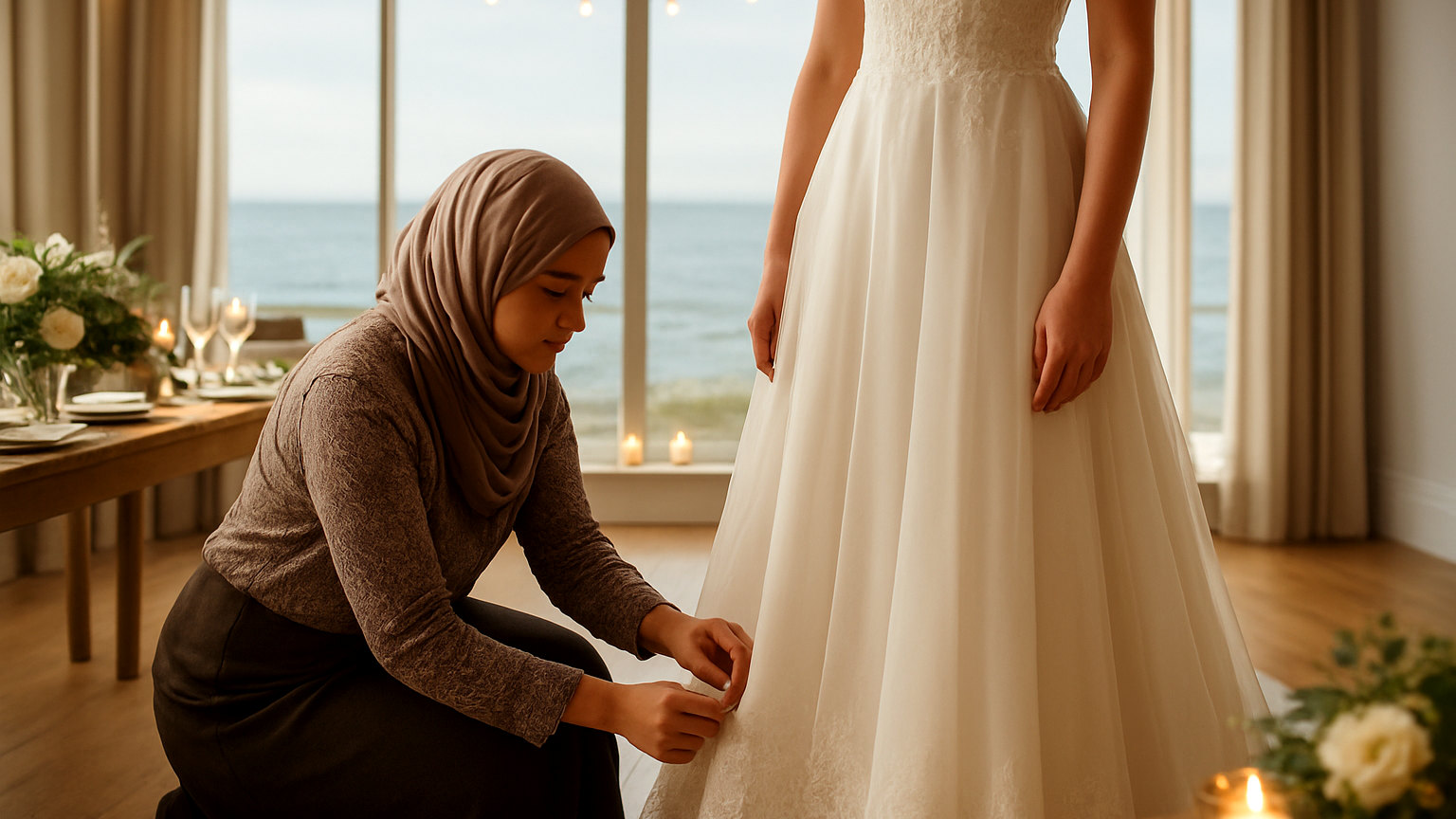
Bridal sizing bears very little relation to high street sizing, and this catches almost everybody. The number on a bridal label is not comparable to the number on anything else in your wardrobe, and it is worth understanding before an appointment rather than during one.
Why is bridal sizing different?
Because the industry uses its own charts, which have not moved with high street sizing over the decades and which vary between designers.
The practical consequence is that the number is meaningless as a comparison. It is a manufacturing reference rather than a description of anybody.
How is a dress ordered?
By measurements rather than by size. The boutique measures bust, waist and hips, compares them against that designer own chart, and orders the size that accommodates the largest measurement.
That is why almost every dress needs altering. The ordered size fits the widest point and everything else is brought in.
Does that mean the dress arrives too big?
Usually, and deliberately. Fabric can be taken in far more easily than it can be let out, so the convention is to order up and alter down.
Boutiques will explain this and it is worth hearing clearly, because a dress arriving noticeably loose can be alarming if nobody has said it will.
What about samples in the shop?
Boutiques hold samples in a limited range of sizes, so almost nothing in the shop will be your measurements. Dresses are clipped at the back to approximate a fit.
That is normal and it means the version you try is an indication rather than a preview. Ask the consultant to explain what will change once it is yours.
What if boutiques do not stock your size?
A real and widely acknowledged problem, and it varies considerably between shops. Some hold a genuinely broad range of samples and others hold very few.
Ask when booking what sample sizes they carry. It is a fair question, it saves a wasted appointment, and a boutique that answers it well is one worth visiting.
Should you order to your current measurements?
Yes. Order to the measurements taken at the time, and let the alterations do the fitting closer to the day.
Ordering a size smaller than your measurements in anticipation of anything is a well known way to end up with a dress that cannot be altered to fit, since letting out is limited by the seam allowance.
When are measurements taken?
At the point of order, and again at each fitting. Bodies change over the months between, which the alteration schedule exists to accommodate.
Tell the boutique if anything significant changes, including pregnancy, since it affects both the timing and the approach to the fittings.
What about separates?
They solve the sizing problem for anybody who is a different size on top and bottom, which is extremely common and which single dresses handle badly.
A top and skirt ordered separately can be sized independently, which frequently means less alteration and a better fit.
What should you take from all this?
That the number is not worth any emotional weight. It is a designer reference that differs between labels and describes nothing about the person wearing it.
What matters is the fit at the final appointment, and that is a function of the alterations rather than of anything printed on a label.
Do sizes vary between designers?
Substantially, which is why the same person can be two or three different sizes across a single boutique. Each designer publishes its own chart and the boutique orders against it.
Nothing about that means anything. It is a manufacturing convention and consultants will say the same if asked.
What should you do if the number bothers you?
Tell the consultant, who can simply not mention it. Most boutiques will happily order without discussing the number at all, and a good many brides ask for exactly that.
The fit at the final appointment is what matters, and that comes from the alterations rather than from anything on a label.


