
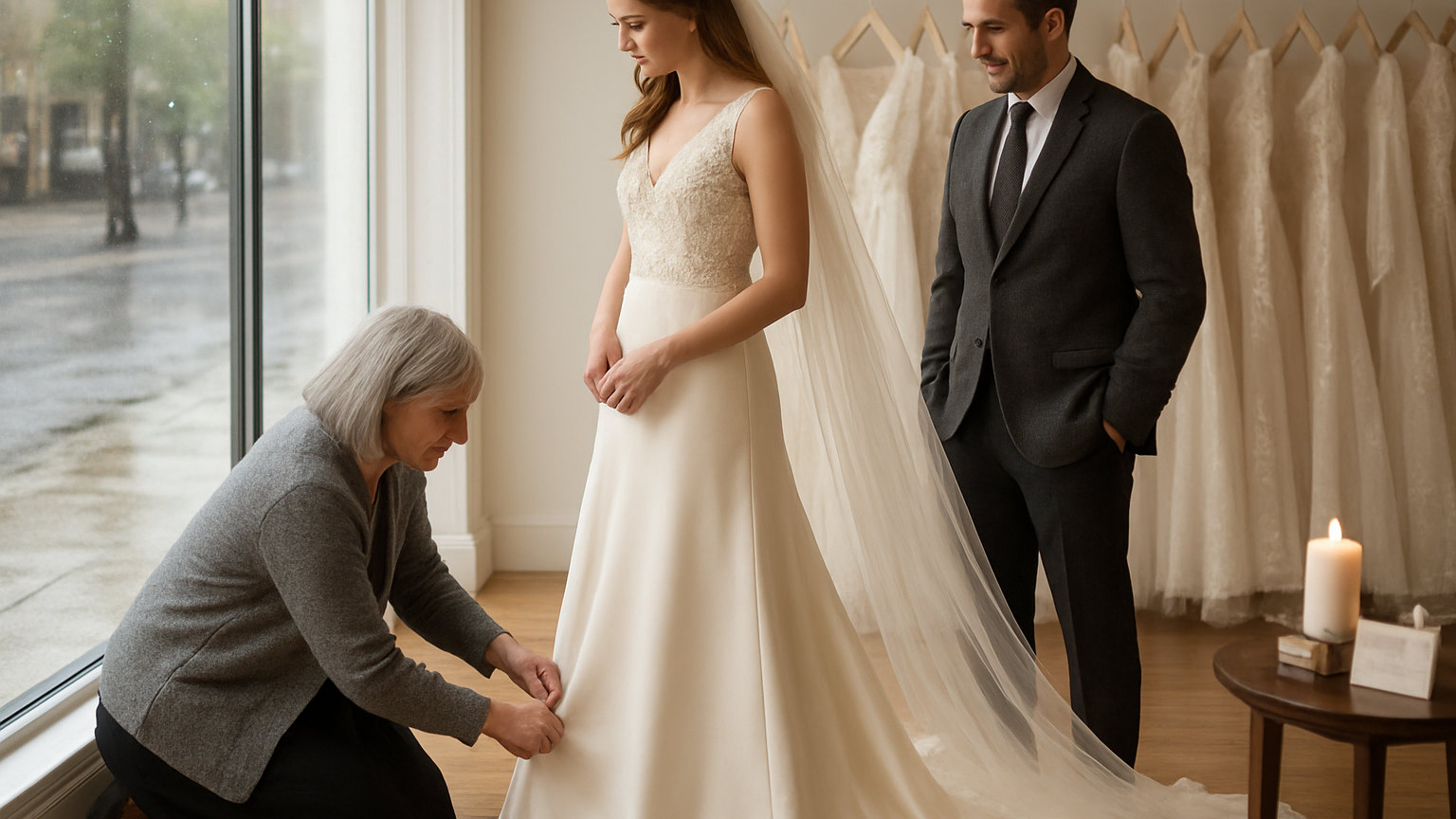
A veil is entirely optional and a great many brides do not wear one. Where one is worn, the length changes the look considerably and the practicalities change with it, particularly outdoors.
What are the main lengths?
Short veils sit around the shoulder or elbow. Fingertip veils reach roughly the hands. Chapel and cathedral veils extend beyond the dress, with cathedral being the longest and most dramatic.
The names vary slightly between shops. What matters is where it falls relative to the dress, so ask for that rather than the name.
What does a long veil do?
Adds drama to the ceremony and to photographs taken from behind, which is a substantial share of the images during the service.
It also requires managing. Somebody has to arrange it, it catches on things, and it needs removing before the evening, so plan who does that.
What does a short veil do?
Considerably less fuss and a lighter look. It suits shorter dresses, register office ceremonies, and anybody who wants the element without the management.
It also stays out of the way during a drinks reception, which a long veil does not.
What about wind?
The main practical consideration and the one most often forgotten. A veil outdoors on an exposed terrace or a coastal venue moves constantly and can be genuinely difficult.
Photographers frequently love it and brides frequently do not. Consider a shorter or weighted veil for an outdoor wedding, or none at all.
Should the face be covered?
Entirely a matter of preference and it is far less common than it used to be. Where a blusher is worn, somebody lifts it at a defined moment during the ceremony.
Decide who does it and when, and tell the officiant. It is a small choreography that goes wrong when nobody has discussed it.
When does it come off?
Usually after the ceremony or after the formal photographs, and almost always before the meal. Long veils and dining do not combine well.
Ask somebody to take it and know where it is going. It is one of the more commonly mislaid items at a wedding.
What are the alternatives?
Combs, pins, headbands, hair vines, flowers, a hat or nothing at all. All are entirely normal and none carries any obligation.
A cape or a jacket is an increasingly common alternative that provides a similar dramatic line without the veil management.
Should you try it at the appointment?
Yes, with the dress. A veil changes the look considerably and it is difficult to imagine without seeing it, particularly a long one.
Try more than one length. People frequently arrive certain about a cathedral veil and choose something shorter once they have seen both.
What does it cost?
Anything from a modest sum to several hundred pounds depending on length, fabric and any trim. Lace edged and hand finished veils cost considerably more than plain tulle.
It sits in the accessories budget alongside shoes, underwear and jewellery, which together commonly add several hundred pounds to a dress figure and are frequently left out entirely.
Does it suit every ceremony?
It suits whatever you want it to. Veils are traditional rather than required, and a great many weddings now have none at all without anybody remarking on it.
For a register office ceremony, a small wedding or a second wedding, something simpler is very common and entirely appropriate.
Who fixes it on the day?
Usually whoever is doing your hair, since it has to be secured properly. Tell them in advance and bring it to the trial.
When should you decide?
At the dress appointments, since it has to be seen with the dress. Deciding afterwards from photographs online rarely produces the same answer.
What is the short answer?
No. Wear one if you want one, and if you are unsure, try a few at an appointment and see whether any of them changes how the dress feels.


