
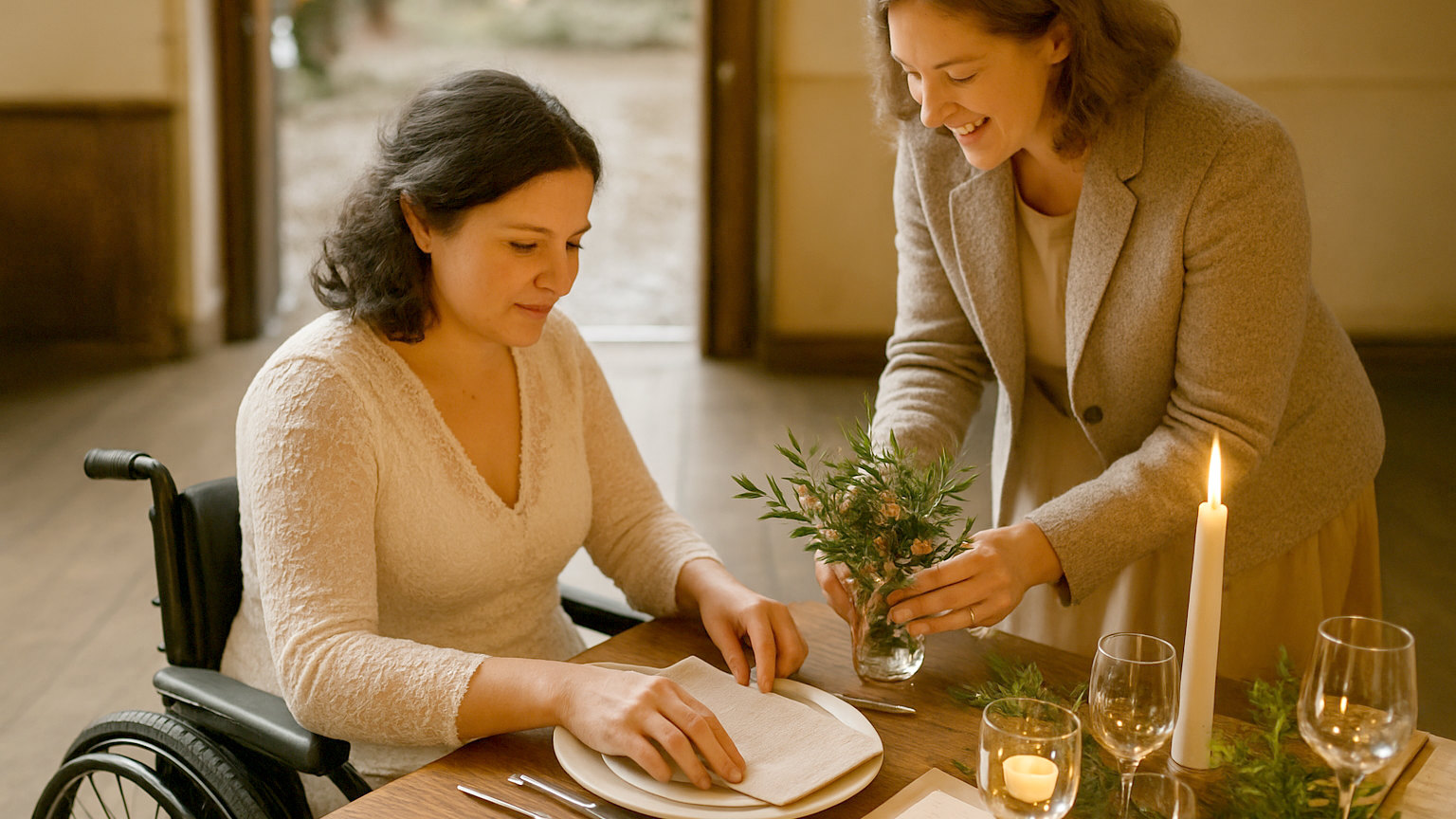
The table is where guests spend the longest looking at anything you chose, which is what makes it the most valuable styling at a wedding. What they actually register is a short list and most of it is not decorative.
What do guests notice first?
Whether they can see and hear the people opposite them. A centrepiece at seated eye level is registered within a minute, and not favourably.
After that, whether there is room to eat comfortably and somewhere to put a drink down.
What do they notice about the styling?
Candlelight, above everything, because it changes how the whole table feels. A table lit warmly at eye level is a different experience from one under overhead lighting.
Then the general impression of whether the table looks considered, which comes from coherence rather than from any individual item.
What do they not notice?
Favours, table numbers, menus, napkin folds and anything scattered across the cloth. Each is looked at once and none is remembered.
Guests cannot afterwards describe a centrepiece either, though they do remember whether they could talk to people across the table.
What do they touch?
The glassware, the cutlery and the napkin, for two hours. That is direct physical contact, which is a different order of experience from looking at something.
Upgrading those three is cheap relative to their visibility and is among the better value decisions available.
What produces complaints?
Crowding. A table too full to eat comfortably, a centrepiece blocking conversation, or too many objects to move out of the way.
All three come from adding items rather than from any item being wrong, which is the argument for choosing three things rather than six.
What do photographs show?
The table before guests sit down, which is the only time it looks as planned. Once people are seated, the styling is largely obscured.
That is a reason to have the room finished early enough to be photographed, and a reason not to over invest in details that disappear.
Where should the money go?
Candles first, since they cost little and change the whole table. Then the glassware and napkins, which guests handle directly.
Then one good centrepiece per table at a height that does not obstruct. Beyond that, the returns fall away sharply.
What can be cut without loss?
Favours, menus where the food is announced, table numbers where tables are named on the plan, and anything decorative scattered on the cloth.
Cutting all four reduces the cost meaningfully and removes nothing anybody experiences.
Does anybody compare?
No. Guests do not compare your tables with another wedding and have no idea what anything cost. What registers is whether the table felt pleasant to sit at.
Comfort, light and space do that, and none of them is expensive.
What is the test?
Sit at a finished table for ten minutes. Anything you would move, anything blocking your view, and anything you have not looked at is something to reconsider.
It takes ten minutes and it is more useful than any amount of research into what a table should have on it.
What is the single best decision?
Candles, in quantity, at a height that does not block anybody. They cost little, transform the table and improve every photograph taken at it.
What should you do with the rest of the budget?
Put it into the food, the drink or the glassware, all of which every guest experiences directly for hours rather than glancing at once.
What do couples say afterwards?
Almost universally that they spent time on details nobody mentioned. The table is worth attention and the individual objects on it matter far less than the overall impression.
Light it well, keep it uncrowded, and let people see each other. That covers almost everything guests actually register about a table.
What is the honest summary?
Comfort, light and space, none of which is expensive. Everything else on the table is for you rather than for them, which is a perfectly good reason to have it.


