
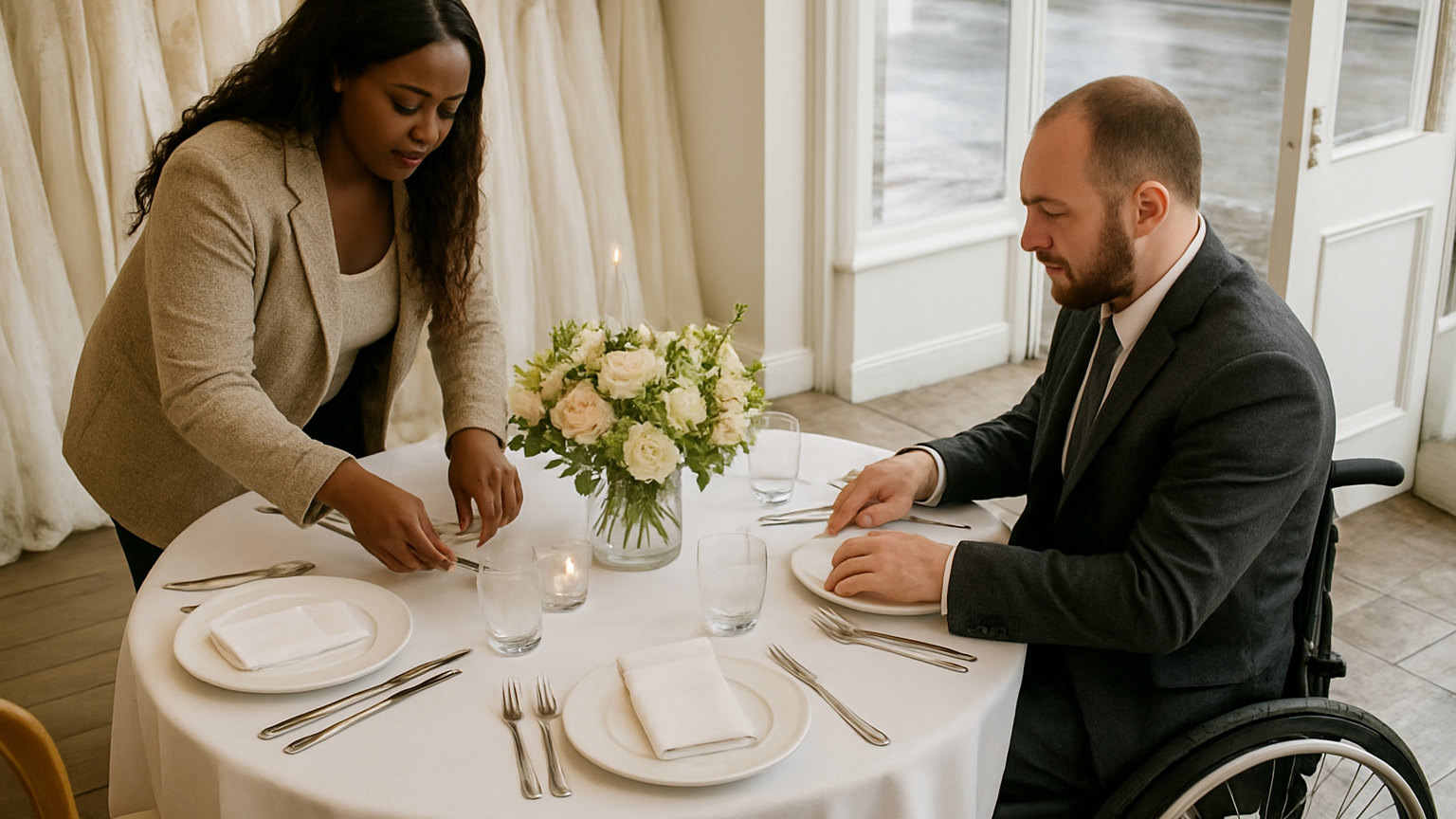
The place setting is the part of the table each guest actually touches for two hours, which makes it worth more attention than it usually gets. Most of it is handled by the venue, and a few decisions are yours.
What is standard?
A plate, cutlery for each course, a water glass, a wine glass and a napkin. That is the base and the venue lays it as a matter of routine.
Additional glasses are added for a second wine or a toast drink, and the venue will tell you what their standard setting includes.
How is cutlery laid?
Working from the outside in, one set per course, with dessert cutlery either above the plate or brought with the course.
Venues do this correctly without being asked. It is worth knowing only so you can check the setting looks right when the room is finished.
Where does the napkin go?
On the plate, to the left of the cutlery, or in a glass. All are conventional and the choice is largely aesthetic.
On the plate is the most common because it photographs well and it is where a place card, a menu or a sprig of foliage can sit with it.
What are charger plates?
Large decorative plates placed under the setting, removed before the food arrives. They add colour and a sense of occasion.
They are a hire cost per head and a genuine visual difference in photographs of an empty table. Ask whether the venue owns any before hiring.
What about the glassware?
Frequently where a venue standard set lets a table down. Good glasses look considerably better than heavy catering ones and photograph better.
Ask whether an upgraded set is available, since many venues hold more than one and offer the better one only on request.
What can be added?
A place card, a menu, a favour, a sprig of foliage or a small personal note. Each is optional and each takes space from the guest.
Two additions is comfortable and four starts to crowd the setting, which reduces the space somebody has to eat.
What about a personal touch?
A handwritten note at each place is inexpensive, takes real time and is consistently mentioned afterwards by the people who received one.
It is one of the few table additions that guests genuinely keep, which distinguishes it from most favours.
How do dietary requirements work?
Frequently through a discreet mark on the place card, which tells the serving staff without announcing anything to the table.
Agree the system with the caterer in advance. It saves a great deal of confusion during service and costs nothing.
What should you check?
One finished setting before guests come in, ideally photographed. Check the glassware is clean, the cutlery matches and the napkin sits where you expected.
It takes two minutes and it is the last opportunity to fix anything across a hundred and fifty covers.
Where does the money go furthest?
Glassware and napkins, both of which are handled directly and both of which are cheap to upgrade relative to their visibility.
Charger plates are the next step and are a genuine cost per head, so decide whether the empty table photograph justifies it.
What should you not add?
Anything the guest has to move before they can eat. Every item at a setting reduces the space somebody has, and they will relocate whatever is in the way.
Who sets it out?
The venue, from their standard setting, with your additions placed on top. Tell them exactly what goes where and provide a photograph.
What is worth upgrading?
Glassware and napkins, both handled directly for two hours and both inexpensive to improve relative to how visible they are.
Keep it uncluttered and check one finished setting before the doors open. Two minutes, and it is the last chance to fix anything.
Does the venue set the standard?
Largely, and it is worth asking what their default includes so you know what you are adding to rather than guessing.


