
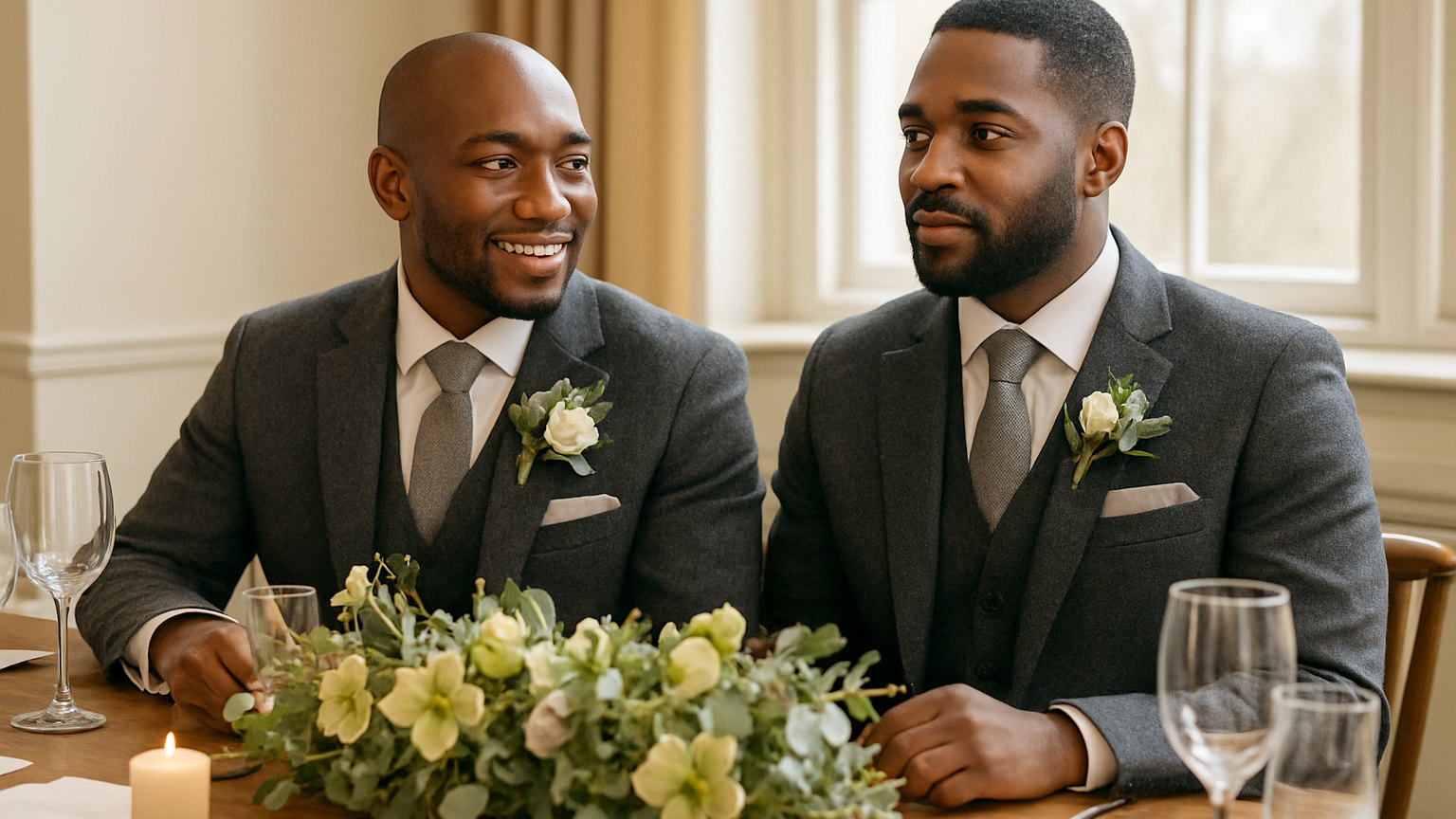
Long tables need a different approach from round ones. The sightlines run along the table as well as across it, which changes what works and rules out several things that suit a round.
What is the main difference?
A round table has one centre and a long table has a run. Styling it as a series of separate centrepieces produces a table that looks interrupted rather than continuous.
A continuous or repeating treatment along the length reads considerably better and is usually cheaper.
What works best?
A runner down the centre, either fabric, foliage or both, with candles and small arrangements along it.
A foliage runner with candles at varying heights is the standard solution because it works. It is inexpensive, it photographs beautifully and it keeps sightlines open.
What about height?
Lower than on a round table. Anything tall along the centre of a long table blocks the view down the length as well as across it.
If you want height, use tall narrow candlesticks rather than arrangements, since the eye passes between them.
How much do you need?
More than for round tables of the same guest count, since you are dressing a length rather than a point. A long table takes more foliage and more candles.
That is worth knowing when pricing, since long tables can cost more to style even where they cost less to seat.
How should it be spaced?
Evenly, with a repeating rhythm rather than a random scatter. Clusters at regular intervals along the runner read as deliberate.
Leave gaps for the food. A continuous unbroken run of decoration leaves nowhere for serving dishes, which matters if the meal is shared.
What about a bare table?
A good wooden trestle table with a foliage runner and candles and no cloth is one of the most effective looks available, and it removes the linen cost entirely.
Check what the tables look like before deciding. A worn or mismatched trestle needs covering.
What do guests experience?
Conversation with the people either side and opposite, which is four or five people rather than a whole table.
That is worth knowing when planning the seating, since a long table produces a different social experience from a round one.
What about serving?
Ask the caterer how they serve a long table and how much clear space they need. Plated service and shared platters have very different requirements.
Shared dishes need real space in the centre, which means a narrower runner or gaps built into it.
Does it suit every room?
Long tables fit rectangular rooms efficiently and generally seat more people per square metre than rounds, which is why they are worth considering when capacity is tight.
They suit barns, marquees and long halls particularly well, and awkward or irregular rooms less so.
What is the simplest version?
Bare or plain cloth, a foliage runner, candles in glass at intervals, and nothing else. It costs very little, it works in almost any venue and it is difficult to get wrong.
What about the ends?
People seated at the ends of a long table are slightly separated from the conversation, which is worth thinking about when placing guests.
Some couples leave the ends empty for that reason, which also gives serving staff access.
How do several long tables work together?
Parallel runs or a horseshoe are the usual arrangements, and both need the same treatment repeated along each. Ask the venue for a floor plan.
What does it cost?
Frequently more than round tables to style, since you are dressing a length rather than a point, which is worth factoring into a floral quote.
What is the most common mistake?
Treating it as several round tables in a row. A long table wants one continuous idea rather than a repeated centrepiece, and the difference is immediately visible.
One continuous run, kept low, with candles along it. Simple, cheap and very difficult to get wrong.


