
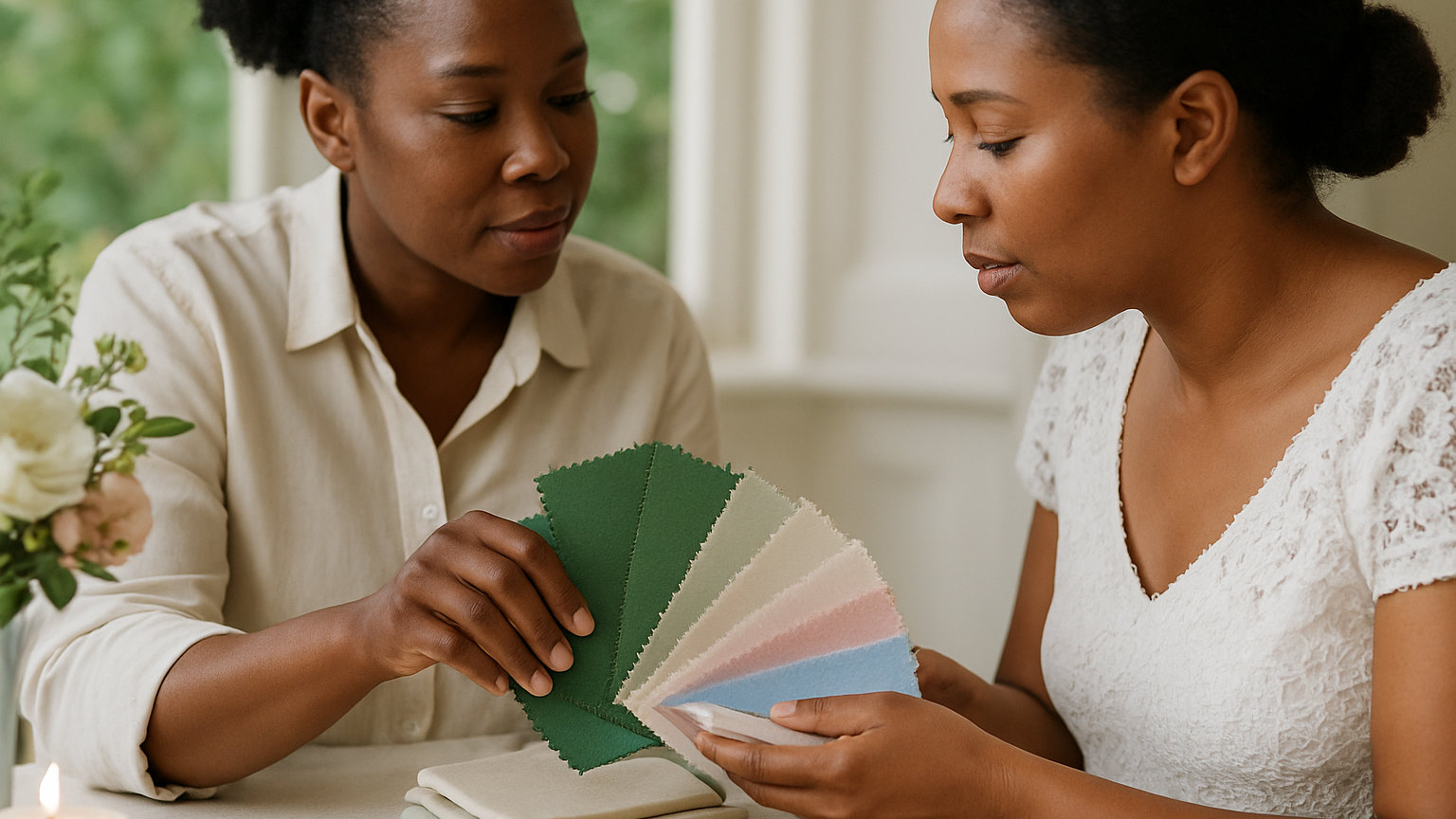
A palette assembled from several colours you like tends not to work. One built outward from a single starting point usually does, and the method takes about an hour.
Where does it start?
With one physical object. A fabric, a flower, a painting, a tile, a piece of pottery. Something you can hold and take to suppliers.
Starting from an object rather than a name means the colour is fixed from the beginning, which is what prevents the mismatches later.
What comes next?
A supporting colour that sits comfortably with it. Either a neighbouring colour, a lighter or darker version of the same one, or a warm neutral.
Hold the two together in daylight rather than choosing on a screen. If they fight, one of them is the wrong tone rather than the wrong colour.
How do you choose an accent?
Something with contrast, used sparingly. A darker or brighter colour that lifts the other two without competing with them.
The test is whether it works in small quantities. Anything that only looks right used widely is a main colour rather than an accent.
What about neutrals?
Add one warm or cool neutral to sit behind everything. Cream, stone, grey or white depending on which suits the venue.
The venue supplies most of them anyway, so choose the one that matches what is already in the room rather than fighting it.
Where does greenery fit?
Alongside rather than inside the palette. Foliage works with almost every scheme, adds volume cheaply and does not need to be counted.
Decide whether you want warm greens such as olive or cool ones such as eucalyptus, since that choice does affect how the palette reads.
How do you test it?
Put the physical samples together on top of a photograph of your venue, in daylight, and then under warm artificial light.
Photograph them with a phone as a rough check. Combinations that go muddy in an image will go muddy in the wedding photographs.
What proportions should you use?
Roughly two thirds main, one third supporting and a small fraction accent. Applied evenly, three colours compete rather than combine.
Think about where each will appear rather than how much you like it. The bridesmaid dresses carry the largest block, so that is usually the main colour.
What should you write down?
The three colours, the neutral, the greenery direction and where each will appear. One page, shared with every supplier.
Include the physical sample. A written palette without a swatch is a list of names, which is exactly the problem the method was designed to avoid.
When is it fixed?
Before bridesmaid dresses and stationery are ordered, which are the first commitments that depend on it. The florist brief comes later.
Once those are ordered it is effectively fixed, so any doubts should be resolved before rather than after.
What if it stops working?
Change the tone rather than the colour. Most palettes that fail do so because one element is warmer or cooler than the others rather than because a colour is wrong.
Adjusting one tone usually resolves it, and it is a far smaller change than starting again.
Where do you find a starting object?
Anywhere except a screen. A fabric shop, a garden, a gallery, a tile showroom or something you already own and like.
Objects you are drawn to repeatedly are usually a better guide than colours chosen deliberately, and they are already physical.
How long should it take?
An afternoon. A palette that takes three months is a palette being second guessed rather than built, and the extra time rarely improves it.
Who should agree it?
Both of you, briefly, since it appears in every photograph you will both be looking at for decades. It is a ten minute conversation rather than a negotiation.
Start from one object, add outward, test in real light, and write it on one page with a swatch attached. That is the whole method.


