
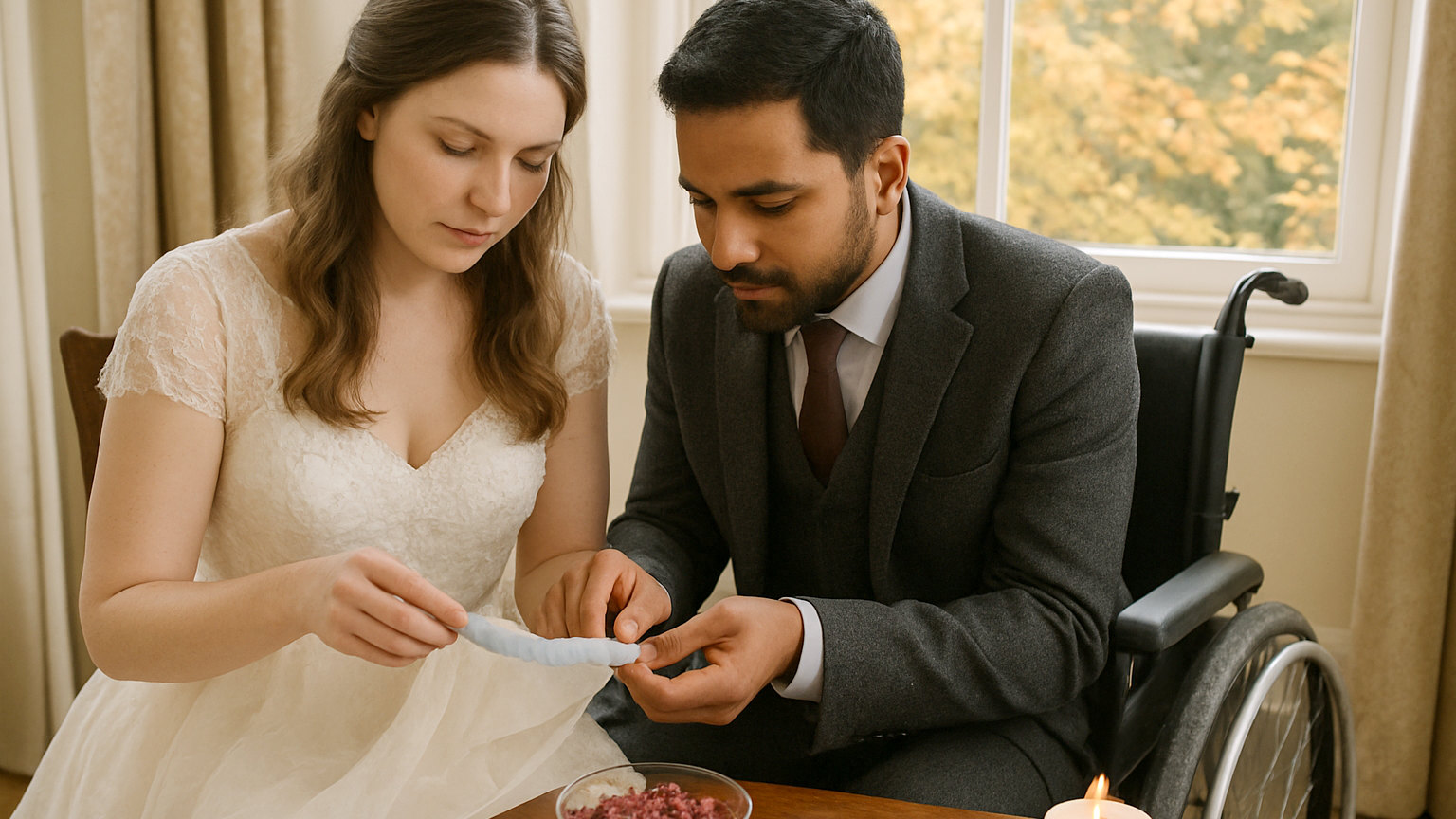
Throwing something over a newly married couple is one of the genuinely old wedding customs, appearing across many cultures and long predating paper confetti. What was thrown was originally food, and the meaning was straightforward.
What was thrown originally?
Grain, nuts, seeds and dried fruit in various traditions. Wheat is commonly cited in Roman practice, and rice appears across a number of Asian customs. All of them carry the same association with fertility and abundance.
The symbolism is not subtle. Showering a couple with the substance of a harvest was a wish for children, prosperity and enough to eat, which were the practical concerns of the societies doing it.
When did paper confetti appear?
In the nineteenth century, spreading from Italian carnival practice where small paper pieces replaced the sweets and other objects previously thrown. The word itself comes from the Italian for confections.
Paper was cheaper, lighter and did not attract birds or spoil, so it replaced food fairly quickly at British weddings. Petals and dried flowers came later as a further variation.
Do venues still allow it?
Many do, with conditions, and a meaningful number do not allow it at all. This is one of the most common restrictions couples discover after buying several boxes of it.
Ask the venue directly and early. Churches, listed buildings, hotels and anywhere with formal gardens all commonly restrict what may be thrown and where.
What restrictions are typical?
Biodegradable only is the most common, meaning dried petals or paper certified to break down rather than foil or plastic. Some venues specify a designated area outside so that clearing is contained.
Others prohibit it entirely, usually because of cleaning costs, drains, wildlife or a planning condition. A venue that says no is generally not negotiating.
What is the practical alternative?
Bubbles, ribbon wands, dried lavender, or nothing at all. Bubbles photograph surprisingly well and are permitted almost everywhere, though they can mark certain fabrics.
Sparklers are a popular substitute for the evening and carry their own restrictions, since many venues prohibit naked flames outright or require a designated area and supervision.
How long does it actually take?
Ten to fifteen minutes for a hundred guests, which is considerably more than the schedule usually allows. It has to be handed out, guests have to be gathered into position, and the photographer needs several attempts.
Build it into the running order explicitly. Confetti is one of the most consistently underestimated items on a wedding day timeline, and it always happens immediately after the ceremony when the schedule is already tight.
How do you organise it well?
Have somebody hand it out before the ceremony ends rather than afterwards, so guests already have it as they leave. Position them in two lines rather than a crowd, which produces better photographs and uses less.
Allow about a small handful per person. Boxes and cones look attractive and slow the distribution down considerably, so a basket at the door is usually more practical.
Is it worth doing?
Most photographers would say yes, because it produces one of the few images from the day where the couple and a large number of guests appear together in motion.
It is also cheap, and it gives guests something to do at a moment when they are otherwise standing about waiting for the drinks reception to open. If the venue permits it, it is one of the better returns available on a small amount of money and a quarter of an hour.
Who should hold it on the day?
An usher or a member of the wedding party, briefed in advance, with a basket by the door of the ceremony room. Not the couple, who will be occupied, and not the photographer, who needs to be in position rather than distributing anything.
Tell them where the venue permits it and where it does not, because the designated area is frequently a specific path or lawn rather than anywhere outside.
What happens to the clearing up?
It depends entirely on the venue and it is worth asking. Some clear it as part of the service, some charge for it, and a few require the couple to arrange it.
Biodegradable petals thrown on grass generally need no clearing at all, which is part of why venues prefer them.


