
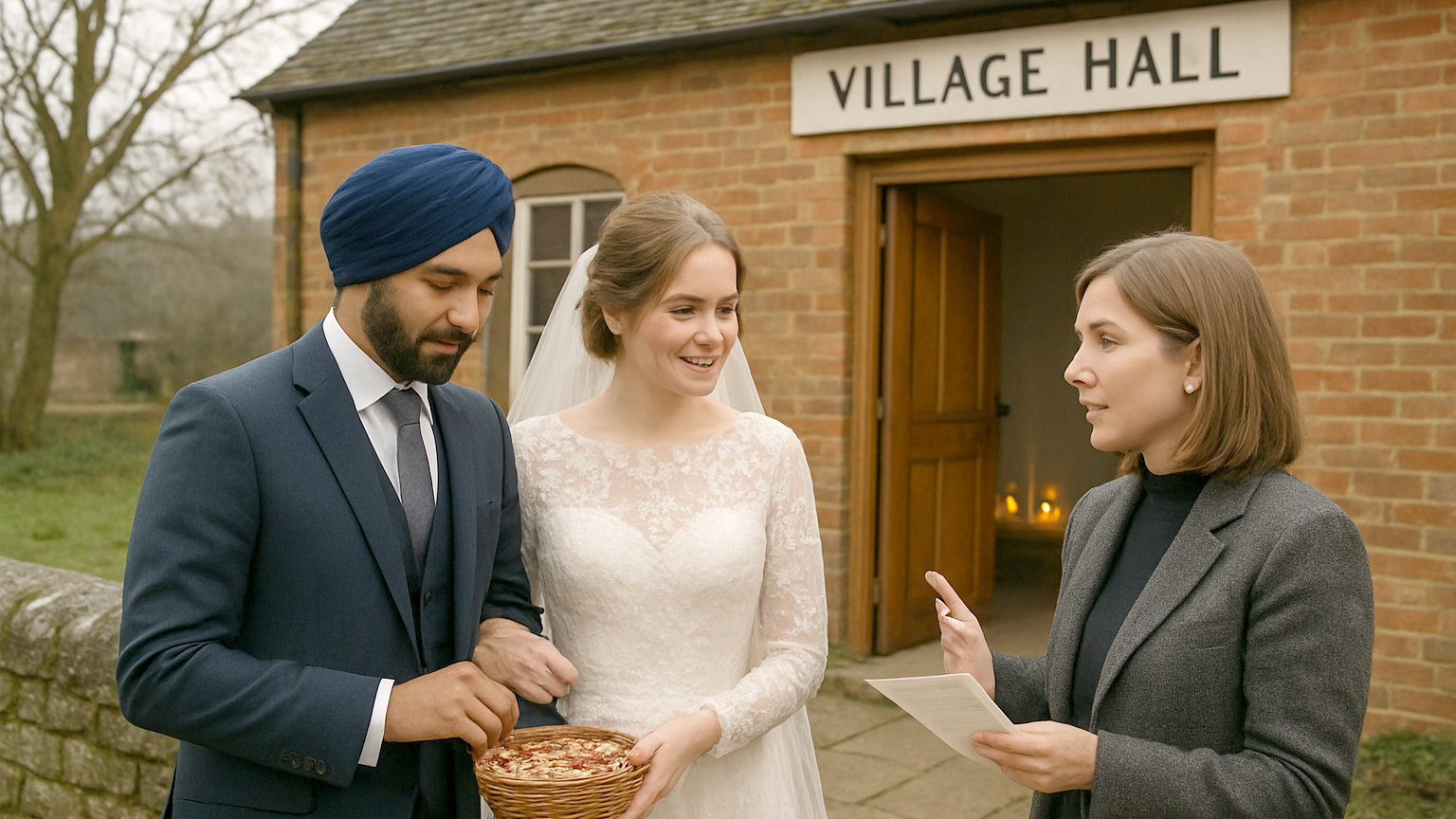
The rhyme lists four items a bride should carry, and a fifth that almost everybody has forgotten. It appears to date from Victorian England and is one of the more cheerfully arbitrary wedding traditions, which is part of why it has lasted.
What is the full rhyme?
Something old, something new, something borrowed, something blue, and a sixpence in her shoe. The final line has largely dropped out of use, partly because sixpences went out of circulation and partly because putting a coin in a shoe is uncomfortable.
The rhyme is generally traced to nineteenth century England, appearing in print in Victorian collections of customs. Like most such rhymes, its earlier oral history is not well documented.
What does something old represent?
Continuity with the family and the life before the marriage. In its original context it also carried a protective sense, with an older item understood to shield the bride from misfortune.
In practice this is the item most people find easiest and most meaningful. A piece of jewellery belonging to a grandmother, a handkerchief, a fragment of lace sewn into a dress, or a family bible carried instead of a bouquet.
What does something new represent?
Optimism about the marriage ahead. This is the item that requires the least effort, since almost everything a bride is wearing is new by definition.
Some couples make a deliberate choice of it anyway, most often the dress or the shoes, simply so that the item has been consciously selected rather than qualifying by accident.
What does something borrowed represent?
Borrowed happiness. The convention was that the item should come from somebody happily married, on the understanding that some of that good fortune would transfer.
It is the item with the most social content, because it requires asking somebody, and a great many people are pleased to be asked. It also has to be returned, which is the part occasionally forgotten in the aftermath of a wedding.
What does something blue represent?
Fidelity and constancy. Blue has been associated with faithfulness in western European custom for a long time, and before white became standard, blue was itself a common colour for wedding clothing.
It is usually the most discreetly handled of the four. A ribbon inside a hem, blue thread in an embroidered initial, blue shoes, or a piece of blue jewellery.
What was the sixpence for?
Prosperity. A silver sixpence placed in the left shoe was intended to bring wealth to the marriage, and it was traditionally given by the father of the bride.
Sixpences ceased to be legal tender in Britain in the 1980s, but commemorative ones are still made and sold specifically for weddings. Most people who use one now put it in a bag rather than a shoe.
Does it apply to every wedding?
Only if you want it to. The rhyme is addressed to a bride and assumes a wedding of a particular shape, and there is no reason it cannot be adapted, shared between two people, or ignored entirely.
Plenty of couples use the structure loosely, with each of them carrying something old and something borrowed. Nobody is checking, and the tradition has no authority beyond the pleasure people take in it.
Why has it lasted?
Because it is small, cheap and personal, which is an unusual combination in wedding traditions. It costs nothing, it involves family and friends, and it produces objects that carry real meaning afterwards.
It is also flexible enough to accommodate almost anything, which means it survives changes in fashion that have swept away larger customs. A great many couples who have discarded most of the traditional apparatus still find themselves sewing a piece of somebody else into a hem.
When are the items gathered?
Usually in the final month, and often later than intended. Anything that has to be borrowed needs asking for in advance, and anything sewn into a dress has to be done before the last fitting rather than after it.
Tell whoever is doing the alterations if something is being incorporated. A piece of lace or a scrap of fabric added at the final appointment is straightforward and impossible once the dress has been pressed and packed.


