
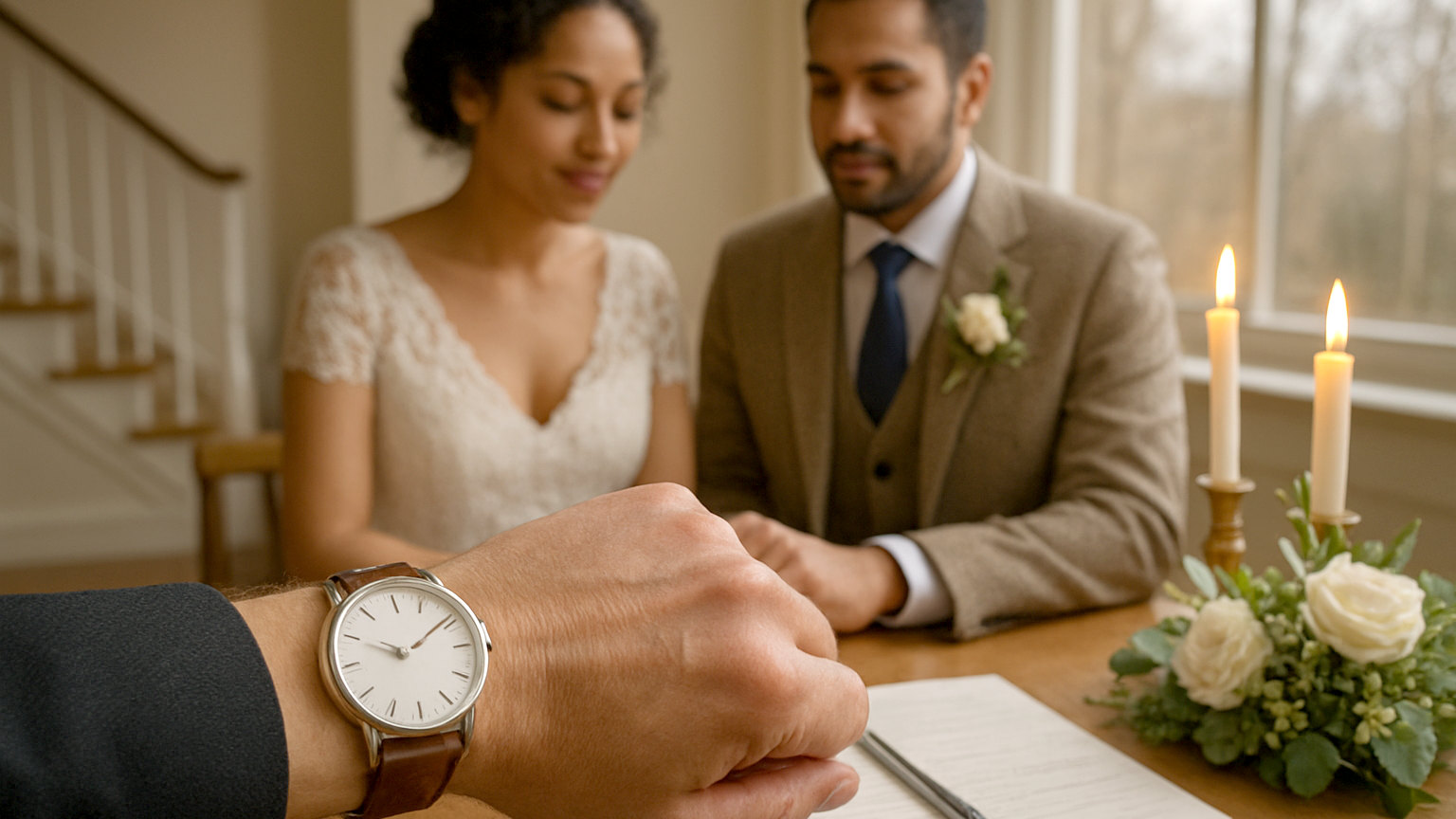
Speeches can happen before the meal, between courses or after it, and the choice affects the schedule more than couples expect. It also affects how much the speakers enjoy the day, which is a legitimate consideration given that most of them are dreading it.
What is the traditional order?
Traditionally speeches come after the meal, with the father of the bride first, the groom second and the best man last. That order is widely varied now and nobody objects, but it is still the default most caterers and venues assume.
Whatever order you choose, tell the venue and the caterer, because service depends on it. A kitchen expecting to serve at seven and finding speeches running until half past has a problem it cannot fix.
What are the advantages of speeches before the meal?
The speakers get them over with and can then enjoy the day, which is a genuine benefit rather than a small one. Guests are attentive because nobody has been drinking for three hours. And the room is quiet, which helps anybody nervous.
The cost is that the kitchen is waiting. Speeches that overrun by twenty minutes push a plated meal back by twenty minutes, and food held that long is worse food.
What are the advantages of speeches after the meal?
The overrun is absorbed by the evening rather than by the kitchen, which makes the whole schedule more forgiving. Guests are relaxed and warm, and speeches generally go down better.
The disadvantage is that speakers spend the entire meal unable to eat, and by the time they stand up some of the room has been drinking for five hours. Attention is noticeably harder to hold.
Does splitting them work?
Yes, and it is underused. One speech between each course keeps the room engaged, breaks up a long meal and spreads the risk of any single one overrunning.
It requires coordination with the kitchen, so agree it in advance rather than deciding on the day. Caterers are used to it and will tell you where the natural breaks fall.
How long should they run?
Eight to ten minutes each, and thirty to forty five minutes in total for three or four speakers. That is the figure to give people rather than leaving it open.
Speeches almost always overrun, usually by the length of one extra speech. Build fifteen minutes of tolerance into the schedule and tell whoever is running the day where it can be recovered.
Who should introduce them?
Somebody with a microphone who is not speaking, usually a toastmaster, the venue coordinator or a confident friend. Speeches that begin with somebody tapping a glass and hoping start badly.
Give that person the running order and the names, and ask them to keep things moving between speakers. Two minutes of shuffling between each speech adds up to more than most people expect.
What about the sound?
A microphone is worth arranging for any room over about sixty guests, and for any outdoor speech regardless of numbers. Rooms that seem quiet during a viewing are very different with a hundred and fifty people and a bar in them.
Check whether the venue provides one, test it beforehand, and make sure whoever is speaking has held it once. The first thirty seconds of a nervous speech being inaudible is a poor start and entirely preventable.
What if somebody does not want to speak?
Do not schedule them. Speeches are a tradition rather than an obligation, and a reluctant speaker delivers a speech everybody can tell they did not want to give.
The list of who speaks is entirely yours to set, and there is no requirement that it follows the traditional roles. What matters for the schedule is that the number is settled early, since four speakers and six speakers are twenty minutes apart and that difference has to be planned for rather than discovered.
Should the schedule say who speaks when?
Yes, by name and in order, on the version that goes to the venue and the caterer. A schedule that simply says speeches gives the kitchen nothing to plan around and gives the person introducing them nothing to work from.


