
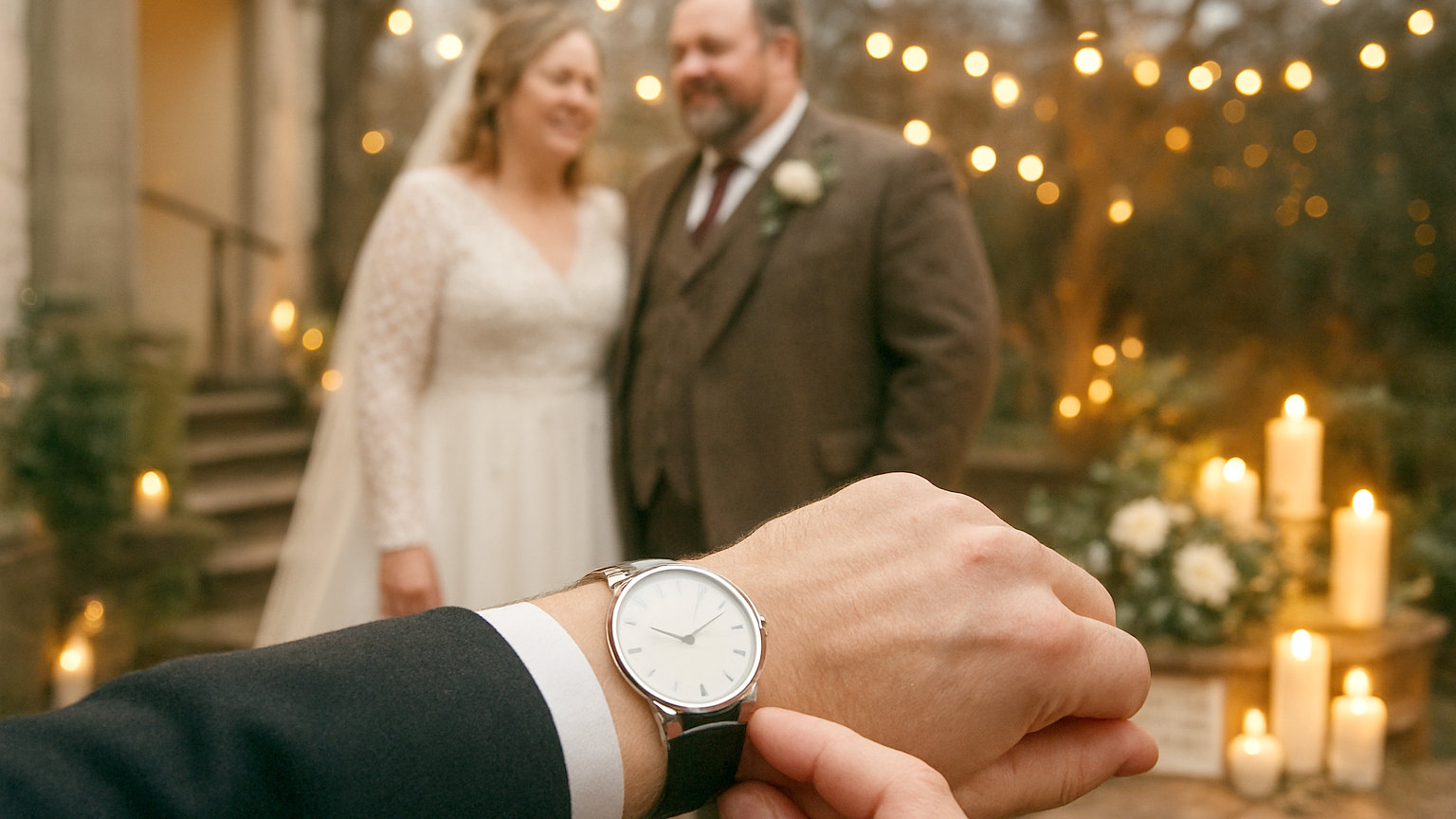
Most weddings finish between eleven at night and one in the morning, and the time is usually set by the venue licence rather than by the couple. It is worth establishing early, because it is the fixed point the whole schedule works backwards from.
What sets the finish time?
The premises licence, which governs when alcohol can be served and when regulated entertainment must stop. Some venues also have planning conditions on noise, particularly in residential areas or where neighbours have complained historically.
Ask for the specific times rather than a general answer. Music, bar service and the time everybody must be off site are frequently three different figures.
What is the difference between last orders and carriages?
Last orders is when the bar stops serving. Carriages is when guests are expected to leave. The gap between them is commonly thirty minutes and occasionally an hour.
Put both on the invitation or the website if there is any ambiguity, particularly where guests are booking taxis. Fifty people trying to leave a rural venue simultaneously at midnight is a genuine problem worth planning for.
Can the curfew be extended?
Sometimes, for a fee, and it depends entirely on the licence. Some venues offer an extra hour as a paid option. Others cannot extend at all because the limit is a planning condition rather than a commercial choice.
Ask before booking rather than afterwards. An extension that is available in principle but requires a separate application is not the same as one you can simply buy on the day.
How does the finish time shape the evening?
It determines how much dancing there actually is, which is what most guests remember. A first dance at nine with a midnight finish gives three hours. The same first dance at ten thirty gives ninety minutes.
That difference is created much earlier in the day. An afternoon that runs forty minutes late takes the time from here, which is the strongest practical argument for slack in the schedule.
What has to happen in the last hour?
Less than people plan for. Cake cutting, the first dance and evening food should all be well finished by then. The final hour works best when nothing is scheduled in it at all.
What does need arranging is the ending itself. A last song announced in advance gives the night a shape, and it is considerably better than the music simply stopping.
Who clears up and when?
Establish this before the day, because it is the single most common unpleasant surprise. Some venues clear everything. Some require all decorations, gifts and hired items to be removed the same night. Others allow collection the following morning within a stated window.
Whatever the answer, it should not be you doing it. Assign the job to two or three people in advance and tell them what is involved, because being asked at midnight is how goodwill gets used up.
Should there be an after party?
Only if somewhere is actually open and somebody has checked. A vague intention to continue elsewhere usually collapses at midnight when it turns out nothing nearby is serving.
If guests are staying on site, the hotel bar is the obvious answer and worth confirming with the venue in advance. If they are not, a taxi plan matters more than an after party.
Does an earlier finish work?
For many weddings, yes, and it is worth considering rather than defaulting to the latest possible time. A wedding that finishes at eleven with everybody still enjoying it is a better memory than one that limps to one in the morning with thirty people left.
Guests with children, older relatives and anybody travelling will thank you. The last hour of a long wedding is usually the emptiest, and ending while the room is still full is a deliberate choice a good many couples say afterwards they were glad they made.


