
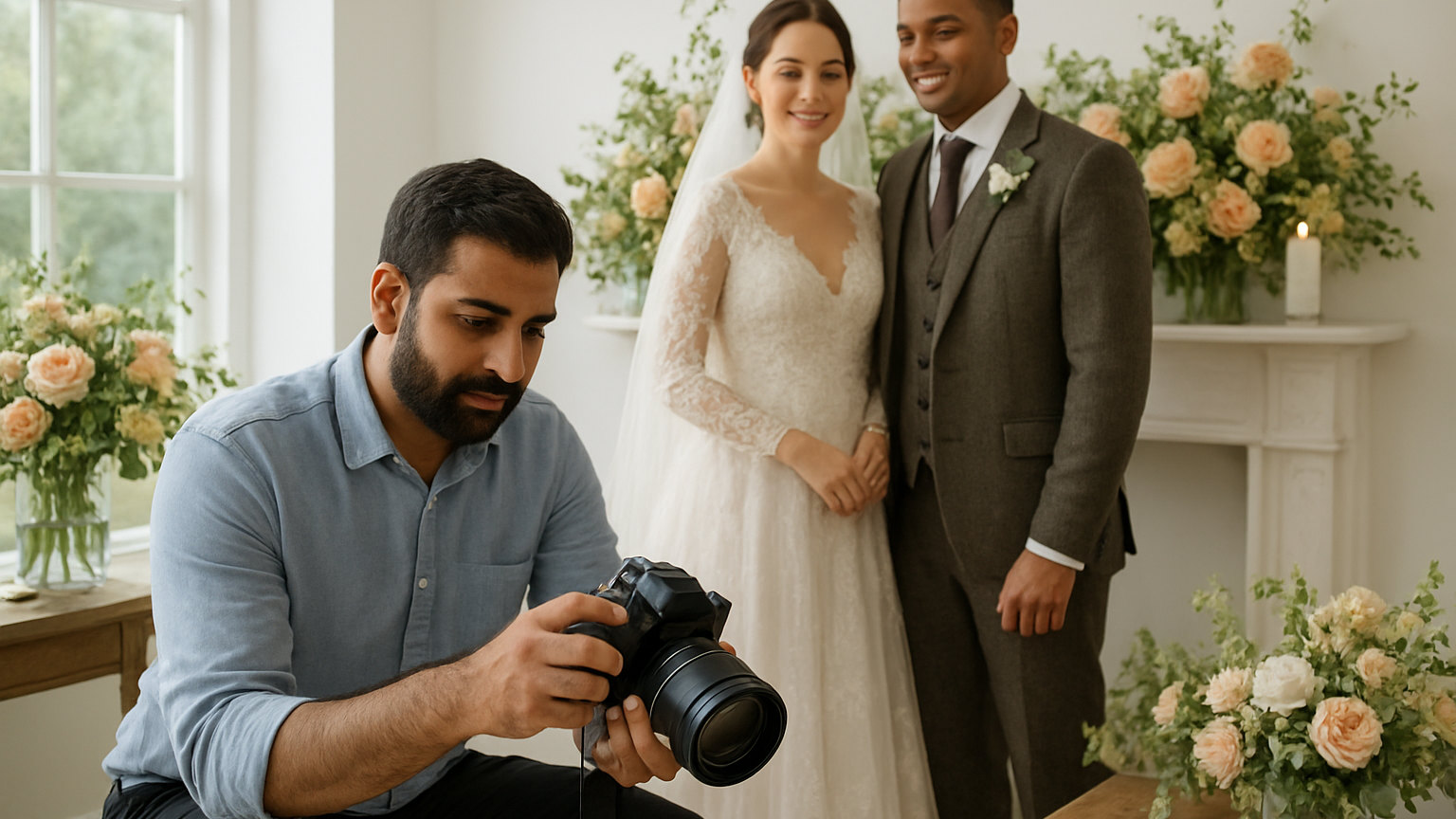
Photography is the single largest consumer of time in a wedding afternoon and the item most consistently underestimated on a first draft schedule. It is also the easiest to shorten, because most of the time goes on organisation rather than on taking pictures.
How long do group photographs take?
About three minutes per group once everybody is standing in the right place, and the standing in the right place is the slow part. Ten groups is a realistic thirty five to forty minutes with a hundred guests.
Every additional group is not just three minutes, it is three minutes plus the time spent finding two people who are at the bar. That compounding is why a list of twenty groups routinely takes over an hour.
How many groups should you have?
Eight to twelve is the range that works. Fewer feels thin and leaves relatives disappointed. More turns the drinks reception into a queue and is the most common reason guests remember standing around.
Write them as named combinations rather than descriptions, and order them so people can leave once they are finished. Start with the largest groups while everybody is still nearby.
How long do couple portraits need?
Twenty to thirty minutes to be worth doing. Ten minutes produces a handful of stiff frames, because it takes most people a while to stop feeling self conscious in front of a camera.
Many photographers prefer to split this, taking twenty minutes after the groups and ten minutes later in the golden hour before sunset. The second visit is usually where the best images come from and it costs almost nothing in schedule terms.
What else takes time?
Confetti, which people assume is instant and takes ten to fifteen minutes to organise properly. Getting ready coverage, which needs the photographer on site an hour or more before you leave. And the detail shots of the room, which have to happen before guests enter it.
That last one matters. A photographer needs fifteen minutes alone in the dining room before it is opened, so the schedule has to allow for the room being finished early.
How do you make it faster?
Nominate somebody who knows both families to call people forward from a written list. This single measure removes twenty minutes or more from the group photographs, because a photographer shouting names into a crowd is the slowest possible method.
Announce during the ceremony or immediately afterwards that group photographs are happening and where. Guests who know to stay near the terrace are considerably easier to gather than guests who have wandered.
Where should photography sit in the schedule?
Groups immediately after the ceremony while everybody is together, then portraits during the drinks reception. Leaving groups until later means reassembling a hundred people who have dispersed, which never works.
Keep the whole photography block inside the drinks reception rather than creating a separate slot. Guests should be having a drink while it happens, not waiting for it to finish.
How does the season change it?
Substantially. In summer the light lasts until nine or ten, so portraits can move to whenever suits. In midwinter the light is gone by four, which means everything outdoors has to happen immediately after the ceremony with no flexibility at all.
Check sunset for your date and tell the photographer what time the ceremony ends. Winter schedules frequently need the ceremony brought forward by an hour purely so the pictures are possible.
What happens if it rains?
Everything moves indoors and takes slightly longer, because space is tighter and groups have to be arranged in smaller batches. The schedule should assume this rather than treat it as an exception.
Agree the indoor location with the photographer in advance and agree who decides and by what time. A wet weather plan settled in April costs nothing. The same decision made on the morning, by people who are getting ready, is the most avoidable stress in any wedding.


