
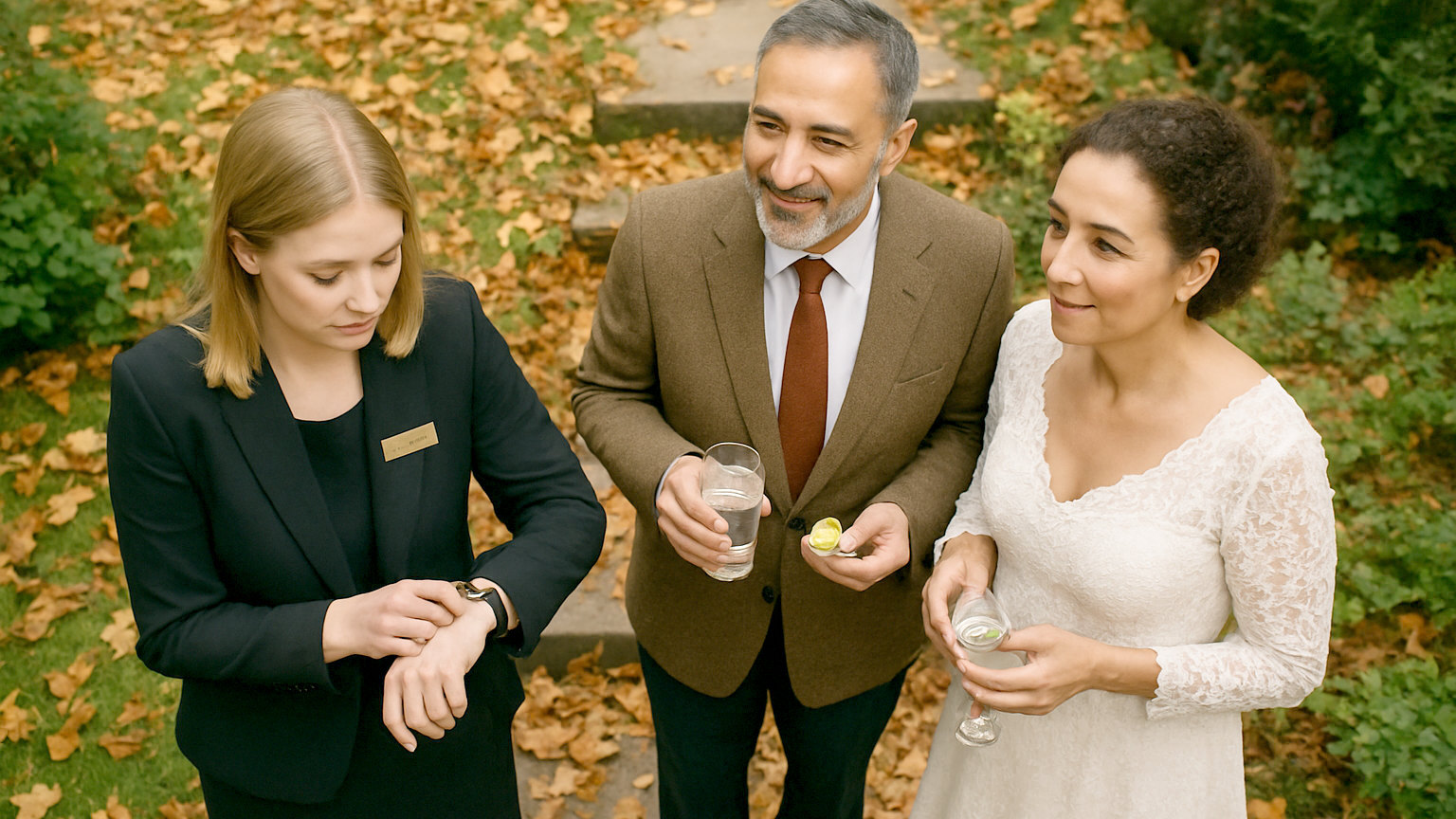
The drinks reception is the most flexible part of a wedding day and the part most often set arbitrarily. Ninety minutes to two hours is the working range for most weddings, and the right figure within it depends on what else has to fit inside the same window.
What sets the minimum length?
Whichever takes longer of the photographs or the room turnaround. If group shots and portraits need seventy minutes, the reception cannot be shorter than that without guests waiting for you.
Where the ceremony and meal share a room, the turnaround usually sets the floor at around an hour. Ask the venue what they need rather than estimating, because it varies with the room and the staffing.
Why is ninety minutes the usual minimum?
Because anything shorter leaves no room for the reception to be a reception. Photographs consume most of it, guests spend the time queuing at a bar that has just opened, and the couple never surfaces.
Ninety minutes allows photographs to happen alongside something that guests are actually enjoying, which is the entire point of the format.
When is two hours better?
When there are more than about a hundred and twenty guests, when the ceremony is at a separate venue, when the group photograph list is long, or when the weather is good and there is somewhere pleasant to be.
Two hours is also the sensible choice if you want any slack in the day at all, because this is where slack should live. It absorbs delay without anybody noticing.
When does it become too long?
Past about two and a half hours, and sooner if guests are standing, cold, or have run out of canapes. The energy in a room drops noticeably at that point and it is hard to recover before the meal.
Guests who have been drinking for three hours without a proper meal is the other consideration, and it is the most common cause of a difficult evening later.
What has to be provided?
Something to drink including a good non alcoholic option, something to eat, somewhere to sit for at least a third of the guests, and shelter from whatever the weather does.
Canapes matter more than they appear to. The gap between breakfast and a meal served at five or six is long, and food is what stops the drinking landing badly. Three to five pieces per person is a common figure.
How much drink is needed?
Commonly two to three drinks per guest across the reception, more in warm weather. Ask the venue or caterer for their own figure based on your numbers and the length, since they see it every week.
Make sure the bar or service can actually cope. One person pouring for a hundred and fifty guests creates a queue that lasts the whole reception, and the answer is more staff rather than more time.
Does it need structure?
Very little. Background music, somewhere to sit and something to look at is enough. This is usually the only stretch of the day where guests can talk properly, and filling it with organised activity works against that.
Lawn games, a guest book or a photographer moving around are pleasant additions rather than requirements. Where structure genuinely helps is if the reception has been extended beyond two hours by a delay.
How do you end it?
With a clear announcement and enough time for people to move. Calling a hundred guests to a meal takes fifteen to twenty minutes from the announcement to the last person sitting down, and that belongs in the schedule rather than being absorbed by the kitchen.
Ask the venue to make the announcement twice, a few minutes apart, and to open the doors between the two. Guests move at a reasonable pace when they know the room is ready and very slowly when they do not.
Should it happen outdoors?
Where the weather allows, and with an indoor plan agreed in advance for when it does not. The indoor version needs checking properly, because a room that holds a hundred people who can spill outside does not hold a hundred people who cannot.


