
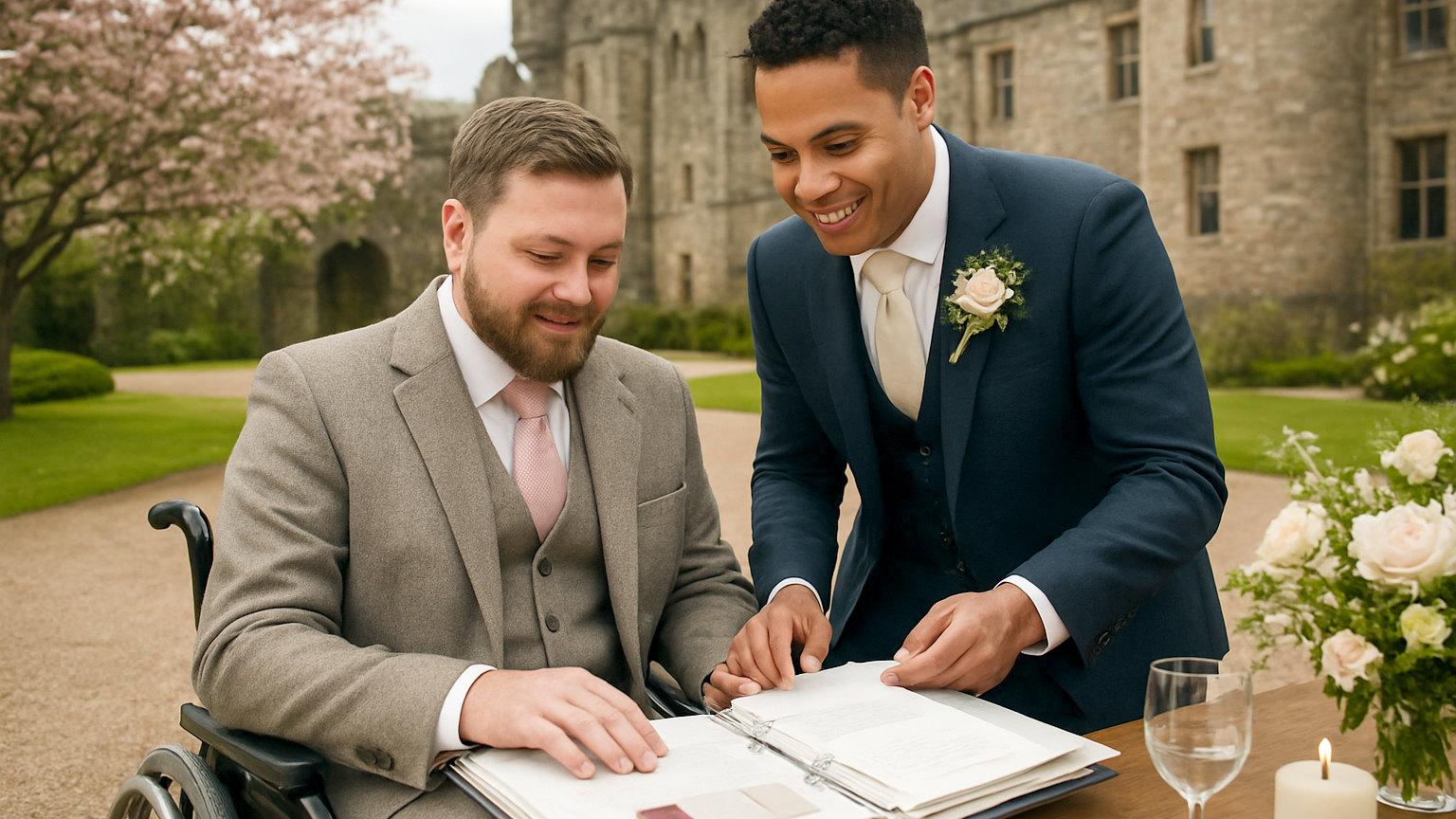
Three months is the busiest phase of most weddings. It is when the abstract decisions turn into confirmed arrangements, when the guest list stops being flexible, and when the number of small jobs multiplies. It is also the point at which a plan that has been drifting becomes visibly behind.
What has to happen in the next few weeks?
Invitations go out, if they have not already. Everything else at this stage depends on knowing who is coming, and every week the invitations sit unsent is a week added to the chasing later.
Alongside them, the ceremony content needs attention. Readings, music, vows and the order of service all take longer to settle than people expect, particularly where several people have opinions, and some ceremonies require the wording to be approved in advance.
When do final numbers matter?
Sooner than the wedding, and usually about two weeks before it. That deadline drives the invitation reply date, which is why the reply date should sit six to eight weeks out rather than a fortnight.
Expect to chase. A meaningful proportion of guests will not reply to the invitation at all, and a phone call or message gets a faster answer than a second card. Build the chasing into the plan rather than treating it as a failure.
What should be confirmed with suppliers now?
Arrival times, access requirements, what they need from the venue and who they should contact on the day. Send one message to each supplier with the same information in it, and ask them to confirm it back.
This is the single most effective thing you can do at three months. Most problems on a wedding day are not failures of skill, they are failures of information, and one written confirmation per supplier removes most of them.
Which appointments should be booked?
Hair and makeup trials, the final dress fitting, menswear fittings, and the cake tasting if that is included. Trials in particular need to happen with enough time to change your mind, so aim for six to eight weeks out rather than the final fortnight.
If any of the wedding party need appointments too, book them together where possible. Coordinating five separate diaries in the last month is a job nobody wants and it usually falls to whoever is least able to say no.
What about the paperwork?
Give notice if you have not already, and check the specific requirements for where you are marrying, because they differ across the United Kingdom. Confirm what documents have to be produced on the day and who is responsible for bringing them.
If either of you is changing your name afterwards, this is a reasonable point to find out what that involves. It is not urgent, but it is far easier to read about now than in the week after the wedding.
How do you keep the workload manageable?
Batch the small jobs rather than doing them one at a time. Set aside a single evening for everything involving stationery, another for everything involving suppliers, another for everything involving money. Switching between categories is what makes this stage feel relentless.
Hand over anything that can be handed over. Chasing replies, collecting hire items, assembling favours and building playlists are all genuinely delegatable, and the people who offered to help six months ago meant it.
What should you start but not finish?
The seating plan and the running order. Both need real numbers to be finished, and both benefit enormously from being started early with the difficult parts noted. Write down which guests cannot sit together while you still have the patience for it.
Speeches sit in the same category. Nobody writes a good speech in a week, and the people who leave it that late are the ones who are most nervous about it. A rough draft at three months and a rehearsal at three weeks produces a considerably better result than anything written the night before.


