
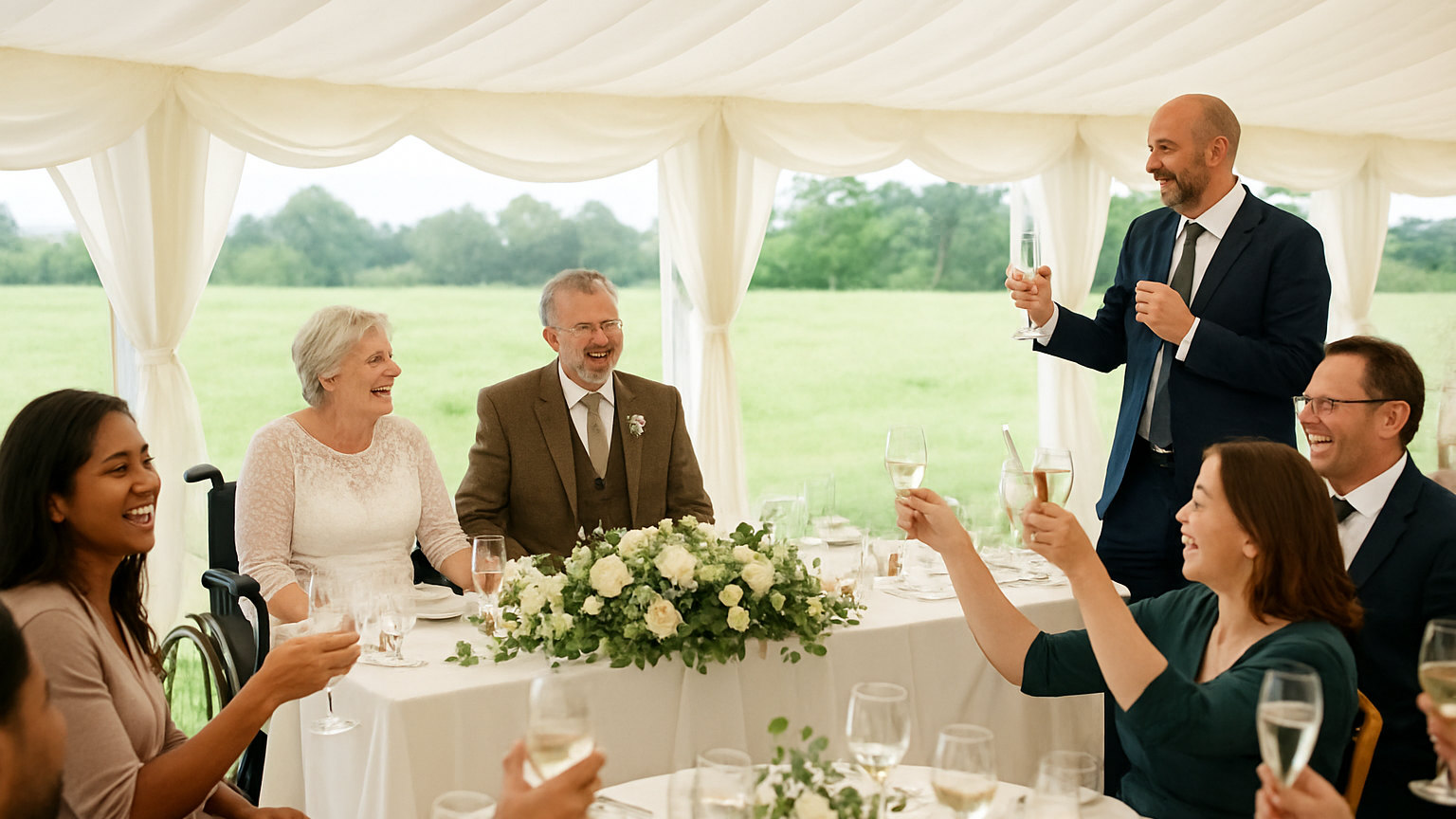
Speeches can happen before the meal, between courses or after it, and each has consequences beyond preference. The choice affects the speakers, the guests and the length of the afternoon.
What is traditional?
After the meal, once everybody has eaten and the plates are cleared. It is still the most common arrangement.
Guests are fed, settled and relaxed, which is a good audience.
What is the case for before?
Speakers can enjoy the meal rather than dreading it, which is a genuine kindness to anybody nervous.
It also means the meal runs uninterrupted and the block is over while guests are fresh.
What is the drawback of before?
Guests are hungry, having eaten canapes several hours earlier. A long speech block before food is felt.
Keep it short if you go first, and make sure there has been something substantial during the reception.
What about between courses?
It spreads the block out and adds considerably to the length of the meal, frequently thirty to forty minutes.
It also interrupts the kitchen, so ask the caterer whether it works before deciding.
How does it affect the evening?
Everything after the meal is compressed by whatever the meal and speeches take. A long block pushes the first dance later.
A late first dance is the most common cause of a slow evening, so the total matters more than the placement.
What do the speakers prefer?
Almost universally before. Anybody who has spent a meal unable to eat will say the same thing afterwards.
Ask them, since it costs nothing and it is their afternoon too.
What about the drinks?
Glasses need filling before the block starts rather than during it, which takes time for a room of a hundred and fifty.
Tell the venue exactly when the speeches begin so the pour happens ahead of it.
What about the photographer?
They need to know the timing and to be in position rather than eating. Suppliers are usually fed while guests eat for that reason.
If speeches are before the meal, make sure the photographer eats afterwards rather than during them.
Does it need a break?
Not for three speeches under twenty minutes. Beyond that, guests get restless and a comfort break is worth considering.
The better answer is to keep the block short enough not to need one.
What should you decide?
The placement, the total length and the time the block starts, then put it on the running order for everybody.
Before the meal is kinder to the speakers and after is easier on the guests. Both work, and the length matters more than either.
Who decides?
The two of you, with the caterer and the venue confirming it works. Both have views and both are worth hearing.
Ask the speakers too, since they will almost all prefer before the meal.
What should be on the running order?
The start time, the order, the approximate length of each and the total. Sent to the venue, the caterer, the photographer and every speaker.
What is the practical answer?
Before the meal if anybody is nervous, after if the gap has been long and guests are hungry. Both work.
What about between courses?
It extends the meal considerably and interrupts the kitchen twice. Ask the caterer before choosing it, since some will decline.
What is most often forgotten?
Filling the glasses beforehand and telling the photographer. Both take one instruction and both are routinely missed.
How does it affect the evening?
Directly. Every minute the block runs over pushes the first dance later against a curfew that does not move.
What do most weddings do?
After the meal, and a growing number now do them before. Both are entirely normal and neither surprises anybody.
What should you ask the venue?
When the glasses can be poured and how long the turnaround afterwards takes.
Whichever you choose, put the start time on the running order and tell everybody.


