
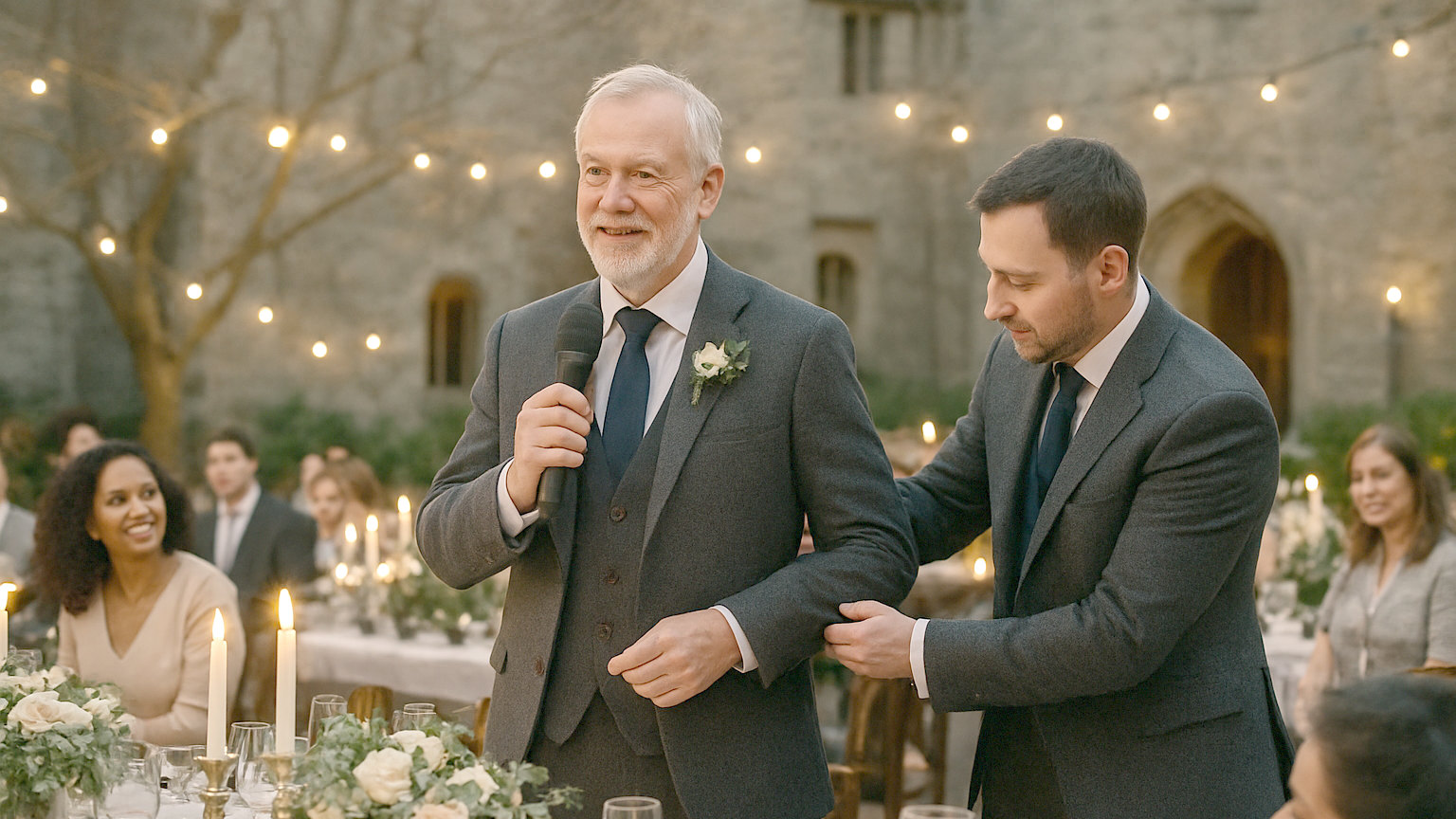
The opening speech sets the tone for the whole block. Traditionally given by the father of the bride, it is now given by whichever parent or relative is best placed, and the job is the same either way.
What is the job?
Welcome everybody, say something warm about your daughter, welcome her partner into the family, and toast the couple.
Four things, five minutes, and the tone set for everything that follows.
How should it open?
By welcoming guests, particularly anybody who has travelled a long way, and thanking people briefly.
Keep the thanking short. It is the part most likely to expand and the part guests least need.
What should be in the middle?
One or two specific stories from childhood or growing up, chosen because they say something true rather than because they are funny.
Guests want to hear about the person as a child from somebody who was there. That is what only this speech can provide.
What about the partner?
Say something genuine about them and about welcoming them. It matters to them and to their family, and it is frequently rushed.
A sentence about the first time you met them is usually enough and is always well received.
How emotional should it be?
As emotional as you are. Fathers becoming tearful during this speech is entirely normal and the room finds it moving rather than awkward.
Pause, breathe and continue. Nobody minds and it is remembered fondly.
What if the family is not traditional?
Whoever raised or is closest to the person can give this speech. A mother, a stepparent, a sibling, a grandparent or a family friend.
Nobody in the room will find it unusual. What matters is that somebody welcomes people and speaks warmly.
What about divorced parents?
Handle it in advance rather than in the speech. Decide who speaks, tell the other in good time, and keep the content neutral.
Where both want to speak, place them apart in the order and ask each to keep it brief.
What should be avoided?
Long family history, in jokes, anything about the cost of the wedding and anything that might read as a comment on the marriage.
Also anything about previous relationships, which never lands well from any speaker.
How long?
Five minutes at most. This speech sets the length expectation for the block, and a long opener makes everything after it feel longer.
Time it aloud, standing, and cut a third.
How should it end?
With a clear toast to the couple, plainly signalled so guests know to raise a glass.
Then hand to whoever is next, which keeps the block moving and tells the room the order is deliberate.
Should you rehearse it?
Aloud, standing, several times. It is the speech most likely to be delivered by somebody who does not speak publicly often.
Read from cards on the day rather than memorising, which everybody expects and nobody minds.
What makes it work?
One specific childhood story, a genuine word about the partner, and a clear toast. Everything else is optional.
What do guests want from it?
To hear about the person from somebody who has known them longest. That is what only this speech can give them.
How long should it be?
Five minutes at most. It sets the expectation for the whole block, so a short opener helps every speaker after you.
What should you avoid?
Long family history and anything about what the wedding cost. Neither belongs in a speech.
What if you are not the father?
The speech is the same. Whoever is closest gives it, and the room adjusts within a sentence.
Welcome the room, tell one story, welcome their partner, and raise a glass.
What makes this speech different?
You are the only speaker who knew them as a child, which is the material nobody else in the room can offer.
It is a short speech with one job, and warmth carries it further than polish.


