
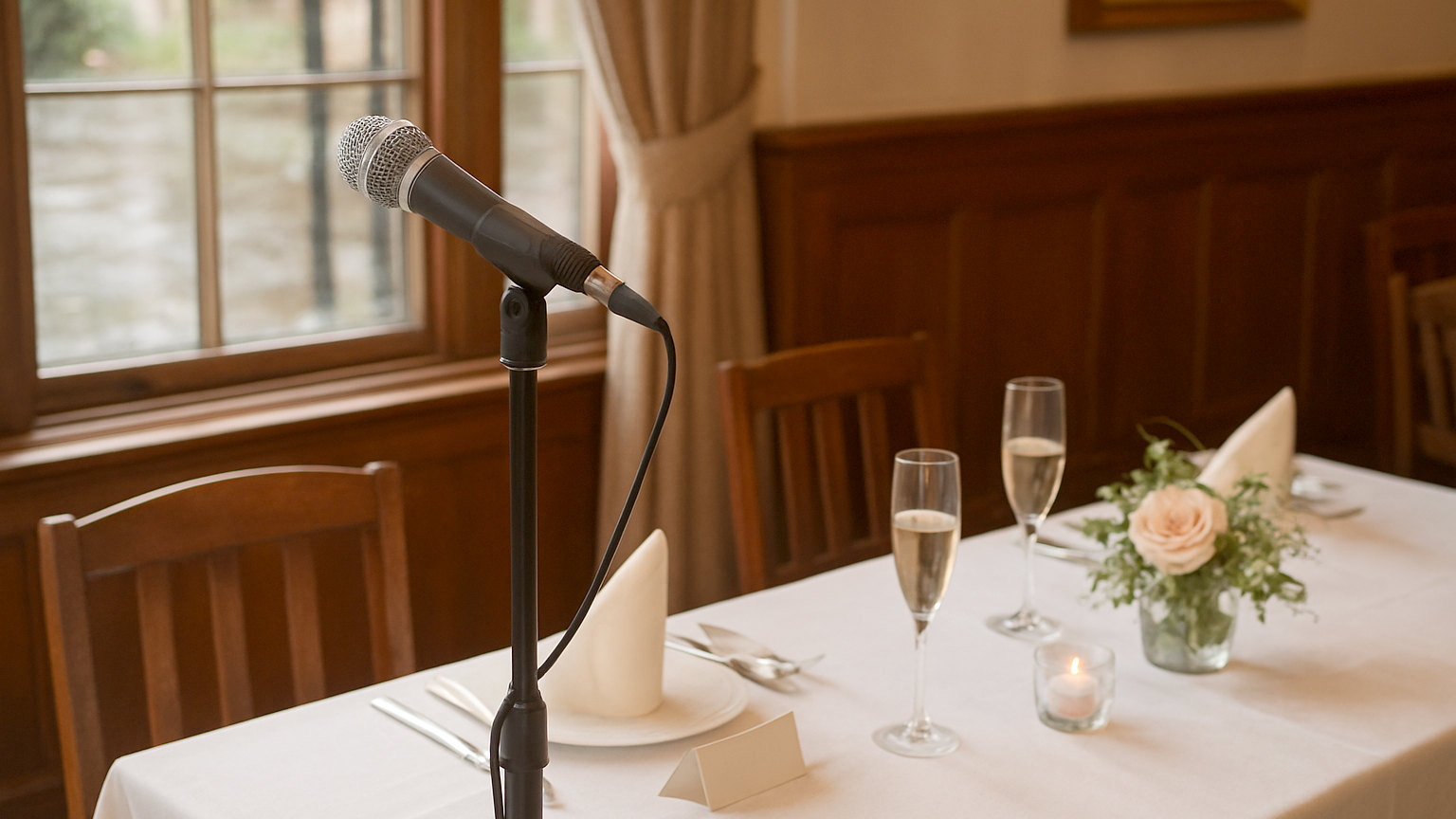
The couple speech carries the thanking and most of the sincerity, which makes it the most functional of the block and the one most likely to become a list. Keeping it warm rather than administrative is the whole challenge.
What is the job?
Thank the people who need thanking, say something about each other, acknowledge anybody absent, and toast somebody.
Four things, and the thanking is the part that has to be kept under control.
Who needs thanking?
Parents, anybody who contributed financially, the wedding party, anybody who did a job, and the guests for coming.
Name a small number specifically and cover everybody else generally. A two minute list is two minutes of a five minute speech.
What about the sincere part?
Something specific about your partner rather than general praise. One story or one true observation lands harder than a paragraph of adjectives.
This is the moment guests are most attentive, so it is worth the effort of finding the right thing.
Should both of you speak?
Entirely up to you. Both speaking, one speaking, or a joint speech shared between you are all common and none needs explaining.
If only one of you wants to, that is fine and nobody counts.
How does a joint speech work?
Alternate sections rather than sentences, so each of you has clear stretches. Swapping every line is difficult to deliver and sounds rehearsed.
Practise the handovers, which is where joint speeches stumble.
What about gifts?
Frequently handed out during this speech, to parents and the wedding party. It adds time, so keep the number small.
Have somebody bring them to you rather than collecting them yourself, which breaks the flow entirely.
What about absent people?
A short mention of anybody who has died or could not be there is warmly received and should be brief.
Tell the people closest to them beforehand so it does not catch them unprepared.
Who should you toast?
Traditionally the bridesmaids, and now frequently the parents, the guests or anybody who made the day happen.
Signal it clearly so guests know to raise a glass.
How long?
Five minutes for one speaker, and no more than seven if both of you speak. The thanking is what makes this one expand.
Write the list, then cut it to the names that genuinely need saying aloud.
What do guests actually want?
To hear you sound happy and to be thanked briefly. They do not need the full list and they do want the sincere moment.
Get those two right and the speech works, whatever else is in it.
Who writes it?
Both of you, together or separately depending on the format. Agree the thanking list between you so nobody is named twice or missed.
Write the list first, then cut it, then write the rest of the speech around what remains.
How do you keep the thanks short?
Name five or six people specifically and cover everybody else in one sentence. Guests do not need the full list.
What is the most important part?
Something specific about each other. It is the moment guests are most attentive and the one they remember.
When should you write it?
A month out, so there is time to cut the thanking list and practise the handovers if you are speaking together.
What should you not forget?
Thanking the guests for coming, which is easy to leave out and is the one thing every person in the room is included in.
Do you both have to speak?
No. One of you, both of you or a joint speech are all common, and nobody is counting.
Thank people briefly, say something true about each other, and toast somebody.
Who should you thank first?
Whoever contributed most, named specifically, then everybody else in one sentence. Guests do not need a full itemised list.
Keep the thanks tight and the sincerity specific, and it works.


