
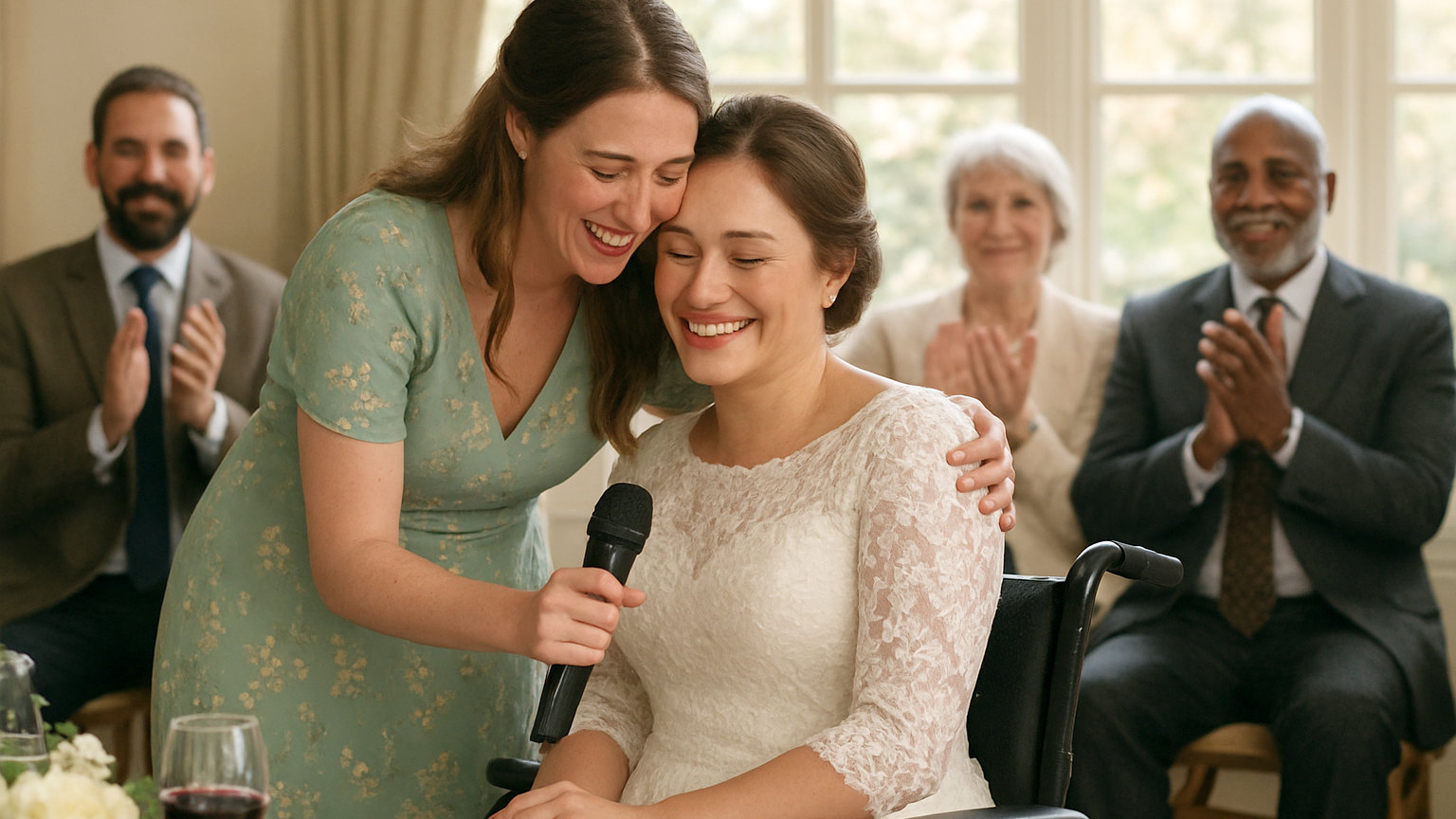
Anybody can speak at a wedding. The traditional line up of three excludes most of the people close to a couple, and adding somebody is entirely ordinary now.
Who else commonly speaks?
The chief bridesmaid or maid of honour, siblings, close friends, a mother or a grandparent. All are common and none is remarked upon.
A joint speech from two friends is another option and shares the load nicely.
Why does it matter?
Because the traditional format means one side of the couple is frequently barely spoken about, which is noticeable.
Adding a speaker from the other side balances the block and gives the room a fuller picture.
How do you fit them in?
By keeping everybody shorter. Four speeches of four minutes is better than three of eight, and it accommodates more people.
Tell every speaker the total block length so they understand why the limit exists.
Where in the order?
Keep the funniest last and spread similar speeches apart. Two sentimental speeches back to back feel repetitive.
Otherwise the placement is flexible and the shape matters more than the roles.
How do you ask?
Privately, early, with a clear length, and in a way that makes it genuinely easy to decline.
Somebody dreading a speech for a year is a real cost, and a reluctant speaker rarely gives a good one.
What if somebody asks to speak?
Say yes if you want them to and no if you do not. It is entirely reasonable to keep the block short.
Offering an alternative role, such as a reading at the ceremony, softens a no considerably.
What about an open microphone?
Risky. It extends the block unpredictably and produces at least one speech nobody planned for.
If you want it, cap it explicitly at two or three people and have somebody ready to close it.
What should you brief them on?
The length, the audience, the order, when it happens and anything to avoid. Same as any speaker.
Tell them who else is speaking, since it prevents two people telling the same story.
Does anybody mind?
Almost never. Guests notice the total length far more than who is speaking, and a good speech from an unexpected person is memorable.
Where a traditional relative expects to speak and would be displaced, have that conversation early.
What is the limit?
Four speakers and twenty minutes total. Beyond that the room stops listening regardless of who is at the microphone.
What about a joint speech?
Two friends or two siblings sharing one speech works well and halves the pressure on each of them.
Ask them to alternate in sections rather than sentences, which is considerably easier to deliver.
How do you keep the total down?
Give every speaker a shorter individual limit rather than reducing the number of speakers. Four short speeches is better than three long ones.
What is the benefit?
A fuller picture of both of you, and a chance to include somebody who matters. Guests notice when only one side has been spoken about.
Is it unusual?
Not any more. A speech from the chief bridesmaid or a sibling is entirely ordinary and nobody remarks on it.
How should you ask?
Privately, months ahead, with a stated length, and in a way that makes declining genuinely easy.
What is the limit?
Four speakers and twenty minutes in total. Beyond that the room stops listening whoever is speaking.
What should they be told?
The length, the order, who else is speaking and what to avoid. The same brief as any other speaker.
Ask whoever has something to say and keep everybody short.
Why is it worth doing?
Because it balances the block. A traditional line up frequently means one half of the couple is barely spoken about.
Anybody can speak. Ask the people who want to and keep them all short.
When should you decide?
Early, so everybody has months rather than weeks to prepare.


