
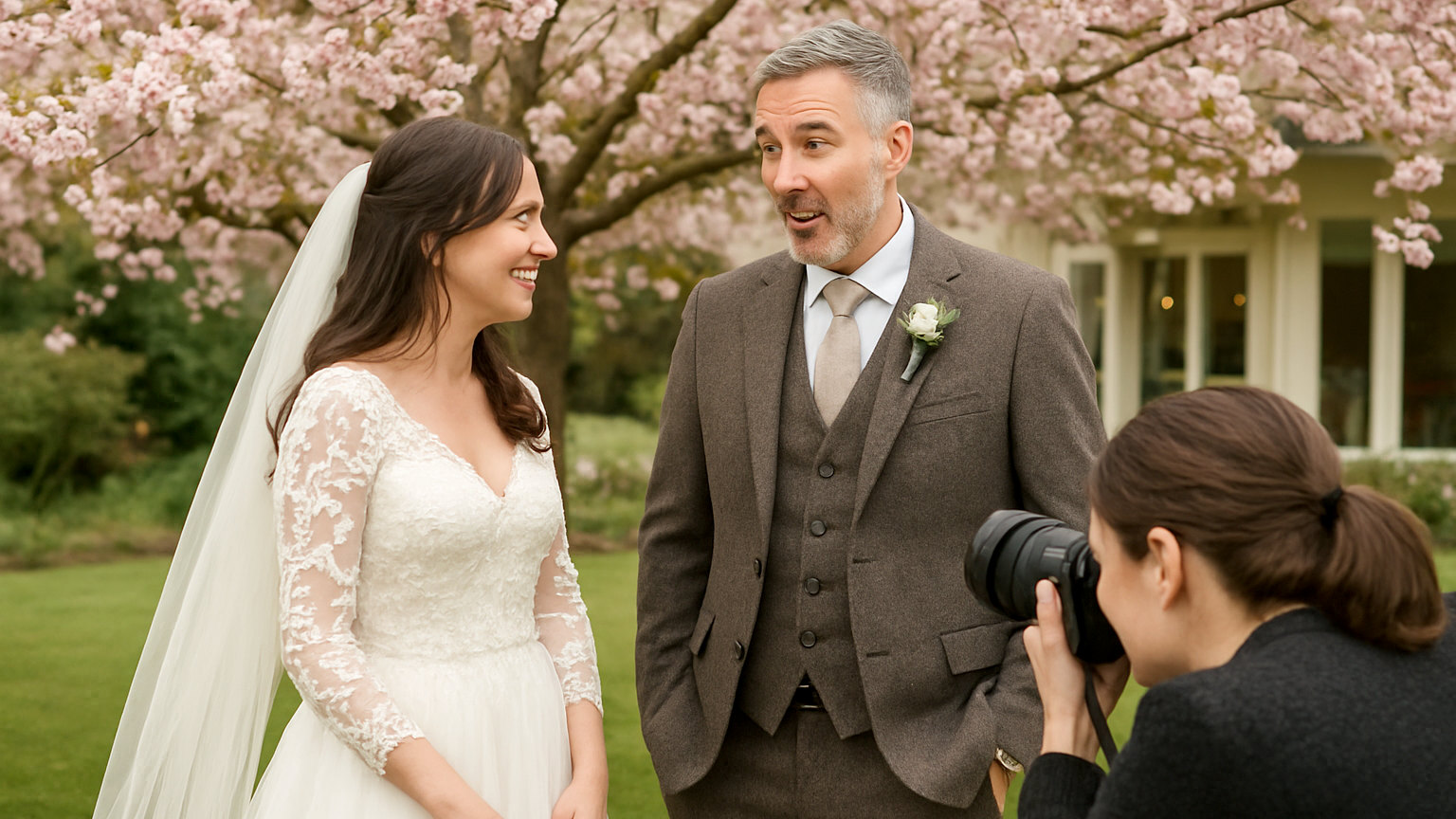
A first look is a private moment before the ceremony where the two of you see each other for the first time, usually photographed. It has become common in Britain over the last decade and it changes the schedule considerably.
How does it work?
The photographer positions one of you, brings the other in, and steps back. It takes ten to fifteen minutes and it is deliberately private.
It is usually followed immediately by couple portraits, which is where the schedule advantage comes from.
What does it change?
The timing of everything. With portraits done beforehand, you can go straight into the reception after the group shots rather than disappearing for half an hour.
That is an extra thirty minutes at your own drinks reception, which is what most couples say they wanted more of.
What do you lose?
The moment at the top of the aisle, which for many people is the emotional centre of the day. That is a real loss and it is the main argument against.
Some couples find the first look replaces it entirely and others find it is a different moment rather than a substitute.
Who does it suit?
Couples with a tight schedule, a winter wedding where light is short, nerves that would be eased by seeing each other, or a strong preference for reception time.
It suits anybody who finds the idea appealing. There is no correct answer and both are entirely ordinary now.
Who does it not suit?
Anybody who wants the aisle moment, anybody whose family would find it odd, and anybody who simply likes the tradition.
It is a choice rather than an improvement, whatever photographers who prefer it may suggest.
How does it affect the light?
Substantially for a winter wedding. A ceremony at two in December means the light is gone by the time portraits would happen otherwise.
A first look before the ceremony is frequently the only way to get daylight portraits at that time of year.
Where should it happen?
Somewhere private, which needs arranging with the venue. A first look with guests arriving in the background is not a first look.
Ask the photographer to scout it and to keep the area clear during it.
Does it have to be photographed?
No, and some couples do it entirely privately with no camera present. That is a legitimate and increasingly common choice.
Tell the photographer either way so they know whether to be there.
What about the wedding party?
Portraits with the party can also happen beforehand, which removes more from the post ceremony window.
That frequently saves another fifteen or twenty minutes, which is why photographers suggest it alongside a first look.
How do you decide?
Talk it through with the photographer, who will explain what it does to your specific timeline, and then decide on what you want rather than on efficiency.
Half an hour of reception is worth having and it is not worth giving up a moment you would rather have.
What do photographers think?
Most prefer it, since it produces better light, a calmer session and more reception time. That is a genuine view and it is also their convenience.
Ask what it would do to your specific timeline rather than accepting a general recommendation.
What about the wedding party?
A first look with a parent or with the wedding party is a separate and increasingly common moment, and it can happen whether or not you do one together.
How do you decide?
Ask what it does to your specific timeline, then choose on what you want rather than on efficiency. Both options make for a good day.
Is it a modern invention?
Largely, and it has become entirely ordinary in Britain over the last decade. No guest will find it unusual and most will not know it happened.
What should you tell the venue?
That you need a private space at a stated time, and that guests should not be arriving into it.


