
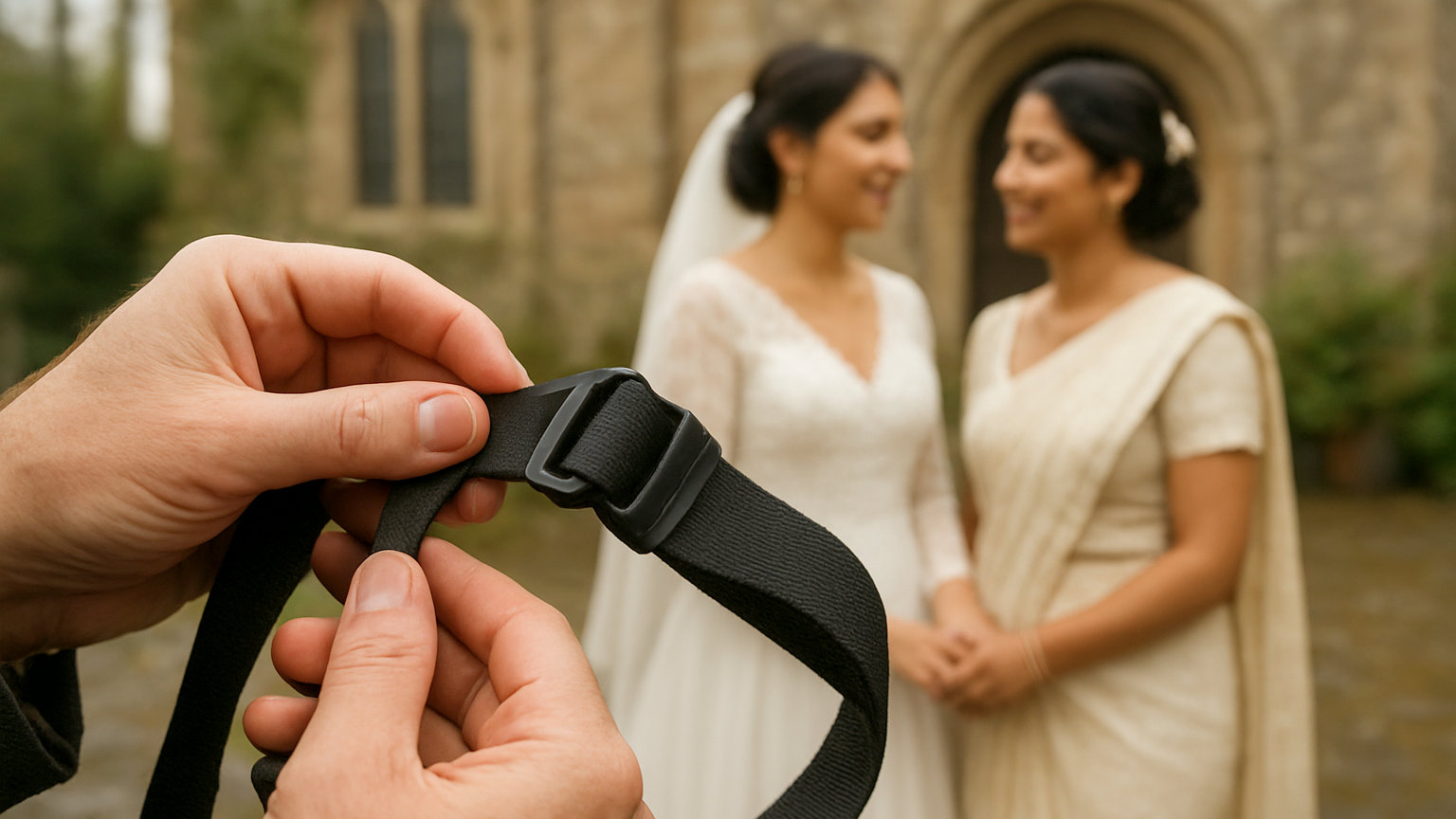
Video captures the two things photographs cannot, which are voices and movement. Whether that is worth the cost is one of the more genuinely personal decisions in wedding planning.
What does it capture?
The vows in your own voices, the speeches, the sound of the room, the way people move and the parts of the day you were not present for.
Couples who have one consistently say the audio is what they value, particularly the ceremony and anything said by somebody who has since died.
What do you get?
Usually a short highlight film of a few minutes, and frequently longer edits of the ceremony and speeches in full.
Ask what is included, since the difference between a highlight reel and full ceremony footage is substantial and not always obvious from a package name.
What does it cost?
Commonly a four figure sum, and it varies widely by coverage and by the length of the finished film.
It is usually the single largest addition available to a wedding budget after the venue and catering.
Is it worth it?
It is the item couples most commonly regret not having, and also one of the more expensive. Both of those are true.
If the budget forces a choice, photography is the priority, since it is the record most people look at. Video is the addition rather than the alternative.
What should you check?
How they record audio, which is what separates a good wedding film from a poor one. Discreet microphones on the officiant and the speakers make the difference.
Ask to watch a full film rather than a showreel, since a two minute highlight reel is assembled from years of work.
How intrusive is it?
Modern wedding videography is largely unobtrusive, using small cameras and available light. Ask how they work if it concerns you.
Introduce the videographer and the photographer to each other in advance, since they work in the same spaces and need to cooperate.
What about the ceremony?
Ask whether the venue or the officiant permits filming and where cameras can be positioned. Some churches and registrars restrict it.
Establish this before booking rather than discovering a restriction afterwards.
How long does it take to arrive?
Frequently longer than photographs, commonly several months, since editing a film is a considerably longer process.
Ask for the turnaround in writing, along with what happens if it is late.
What is the cheaper alternative?
Asking a friend to record the ceremony and the speeches on a phone from a fixed position, which captures the audio if not the craft.
It is not the same thing and it is far better than nothing, particularly for the vows and the speeches.
How do you decide?
Ask yourselves whether you would watch it. Some couples watch their film every year and others have never opened the file.
If neither of you is drawn to it, the money is better spent elsewhere. If one of you is, it is worth taking seriously.
When should you book?
Six to twelve months out for a popular date, in the same window as the photographer.
Book both from people who are happy to work alongside each other, and tell each who the other is.
What matters most in a wedding film?
The audio. Voices during the vows and the speeches are what couples return to, and a film with poor sound is not worth what it cost.
What should you ask to see?
A complete film rather than a showreel, ideally from a venue similar to yours.
What is the priority order?
Photography first, then video. If the budget allows only one, the stills are the record most people actually look at.
If either of you would watch it, book one. If neither would, the money is better spent on something guests experience.
What do couples regret?
Not having one, more often than having one. It is the most commonly cited omission in accounts written years afterwards.


