
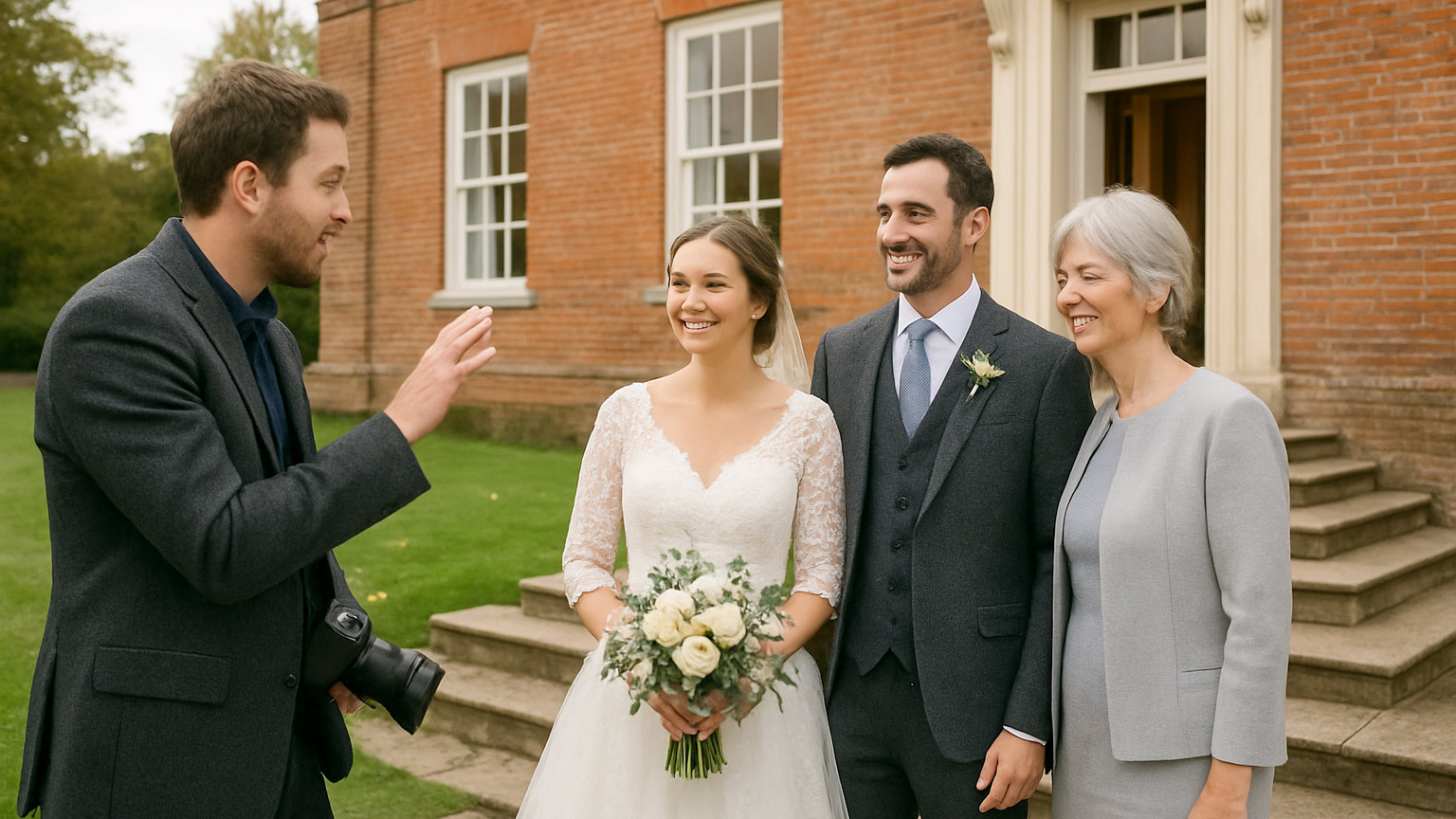
Couple portraits need less time than most schedules allow and better light than most schedules provide. Twenty to thirty minutes at the right moment produces more than an hour at the wrong one.
How long is enough?
Twenty to thirty minutes for the main session, plus ten to fifteen minutes later in the day if the light is good.
Beyond about forty minutes in one block, both the images and your enthusiasm decline noticeably.
When should they happen?
Traditionally after the group shots, which puts them in the middle of the drinks reception. A first look moves them before the ceremony.
The second short session near sunset is where many of the best images come from, and it costs fifteen minutes of the evening.
What does the photographer need?
Good light and somewhere with a decent background, both of which they will have identified at a site visit or on arrival.
They also need you not to be rushed, which is the thing most often missing.
What does it feel like?
Less posed than most people expect. Photographers generally direct loosely and let you interact rather than arranging you.
Almost everybody says they felt awkward for the first two minutes and forgot about it after that.
Should you practise?
An engagement shoot is exactly this, and it is the main reason photographers offer them. Being photographed together once beforehand makes the wedding session considerably easier.
It is optional and it does help, particularly for anybody uncomfortable in front of a camera.
What about the weather?
Overcast is better for portraits than bright sunshine, which produces harsh shadows and squinting. Photographers rarely mind grey days.
Rain needs a plan and produces some of the most distinctive images, so it is worth discussing rather than dreading.
Where should they happen?
Wherever the photographer suggests, which may not be the part of the venue you expected. They are looking at light and background rather than at what is pretty.
Ask them to walk the site beforehand if they have not worked there, which most will do.
How do you get the time back?
A first look, or portraits with the wedding party done before the ceremony. Both remove content from the post ceremony window.
Cutting the group photograph list is the other, since every group is five minutes of the same window.
Should you go back out later?
If the light is good, yes, and it is the single most productive fifteen minutes of the day photographically.
Ask the photographer to tell you when. They are watching the sky and will suggest it if you have agreed to be interrupted.
What should you protect?
Enough time to not be hurried, and the short session near sunset. Those two produce most of the images couples frame afterwards.
What if you dislike being photographed?
Say so at the booking stage. Photographers adjust their approach considerably for couples who find it difficult and most will suggest an engagement shoot.
A shorter session with a photographer who knows works better than a long one with somebody expecting you to enjoy it.
Do you need to leave the guests?
Briefly, and it is your reception too. Twenty minutes away is normal and an hour is noticed by everybody.
What should be in the schedule?
A defined block rather than whatever time is left over, since portraits are the first thing squeezed when the afternoon runs late.
What produces the best images?
Not being rushed, and good light. Neither is expensive and both are matters of scheduling rather than of anything you buy.
How many will you get?
Ask the photographer roughly how many portraits to expect, since it varies and it is worth knowing what the session produces.
Who should be with you?
Nobody, ideally. Portraits with an audience are considerably harder, and most photographers will ask people to step away.
Protect the time in the schedule and take the short session near sunset. Those two produce most of the images couples frame.


