
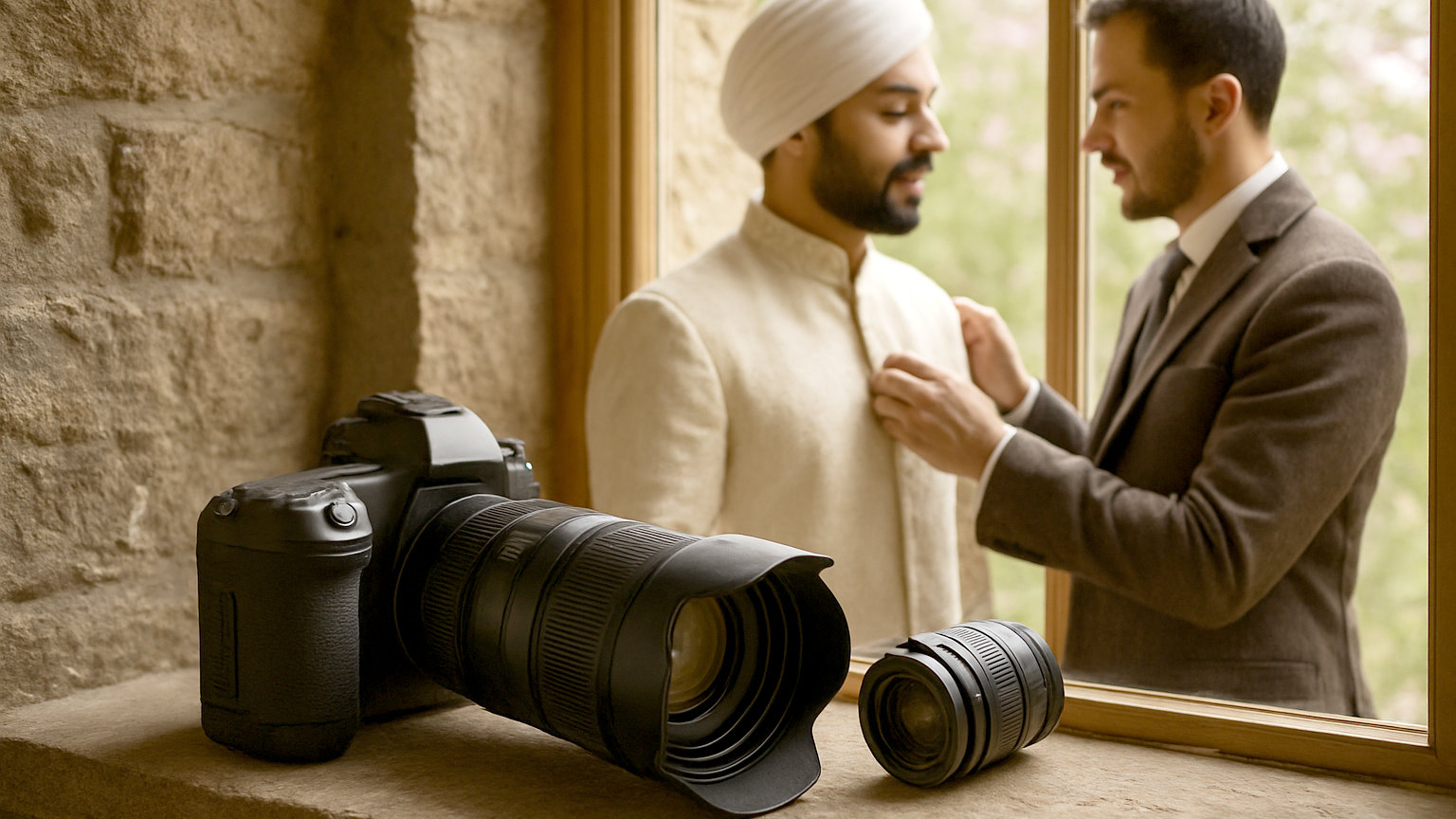
A second photographer covers what one person physically cannot, which is two things happening at once. Whether it is worth the additional cost depends on the size and shape of your day.
What does a second shooter do?
Covers separate preparations, shoots the guests during the ceremony while the main photographer covers the front, captures reaction shots and provides a different angle on set pieces.
They also give a second perspective during the speeches and the first dance, which are single moments with only one good angle each.
When is one genuinely useful?
Where both parties are getting ready in different places and you want both covered, since one photographer cannot do both.
Also at larger weddings, where a single photographer covering a hundred and fifty guests will inevitably miss things.
When is one unnecessary?
At a smaller wedding in a single venue with everybody in one place, where a good single photographer covers everything comfortably.
Below about eighty guests it is rarely the best use of the money.
What does it cost?
Usually a supplement on the main package rather than a second full fee, and photographers who work with a regular partner offer it at cost or close to it.
Ask what it adds and what you get for it, since the value varies considerably by photographer.
Who are they?
Frequently another working photographer who shoots alongside, sometimes an assistant with a camera. The difference in output is significant.
Ask whether the second is an experienced photographer and whether you can see their work.
What about the ceremony?
The clearest single benefit. One photographer covers the vows from the front and the other captures the faces of the people watching.
Those reaction images are frequently the ones couples value most and they cannot be taken by somebody standing at the front.
Does it double the images?
No, and it should not. A good second shooter adds coverage of what was missed rather than duplicating the same moments.
Ask how the two photographers divide the day, which tells you whether the second is genuinely adding coverage.
What about the meal?
Both usually eat during the meal, which is the natural break. It is worth knowing so you are not expecting continuous coverage of everybody eating.
Both count in the catering headcount, which is a cost worth remembering.
Is a videographer an alternative?
No, they are different things covering different ground. A videographer is not a second stills photographer and will be working to their own requirements.
Where budget allows only one addition, decide which medium matters more to you rather than treating them as interchangeable.
How do you decide?
Ask the photographer directly whether your day needs one. Most will tell you honestly, and a photographer who says no to additional money is worth listening to.
Separate preparations and a large guest list are the two situations where the answer is usually yes.
When should you decide?
At booking, since availability and pricing are both easier then. Adding one late may not be possible at a busy date.
What should you ask to see?
A full wedding shot by both of them together, so you can see how the coverage divides and whether the styles match.
What is the honest answer?
For separate preparations or a large guest list, yes. For a smaller single venue wedding, the money is usually better spent elsewhere.
Who should you ask?
The photographer, who will tell you honestly whether your day needs one. Most will decline additional money where it adds little.
What does it add to the catering?
Another cover, which belongs in the headcount along with every other supplier meal.
Ask the photographer whether your day needs one, and take the answer seriously either way.
What is the alternative?
More hours with a single photographer, which frequently adds more to the coverage than a second shooter would at a smaller wedding.


