
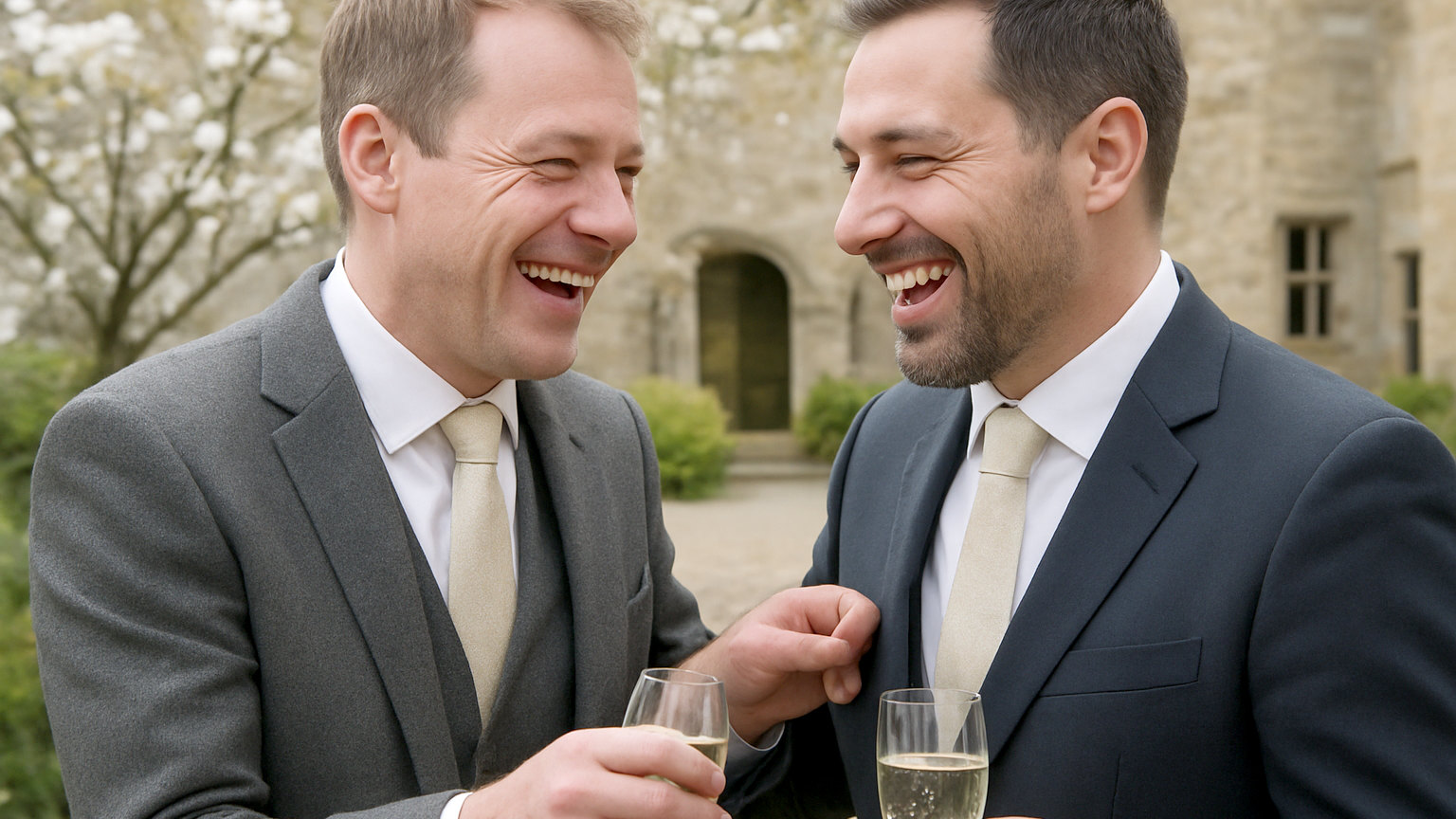
Guests judge a wedding on a short and consistent list of practical things, almost none of which is decorative. Getting them right costs very little and is the difference between a day people enjoy and one they endure.
What do guests actually want?
To know what is happening, to be comfortable, to be fed and watered reasonably promptly, and to be able to hear the parts that matter.
That is the whole list. Everything else is a bonus rather than an expectation.
What are the most common complaints?
Queues at the bar, nowhere to sit during a long reception, not being able to hear the ceremony or the speeches, and long unexplained gaps.
All four are staffing and planning matters rather than budget matters, which is why an expensive wedding can be a worse experience than a cheap one.
How much seating is needed?
Enough for at least a third of guests during the drinks reception, and more if the wedding is long or the guest list is older.
Standing for two hours is the complaint most often raised afterwards and it is entirely preventable.
What about the gap?
The stretch between the ceremony and the meal is where afternoons drift. Two to three hours with nothing happening is a long time.
Food, seating, shade or shelter, and something to look at or do all help. So does simply making it shorter.
What about information?
Guests plan around what they are told. Travel, parking, accommodation, timings, dress code and what to expect all belong on a website well in advance.
Uncertainty is what produces the most guest anxiety, and it costs nothing to remove.
What about hearing?
A microphone at the ceremony and for the speeches, tested in the room beforehand. It is the single most common thing guests cannot do and complain about.
Ask whether the venue has a hearing loop and ask for it to be tested rather than confirmed.
What about the food and drink?
Enough of both, served without long waits, with genuine options for anybody not drinking or with a dietary requirement.
Running out of anything is the most visible failure at a wedding and the one guests remember longest.
What about the weather?
Shade and water in summer, warmth and shelter in winter. Both are frequently overlooked at outdoor receptions and both matter enormously.
Blankets, heaters, umbrellas and a covered area are small costs with a large effect on how long guests stay outside.
What costs nothing?
Being on time, telling people what happens next, having somebody direct guests between spaces, and thanking people for coming.
These are the things guests mention afterwards and every one of them is a matter of planning rather than money.
What do guests not notice?
Favours, chair covers, stationery beyond the invitation, the colour scheme and most of the decoration.
That contrast is worth holding in mind when a budget is under pressure, since the things that matter are cheap and the things that do not are frequently expensive.
What is the cheapest improvement?
More seating during the drinks reception and a working microphone. Both cost very little and both address the most common complaints directly.
Who should you ask?
The venue, since they watch guests at fifty weddings a year and know exactly where people get stuck, bored or uncomfortable.
What is worth the money?
Enough staff, enough food and drink, and enough seating. Those three account for the large majority of what guests experience directly.
What is the simplest test?
Walk the day as a guest, from arriving to leaving, and note every point where you would be uncertain, uncomfortable or waiting.
What matters most?
That guests are comfortable, informed and fed. Everything else is decoration on top of that, and none of it compensates if those three are missing.
Almost all of it is planning rather than budget, which is why a modest wedding can be a considerably better day than an expensive one.


