
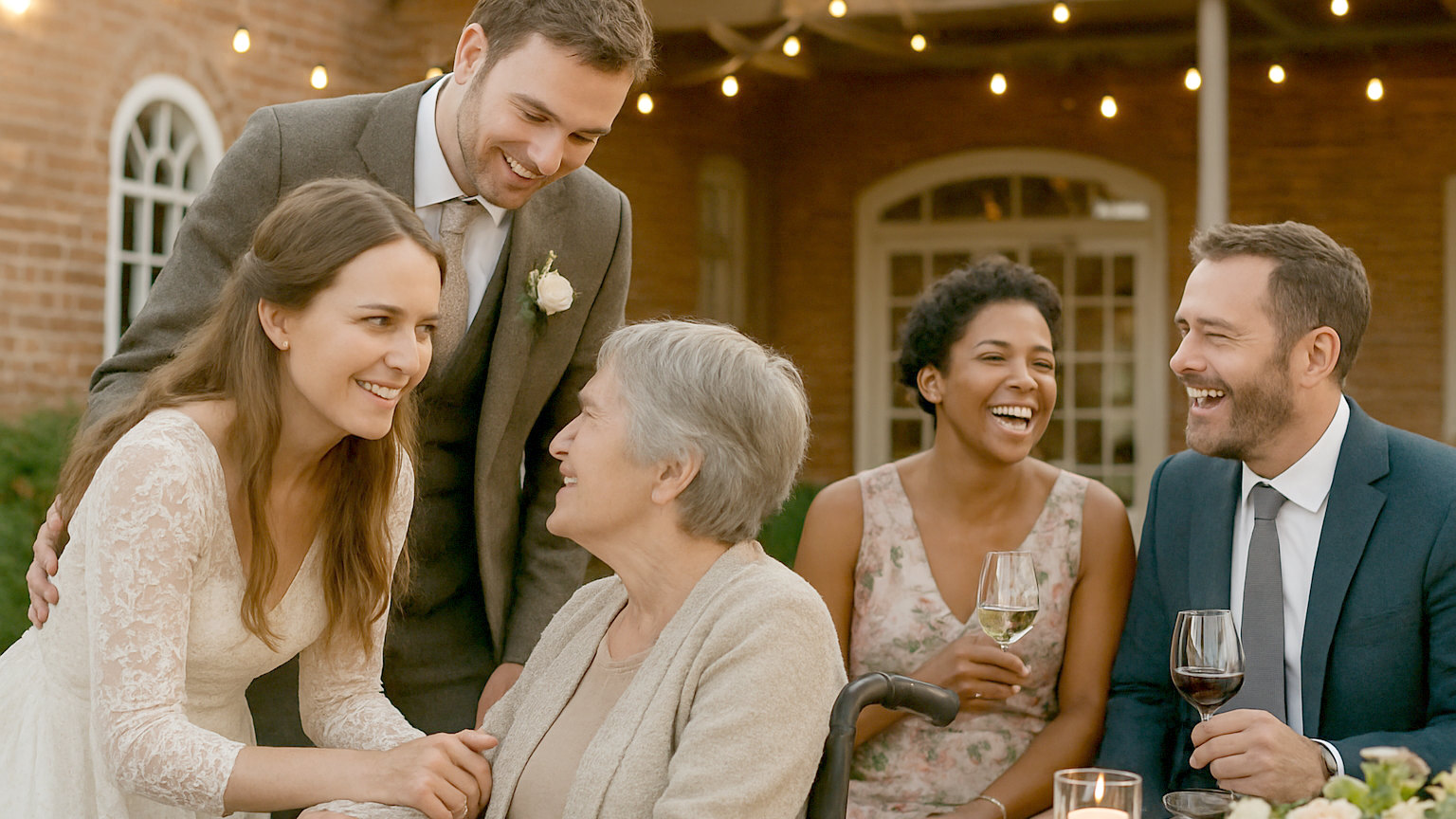
More guests are affected by something than couples expect, and almost none of them will mention it unprompted. Asking directly makes it ordinary, and most of what people need costs nothing to arrange.
Who is affected?
More people than wheelchair users. Older relatives who cannot stand for long, guests with hearing difficulties, anybody with a temporary injury, pregnant guests, parents with pushchairs and anybody with a dietary or sensory need.
At a wedding of a hundred and fifty it is normal for ten or more people to be affected by something.
How do you find out?
Ask on the reply form, alongside the dietary question. A single line inviting people to tell you about anything that would help is enough.
Guests rarely volunteer it because they do not want to be a problem. Being asked removes that entirely.
What should you check about the venue?
Step free access from the car park to every space used, lifts and whether they are available on the day, and where the accessible toilets are.
Ground conditions matter at rural venues, since gravel and grass are difficult for wheelchairs, frames and anybody in unfamiliar shoes.
What about the ceremony?
Wheelchair spaces planned into the rows rather than added at the back, so somebody can sit with their family rather than apart from them.
Ask about a hearing loop and ask for it to be tested rather than confirmed. A guest who cannot hear the ceremony has missed the wedding.
What about the reception?
Seating for anybody who cannot stand for two hours, table access with room between tables, and somewhere quiet to sit.
A quiet room matters for guests with sensory difficulties, for anybody overwhelmed and for parents with young children.
What about dietary requirements?
Collect them with the replies and pass them to the caterer with the seating plan. A discreet mark on the place card tells the staff without announcing anything.
Provide a good alternative rather than an afterthought. It costs very little and is noticed by exactly the people who notice everything.
What can you arrange yourself?
Reserved parking near the entrance, somebody assigned to help a particular relative, chairs brought outside for a reception on grass, and a ramp hired for a single step.
Most accessibility problems at weddings are solved by somebody thinking about them a month in advance rather than by anything expensive.
Who should be told?
The venue, the caterer and whoever is coordinating the day. All three need the information and none of them will have it unless you pass it on.
Tell the venue about specific guests rather than in general terms, so staff can seat and assist without it being requested.
What should be on the website?
A short accessibility note covering parking, step free routes, seating and where the accessible toilets are.
Guests can then plan without having to ask, which is what most of them would prefer.
What is the principle?
Ask, arrange quietly, and tell the people who need to know. Nobody wants to be singled out and everybody wants to be able to attend comfortably.
What if you cannot accommodate something?
Say so honestly and early, so the guest can decide. A venue with no lift is a fact rather than a failure, and people would rather know than discover it on the day.
When should you ask?
On the reply form, which is the natural moment, and follow up individually with anybody who mentions something significant.
What does it cost?
Almost nothing. Most of it is seating, positioning and telling the right people, rather than anything that appears on a budget.
What is the simplest step?
One line on the reply form inviting people to mention anything that would help. It is where almost all of this information comes from.
Ask, arrange quietly and tell the venue. Three steps, no cost, and it determines whether some of your guests can enjoy the day at all.


