
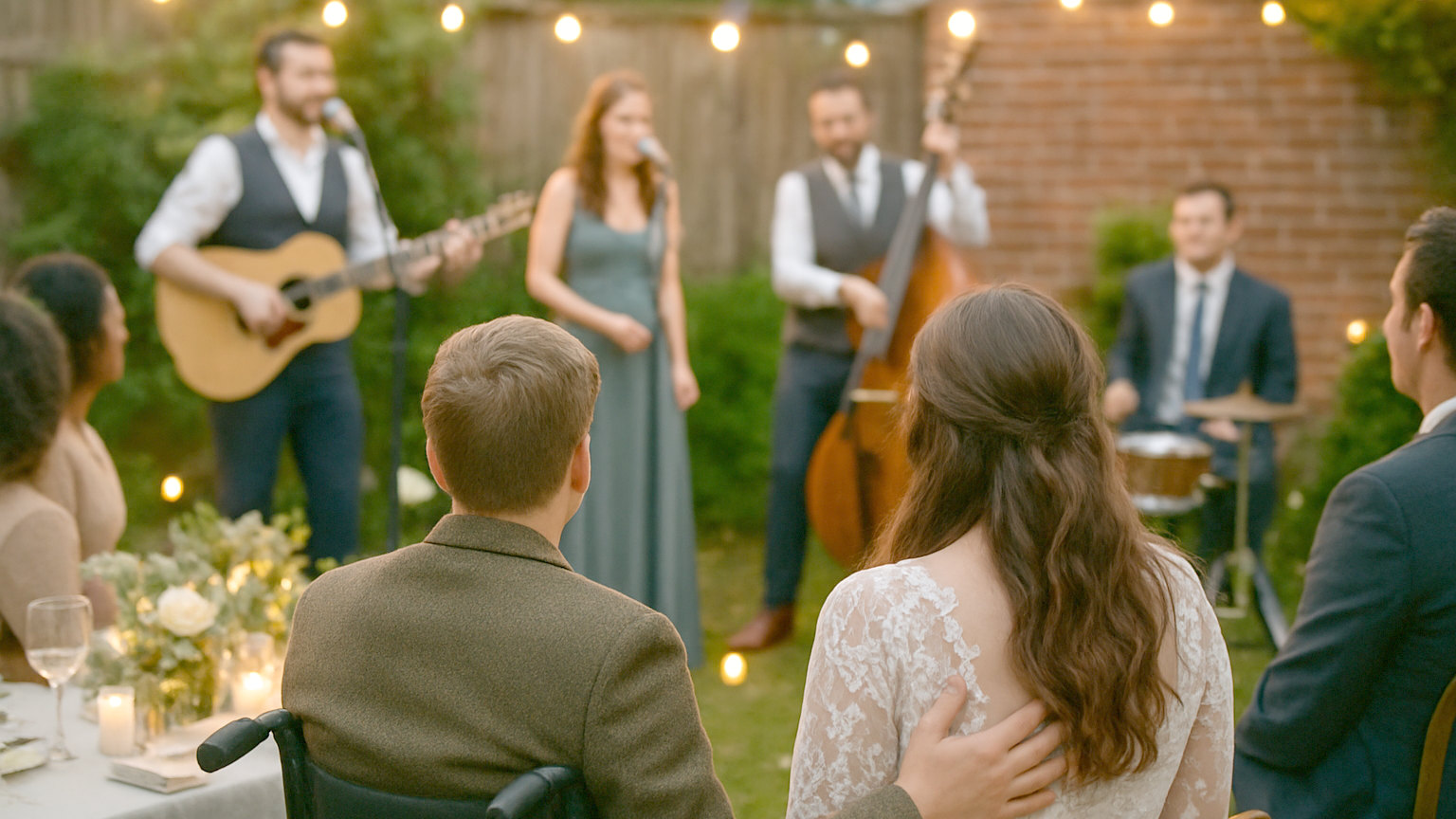
Daytime entertainment exists mostly to fill the gap between the ceremony and the meal, which is where weddings drift. Some options genuinely help and others are expensive decoration.
What is the gap?
The two to three hours between the ceremony ending and the meal starting, during which guests have a drink and wait.
It is the least structured part of the day and the part most likely to feel long, particularly if the weather is poor.
What helps most?
Food, seating and something to look at, in that order. Entertainment is the fourth item rather than the first.
A reception with canapes and enough chairs rarely needs anything else. One with neither is not fixed by a magician.
What about live music?
An acoustic musician, a duo or a string trio during the reception works well and costs less than an evening band.
It gives the space atmosphere without demanding attention, which is exactly right for a reception where people are talking.
What about lawn games?
Genuinely effective at an outdoor wedding. Croquet, giant games and similar give guests something to do and photograph well.
They need dry weather and a wet weather alternative, and many venues own a set. Ask before hiring.
What about a magician?
Close up magic during a drinks reception works better than most people expect, since it moves between groups and breaks up standing about.
It also helps guests who know few people, which is a real benefit at a wedding with two separate friendship groups.
What about a photo booth?
Popular, and better placed in the evening than the afternoon. Guests use it once the formal part is over.
Ask about space, power and whether an attendant is included, since unattended booths tend to break down or run out of paper.
What about children?
The group most in need of entertainment during the gap. A quiet room, some games or hired childcare transforms the afternoon for families.
It also means parents stay for the evening rather than leaving at eight.
What about the venue itself?
Somewhere with grounds, a view or something to explore needs very little added. Guests entertain themselves given somewhere pleasant to be.
That is one of the quieter arguments for a venue with character over a function room.
Is any of it necessary?
No. A great many weddings have nothing during the day and nobody notices, provided there is food, seating and a reasonable gap length.
Shortening the gap is cheaper and more effective than filling it.
What should you spend on first?
Canapes and seating. Both cost less than most entertainment and both address what actually makes a long reception uncomfortable.
What about a receiving line?
It uses part of the gap productively and guarantees you speak to everybody. It takes around forty minutes for a hundred and fifty guests.
Many couples otherwise regret not having spoken to people, so it is worth considering as a use of the time.
What does the venue provide?
Ask, since many own lawn games, garden furniture and heaters. Hiring what is already on site is a common wasted cost.
Where should the money go?
Food and seating first. They address the actual problem, which is guests standing about hungry rather than guests being unentertained.
Is it worth the money?
Sometimes, and it is the fourth priority rather than the first. A shorter gap with food and seating beats a long one with entertainment.
What should you arrange first?
Canapes and seating, then anything else. The order matters and it is frequently the reverse of what gets booked.
What about the weather?
Anything outdoors needs an alternative. Lawn games in the rain are simply wet boxes, so plan the indoor version too.
Feed them, seat them, and keep the gap short. Everything else is optional.
What do guests actually want?
Somewhere to sit, something to eat and somebody to talk to. Provide those and the afternoon works without anything booked.


