
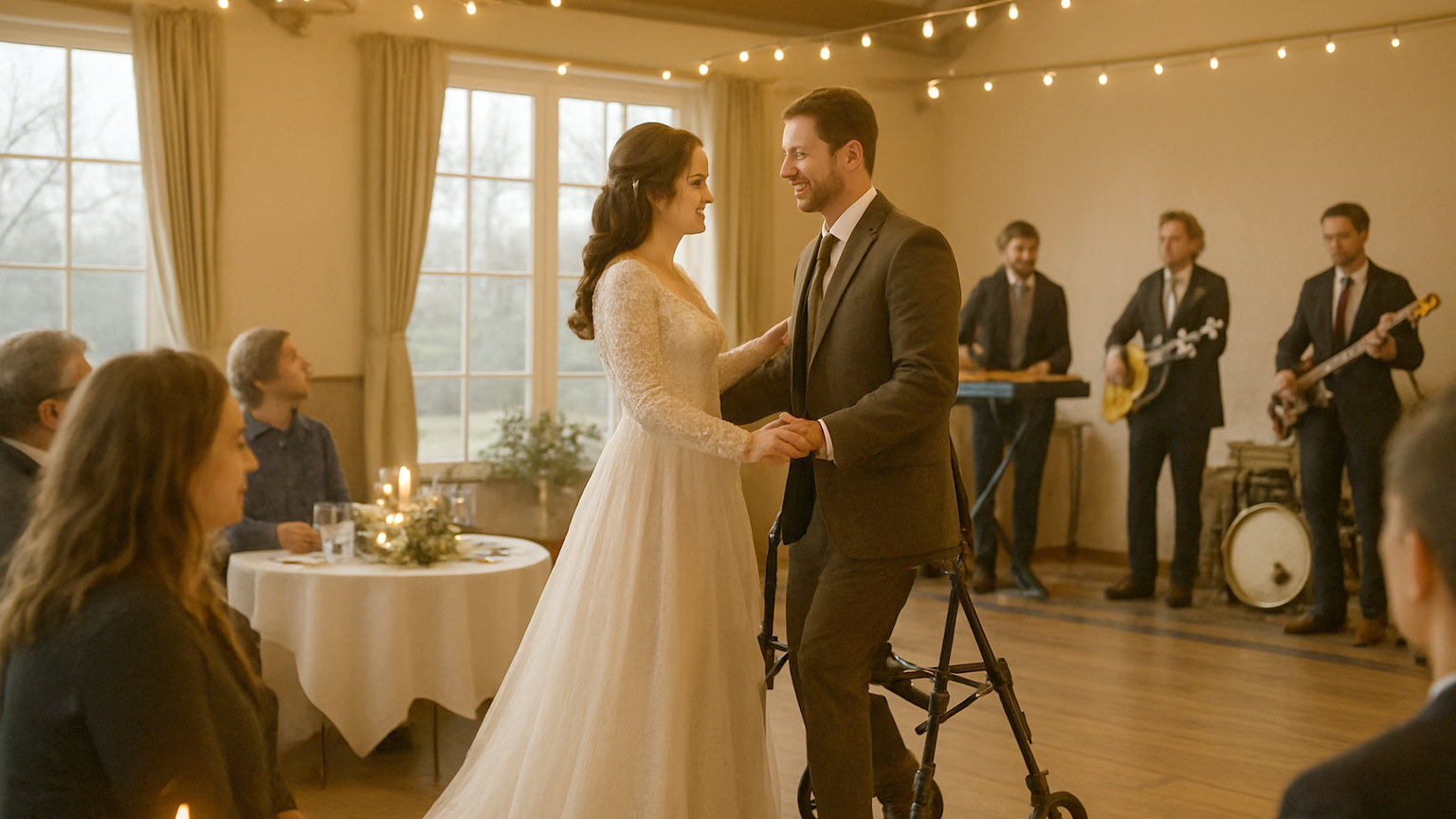
The first dance is three minutes of a hundred and fifty people watching two people who mostly do not dance. Understanding how it actually runs removes most of the anxiety around it.
When does it happen?
Usually at the start of the evening, once evening guests have arrived, commonly between eight and nine.
It marks the transition from the meal to the party, which is why the floor fills immediately afterwards if it is timed well.
How long should it be?
Shorter than the song. Three minutes alone on a floor is a long time and most couples ask for others to join partway through.
Ask the DJ or band to invite people on after a minute or so, or to cut the song at a set point. Both are entirely normal.
Do you have to do one?
No. Some couples skip it entirely, some do it with the wedding party from the start, and some simply open the floor to everybody.
Nobody minds and very few guests notice its absence once the dancing has started.
How do you choose the song?
Something that means something to you and that you can move to. Check the tempo, since a great many meaningful songs are difficult to dance to.
Listen to it once imagining being watched. It is a different experience from listening to it in a car.
Should you have lessons?
Optional and genuinely helpful for anybody nervous. A couple of sessions is enough to have something to do with your feet.
A choreographed routine is a bigger commitment and it is entirely up to you. Guests enjoy both and expect neither.
What if you cannot dance?
Almost nobody can, which is the reassuring part. Moving slowly and talking to each other is what most first dances actually are.
Guests are watching warmly rather than critically, and it is over in ninety seconds if you ask people to join.
What about the lighting?
Ask the DJ or band what they do, since a spotlit floor looks better and photographs better than a dark room.
Tell the photographer when it is happening so they are in position rather than crossing the room.
Can it be a live version?
Where a band plays it, ask early since it needs rehearsal. Most will learn one song and charge for additional ones.
A recorded version is entirely fine and removes any risk of the arrangement not being what you expected.
What about a surprise routine?
Popular and guests enjoy them. It needs real practice and it should be something you want rather than something you feel obliged to do.
Tell the DJ or band exactly how it works, including any cuts or track changes, and rehearse the transition.
What should you arrange?
The song, the point at which others join, who announces it, the lighting and the photographer position.
Five details, agreed in advance, and the whole thing runs itself.
Who announces it?
The DJ, band leader or whoever is running the evening. Agree who and make sure they know how you want it introduced.
A short announcement gathers the room, which is what makes the floor fill afterwards rather than staying empty.
Should you practise?
Once, to the actual song, standing up. It is enough to know how long three minutes is and where you will be looking.
What if you would rather not?
Open the floor to everybody instead, or dance with the wedding party from the start. Both are common and neither needs explaining.
What is the practical advice?
Short song, others joining after a minute, lights down, and somebody announcing it. That is the whole arrangement.
When should you choose the song?
A couple of months out, so a band has time to learn it if they are playing it live.
Nobody is judging it, and it is over faster than you expect.
Does it have to be a slow song?
Not remotely. Upbeat first dances are common and they solve the problem of three minutes of swaying entirely.


